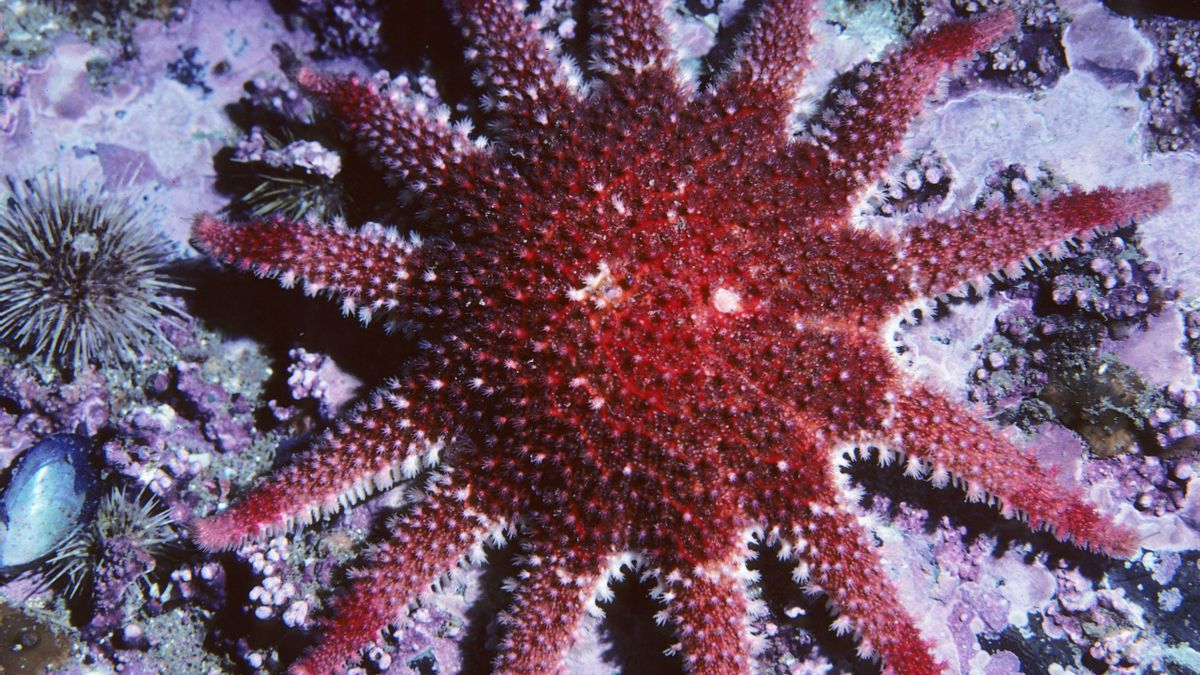
Sunflower Sea Star Nears Extinction: Scientists Race to Save It
The sunflower sea star (*Pycnopodia helianthoides*) is one of the largest sea stars in the world. It can grow up to 24 arms and reach one meter in diameter. It lives in Pacific waters from Alaska to California and Mexico, moving across the seafloor in search of food. Unlike other sea stars, it is a fast predator that feeds on sea urchins, among other prey.
Everything changed in 2013. A marine heat wave raised water temperatures along the west coast of North America. At the same time, a disease known as sea star wasting syndrome spread through the population. The disease causes lesions, loss of arms, and tissue breakdown that leads to death.
The impact was devastating. The population fell by more than 90%. "There were 6 billion sunflower stars from Alaska to Baja California," recalls Reuven Bank, co-founder of the Sunflower Star Laboratory, a nonprofit group dedicated to conserving the species.
The loss of this predator, officially listed as critically endangered by the International Union for Conservation of Nature (IUCN), also disrupted the marine ecosystem. With fewer sea stars, sea urchins — their prey — multiplied and began to devour large areas of kelp.
**Sea Stars, Urchins, and Kelp**
"95% of our kelp forests have disappeared in the last 10 to 12 years," Bank warns. Kelp forests are a crucial habitat for thousands of marine species. They also serve as a key defense against global warming, capturing tons of carbon dioxide each year.
To reverse this situation, scientists have been studying solutions for years. Bank's team is one of the first to take action. According to a statement, its scientists are testing the reintroduction of sunflower sea stars on the seafloor off Monterey, California.
"Sea urchins and other herbivores smell a sunflower sea star and flee in panic. They hide more and eat less," Bank explained. If the trials succeed, the team hopes to permanently reintroduce the species to the area in the coming years. This could trigger a "chain reaction that could one day heal a devastated coast," the researchers say.