AI could 'blow up' healthcare equality, PwC expert warns
Part of composite article AI Health Advice? Doctors Warn of Dangerous Guesswork View full article →
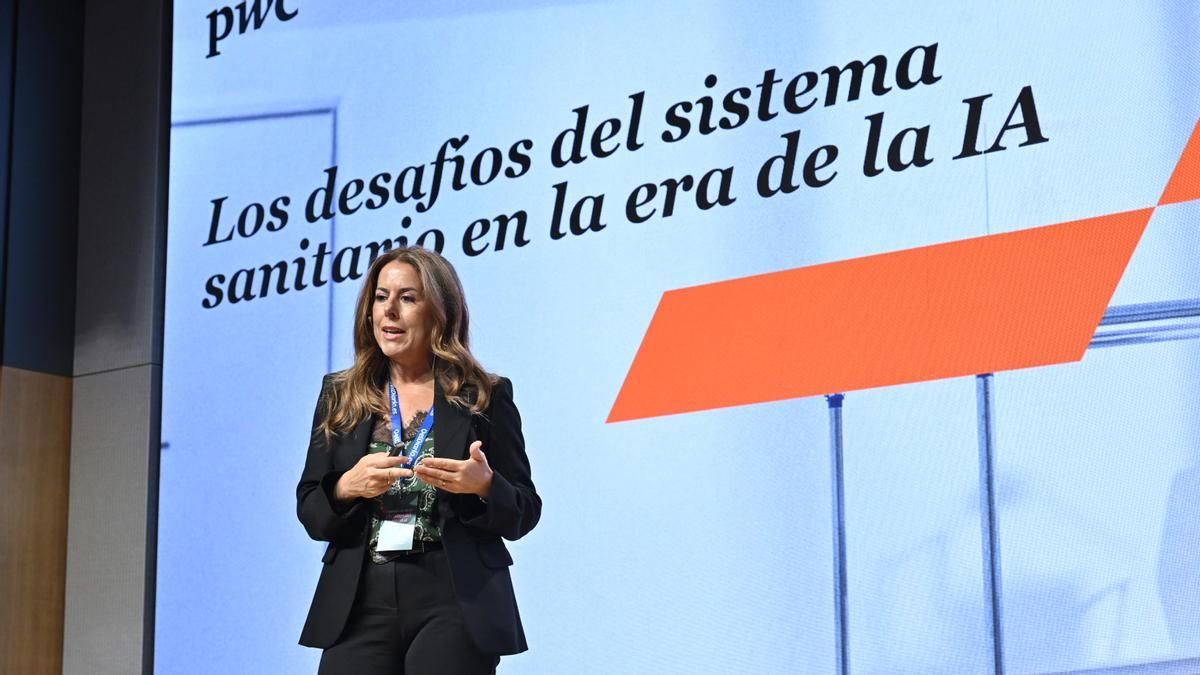
Artificial intelligence could create deep inequality in Spain's public healthcare system if its adoption is not properly coordinated, a leading expert warned at a health conference organized by elDiario.es.
Leticia Rodríguez Vadillo, head of retail, consumer and health at PwC Spain, said AI "can be behind everything as a power mechanism to do things better, but we can also do it badly."
Speaking at the V Health Conference in Madrid, she warned that without coordinated governance, the quality of care will differ severely between hospitals and regions.
"AI can blow up equality in access and treatment," she said.
Rodríguez Vadillo cited a PwC study estimating AI will have an impact of more than $800 billion on global healthcare in the next five years. About 75% of that will come from efficiency savings, with the remaining 25% from new business models. AI's presence in healthcare is expected to rise from 15% to 30%.
She identified several problems in Spain's healthcare system: unclear regulations on bias and ethics, low trust among doctors and patients, weak technology infrastructure, limited access to quality data, and a shortage of skilled professionals.
To show that change is possible, she described a project developed over two years with Valencia's regional health ministry. The system uses a "hub and spoke" structure — a central office in the regional government working with multidisciplinary teams of technology experts and doctors across health areas.
Rodríguez Vadillo also called for an end to isolated pilot programs. "We cannot allow the game of pilots: one here and another there, where one hospital does something but the one next door doesn't know about it," she said.
She urged hospitals to include ethics, privacy and patient safety in their contracts from the start, and to create pre-contract testing spaces to ensure effective public purchasing.
On operations, she stressed that technology requires changing care processes and training staff. "If we bring in AI but don't change processes, we are only adding a patch," she said.
She noted that doctors often complain about spending 50% of their time on tasks they did not study medicine for, and said automating bureaucracy would return essential time to patient care.
Rodríguez Vadillo concluded that the positive impact of digital transformation will not happen on its own. "AI will change things for us, but for it to change for the better, we must govern it and push it forward in an organized system," she said.