Silicon Valley Is Draining Europe's Credit Market to Fund AI Data Centers
Part of composite article Chinese Tech Could Power Europe's Electric Car Push as Paris Showdown Looms View full article →
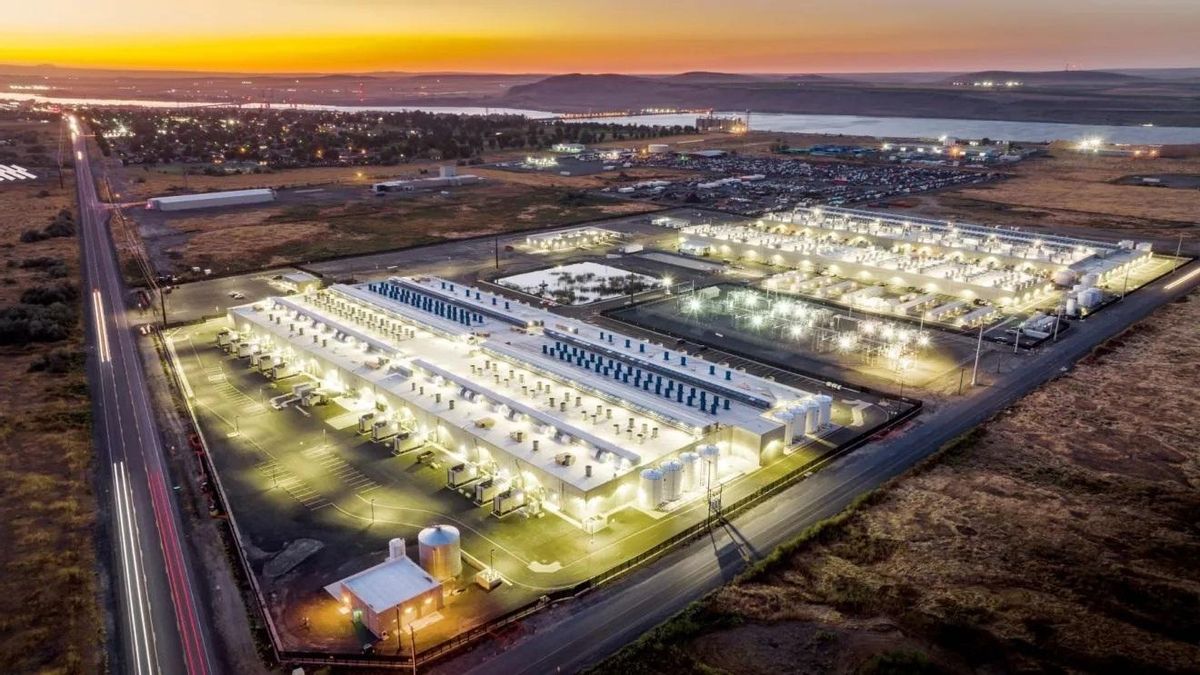
American tech giants are borrowing billions in Europe to build massive AI data centers, leaving European companies struggling to compete for loans.
Amazon, Google, Meta, Microsoft, and Oracle—known as "hyperscalers"—are spending enormous amounts on AI infrastructure. These five companies will spend about 714 billion euros in 2026 and over 1 trillion euros in 2027, according to Goldman Sachs. That trillion equals roughly 6.5% of the eurozone's GDP.
To share the risk, these companies are issuing bonds instead of using only their own cash. In the first nine months of this year, tech companies issued 230 billion dollars in bonds—double the amount from all of last year, according to S&P Capital IQ. Across the entire AI industry, total debt issued is approaching 500 billion dollars.
The European Central Bank (ECB) warns that hyperscaler loans now make up 10% of all new debt issued by non-financial companies in the eurozone. "They are turning to every corner of global financial markets to finance their expansion," the ECB says.
**What This Means for European Companies**
European businesses face higher borrowing costs or must delay their own bond sales to avoid competing with American giants. "Investors have limited balance sheets and portfolio limits," ECB analysts explain. "They may reduce positions in other bonds to make room for large hyperscaler deals. This could create a crowding-out effect that raises costs even for issuers in unrelated sectors."
In practice, a European company seeking loans to build a factory may find investors have less money available because it is going to American tech giants. To compete, the company might need to offer higher interest rates. Or it might postpone its bond sale—and its growth—until competition decreases.
**IMF Warns of AI Bubble Risk**
On Tuesday, the International Monetary Fund (IMF) updated its global economic outlook. Its message on AI was mixed: massive data center investments are currently driving the world economy, but they carry bubble risk due to limited productivity gains and benefits concentrated in few countries.
A "reevaluation" of AI profitability "could sharply reduce investment, trigger stock market corrections, and tighten financial conditions," the IMF warns.
**The US-Europe Gap**
In the US, the Federal Reserve estimates that hyperscaler investments and tech stock gains add between 0.5 and 1 percentage point to GDP. In the eurozone, however, the credit taken by these tech giants does not bring equivalent returns.
Even in Spain—a major recipient of this investment—the long-term economic benefits remain uncertain. Amazon and Microsoft have committed to investing about 33 billion and 5 billion euros respectively in large data centers. The Basilio Paraíso Foundation estimates these will add nearly 1.15 billion euros annually to the regional economy once operational—about 0.07% of Spain's GDP.
The Foundation warns that while construction creates activity and jobs, "the challenge" will be ensuring that operations improve productivity across other companies.
Amazon says its Spanish data centers will contribute 31.7 billion euros to national GDP through 2035 and support an average of 29,900 full-time equivalent jobs annually in local companies, including indirect positions. More than half of that economic impact would be concentrated in Aragón.
**Who Really Benefits?**
Outside the US, the economies growing most from AI data centers are not those receiving them—but those producing essential components. Taiwan and South Korea stand out.
Taiwan produces about 90% of the world's advanced AI chips through TSMC, which manufactures chips for Nvidia and Apple. TSMC keeps breaking quarterly profit records.
South Korea produces many server components, including memory chips. Samsung's stock value has increased 121% in one year, while SK Hynix also reports soaring results.
Europe benefits mainly through ASML, the Dutch company that makes chip-manufacturing machines for TSMC and Samsung. ASML reported net sales of 11.7 billion euros this week—up 55% year-over-year—and net profit of 4.96 billion euros. However, the company admits it cannot meet demand through 2027 and 2028 and is already negotiating deliveries for 2030.
Customers face a four-year wait for these machines. This illustrates how the AI economy depends on a few key suppliers reaching maximum capacity—and given their complexity, expanding production is neither simple nor cheap. ASML is expanding its facilities, but the first phases will not be operational until at least 2029.