Chinese carmakers double down on Europe as Paris Motor Show reopens
Part of composite article Chinese Cars Are Eating Europe: 20 Brands Storm Paris as Market Share Doubles to 10.7% View full article →
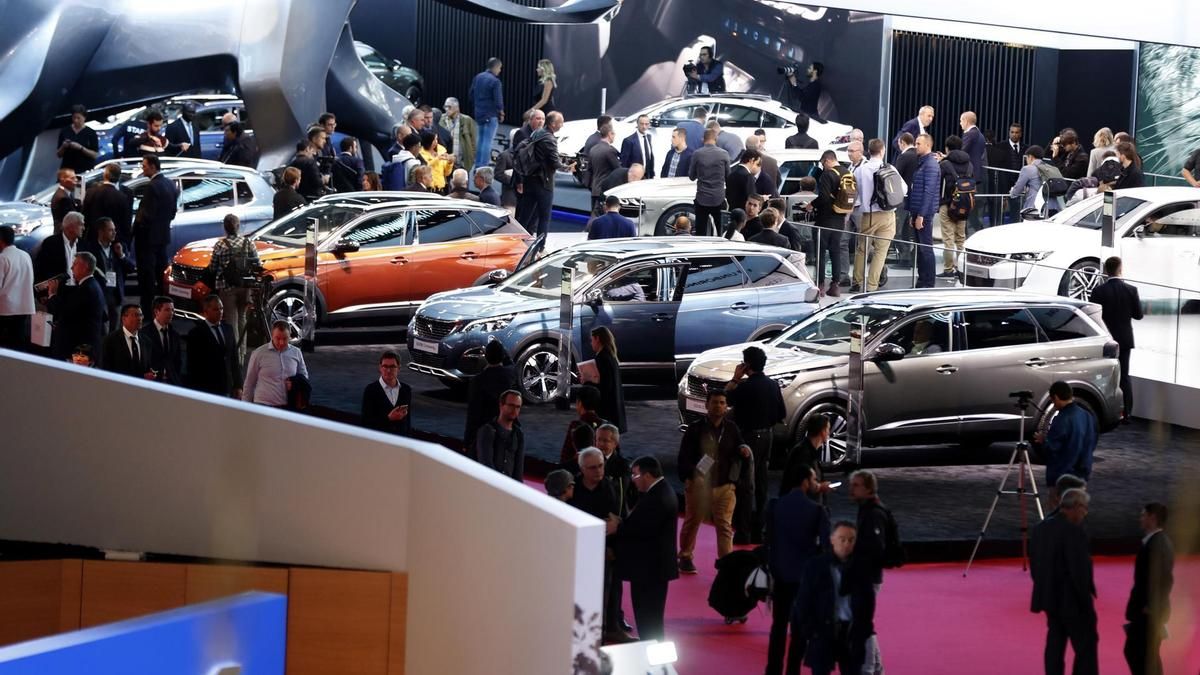
A record 20 Chinese brands will attend the Paris Motor Show next week, twice as many as in 2024. Their presence shows how quickly China's car industry is expanding into Europe, while Western brands use the fair to present new models and defend their market share.
The Chinese group includes established names such as BYD and Chery, alongside lesser-known brands like Aito and Avatr. Their push goes beyond pure electric cars. After the European Union imposed tariffs on electric vehicles made in China, Chinese companies widened their offer to include plug-in hybrids and combustion models to gain ground in other segments.
Market data confirms the shift. Chinese brands reached 10.7% of the European market in the second quarter of 2026, up from 5.7% a year earlier, overtaking Japanese manufacturers, according to Schmidt Automotive Research data cited by Reuters. In plug-in hybrids, their share in Western Europe passed 26% in the same period, compared with 2.2% two years earlier.
Spain is one of the countries with the deepest Chinese penetration, with a market share approaching 15%. Their weight is much lower in countries such as Germany and France, where local manufacturers have traditionally dominated.
Registration figures from the European Automobile Manufacturers' Association (ACEA) also show growth for several Chinese groups in the EU. Between January and August, BYD registered 177,752 passenger cars, up 163% from the same period in 2025. Chery, which includes the Omoda, Jaecoo and Jetour brands, reached 116,318 units, up 250.9%. SAIC Motor — parent of MG and Maxus — totaled 163,707, up 19.8%. Geely reached 205,047 registrations, up 7.8%, while Leapmotor, which operates in Europe through a Stellantis-controlled joint venture, raised its registrations by 426.8% to 62,508 vehicles.
**Europe looks to regain the initiative**
The pressure comes at a delicate moment for traditional manufacturers. Weak demand, the costs of electrification and Chinese competition coincide with industrial and labor adjustments at groups such as Volkswagen and BMW. European brands have also lost ground in China since the pandemic, while their Asian rivals look to Europe for new opportunities amid barriers to the U.S. market and weaker demand at home.
The response involves launching more affordable electric models and strengthening their offer in high-volume segments. One focus of the fair will be Stellantis' new interpretation of the Citroën 2CV, part of a search for simpler, cheaper electric vehicles that can compete on price. European manufacturers are also trying to benefit from Chinese growth through industrial and technology agreements, a strategy that coexists with their calls for stronger competition safeguards.
The European Union, for its part, is studying measures that would tie certain subsidies and public contracts to local content requirements. European industry is also asking for a review of competition from Chinese plug-in hybrids, after tariffs on pure electric cars failed to slow Asian brands' expansion across the market.
The larger presence of manufacturers in Paris also illustrates the renewed appeal of auto shows, which had lost participants in recent years. The fair has become a commercial and technological showcase, but also a test of strength between two industrial models: European groups, forced to defend their position and speed up the electric transition, and Chinese manufacturers, rapidly expanding their offer and dealer networks in Europe.