Gaza Ceasefire a Year Later: ‘The End Is Merely Symbolic’
Part of composite article Gaza Ceasefire a Year Later: 1,400 Killed, 90% Displaced, and Trump's Peace Plan in Ruins View full article →
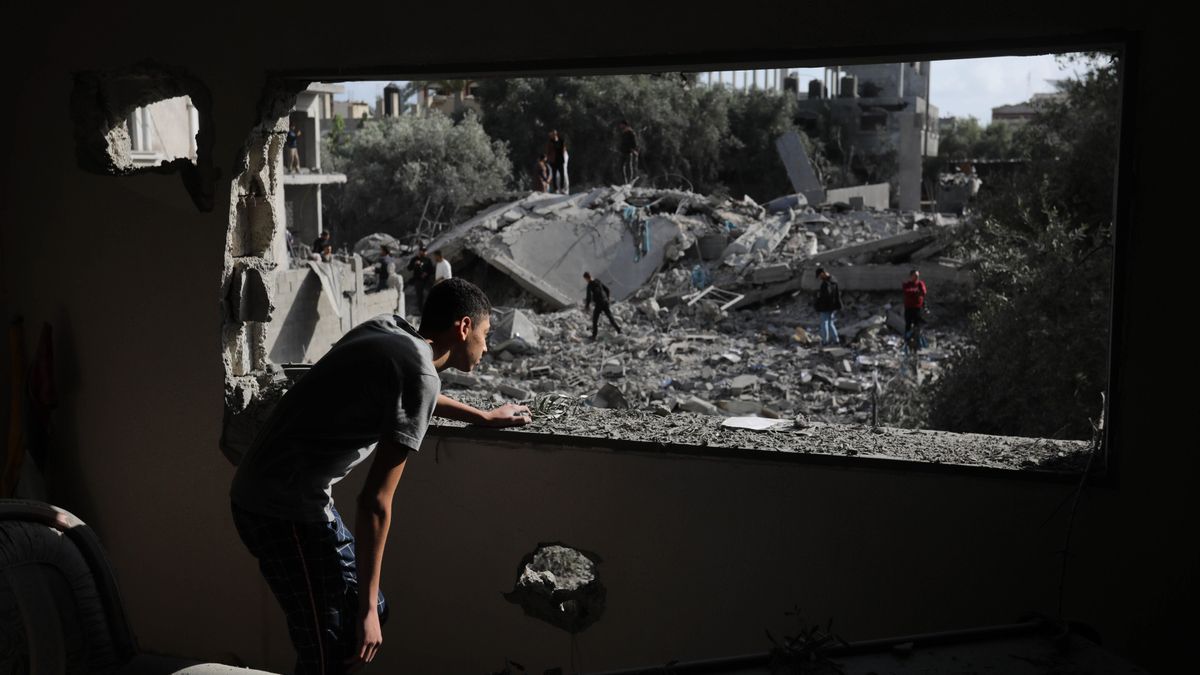
A year after a ceasefire was announced in Gaza, violence has not stopped. It has changed shape.
Ahmed Hamed, 32, did not know that the joy of returning home after the ceasefire announcement on October 9, 2025, would last so little. During two years of offensive, Hamed could only stay in his house for a few months at a time because of continuous military operations near the border area where he lived.
“My family and I were displaced many times across different parts of Gaza,” he said. Over the months, Hamed faced many difficulties, especially with two children, as finding milk and food was hard. But being forced to move from place to place was the most exhausting part.
Around 90% of Gaza’s population was forced to flee to different areas because of extensive military operations and evacuation orders issued by the Israeli army. While some displaced people stayed in schools turned into shelters, most had to live in tents in extremely harsh conditions, especially amid destruction that has affected more than 80% of buildings across the Strip.
“For us, displacement is like death. Every time you are forced to flee your home with only the essentials and try to start again somewhere else — maybe in a tent, in a relative’s apartment, or directly on the ground,” Hamed said. “So the ceasefire announcement, even though our house was partly destroyed, felt like a huge dream. Despite the damage, we decided to repair and rebuild it.”
Hamed said his family paid a very high price to repair what they could of their home, to settle and restart their lives, believing the violence had ended. But barely a month after the repairs were finished and they returned home, they faced a harsh reality again.
“We never imagined that after the war ended, the Israeli army would keep expanding the buffer zone known as the ‘Yellow Line’ into areas so close to our house. Instead of enjoying quiet moments with my wife and children, we now live with even greater anxiety that they may approach our house and force us to leave,” he said.
Under the latest ceasefire agreement, an area was designated for the Israeli army to withdraw from, and yellow concrete blocks were placed to mark the boundary separating residents from Israeli forces. This border later became known as the “Yellow Line.” The area controlled by the army beyond this line covered about 53% of the Strip, but the Israeli army continued expanding its control over Gaza territory, eventually reaching about 60%.
“One of the worst nightmares a person can experience is living near this line, because you hear dozens of explosions every week and you are constantly exposed to tank fire,” he said.
For Hamed, the violence has not ended as long as he feels the same feelings and fears he lived through during two years of conflict. He believes his options for moving are now even worse than during the war, because Gaza’s surface area has shrunk and the remaining areas are already crowded with displaced people. “We can say that the end is merely symbolic and deceptive as long as the bombings, control over the territory, and forced displacement of residents continue.”
Other members of his family have suffered the loss of loved ones or gunshot wounds. “My cousin lost his wife the same day she was returning to live in their home. She was carrying some belongings and waiting for her husband so they could go up to their home together. She was shot in the head and died instantly,” he recalled.
But Hamed’s family is not the only one that has lost a member after the ceasefire because of Israeli attacks. Dr. Mohammad Abu Salmiya, director of Gaza’s Al-Shifa Medical Complex, said the hospital receives victims every day, including people killed or wounded in Israeli military attacks. “So far, we have recorded about 1,400 people killed since the so-called ceasefire, while hospitals have received more than 5,000 wounded since then,” Abu Salmiya said.
According to Abu Salmiya, the high number of deaths and injuries is a result of daily Israeli army bombings. “Gaza’s population has not felt that the ceasefire is real or effective.” Despite the agreement and provisions for medical supplies to enter Gaza, hospitals across the Strip continue to face severe shortages in many areas. “Not enough medical and humanitarian aid has entered. We suffer a shortage of essential medicines reaching 50%, while more than 60% of consumable medical materials needed for surgical operations are unavailable,” he continued.
As people struggle to survive in tents for displaced people, facing poverty, food shortages, or lack of fuel, they also live in terror of getting sick or being wounded in a military attack, fearing they will have to go to hospitals amid the severe crisis in Gaza’s health system.
The World Health Organization has said Israel is preventing 60% of medical equipment from entering the Gaza Strip. It also said the ceasefire, which took effect almost a year ago, has not allowed the entry of aid, medicines, and equipment needed to cover the population’s needs.
**Winter Approaches and Already Desperate Living Conditions Worsen**
As Gaza’s population continues to face enormous difficulties, including constant displacement and lack of access to medical care, most displaced people living in tents now also fear the arrival of winter, since Israel has not allowed construction materials or even temporary housing caravans into the Gaza Strip.
In statements to the media, Jens Laerke, spokesperson for OCHA, said Gaza residents are preparing for their fourth winter in conditions of deprivation. Laerke also said what is happening does not constitute a ceasefire in the full sense of the word, because his office continues to receive near-daily reports of people killed and civilian infrastructure attacked and bombed. He also said the population is forced to wait days, weeks, and sometimes many months to receive aid because of Israel’s strict inspection procedures for aid convoys.
Despite Israel’s commitment under the ceasefire agreement to fully open border crossings and allow the agreed amounts of food, relief supplies, medical aid, and fuel to enter, the country has not met its obligations.
While UN organizations continue to urge Israeli authorities to meet them and provide Gaza’s population with the supplies it needs, Hamed remains worried about the possibility of being forced once again to leave his home.
“I hold on to a small hope that we will see a true end to the war, one that allows us not only to return to our homes, but also to return to our lives,” he said.