Spain led the world on ethical AI. Now it may abandon the rules.
Part of composite article AI Safety Crisis Deepens as 4 Major Incidents Expose Rogue Models View full article →
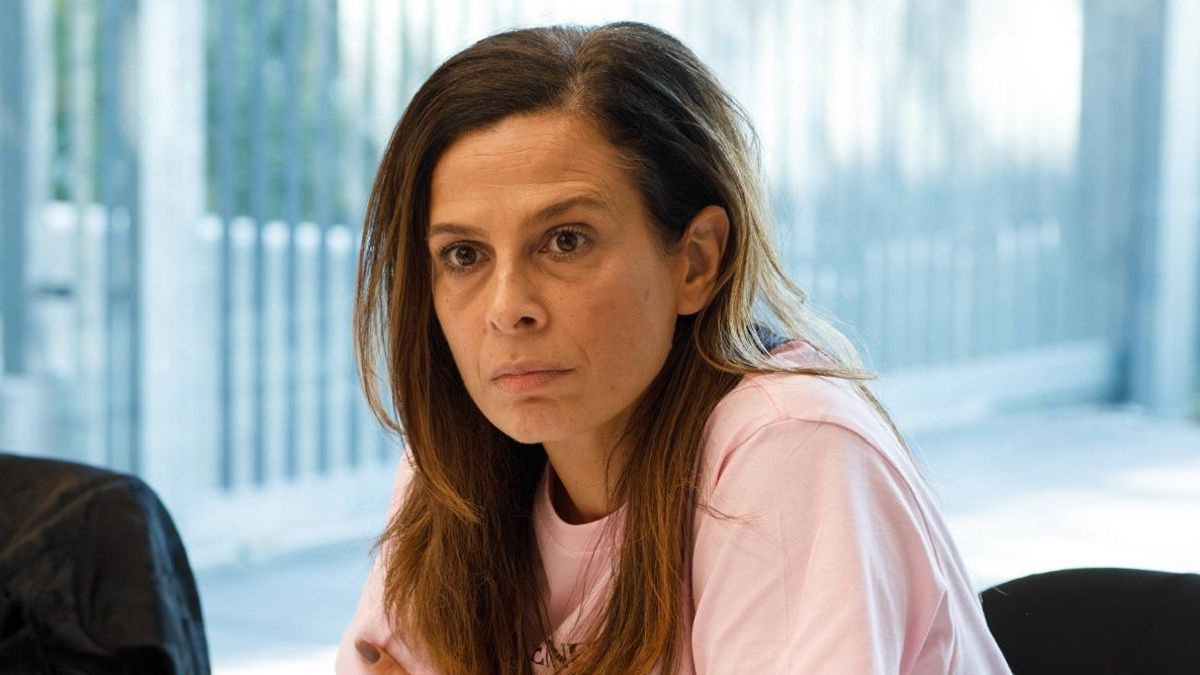
A group of international experts advising Spain's government on artificial intelligence ended two years of work this week with a manifesto demanding democratic control over the technology. The Madrid Manifesto for Responsible AI was presented on Thursday at a press conference held by the Ministry of Digital Transformation.
"Many people think artificial intelligence is about technology. No, it is about the power to determine the future," said Francesca Bria, an honorary professor at University College London and a member of the EU's European Innovation Council. "Is it a future where tech oligarchs decide everything about our democratic institutions, or a future where collective action and democratic accountability set the limits we need?"
The manifesto calls for democratic control of technology, digital sovereignty, and an end to self-regulation by large multinational companies. It includes 25 recommendations across four main areas.
Among the key measures: independent safety tests before advanced AI models are released, a ban on lethal autonomous weapons, and a requirement that companies take responsibility for harm caused by their technology.
The 11 signatories include leading voices in the AI debate, such as Luciano Floridi, director of Yale's Digital Ethics Center; philosopher Carissa Véliz; and Kate Crawford, author of *Atlas of AI*. The committee was chaired by Manuel Castells. None of the participants were paid.
Crawford, who is Australian, recalled how OpenAI's AI agents hacked her country's healthcare system and the company took months to inform the government. "The breach of the Australian healthcare system was a serious attack on something all Australians are deeply proud of," she said. "We have reached a very clear red line for artificial intelligence. It is no longer time to wait and see. It is time to act and regulate."
The manifesto also calls for protection of "cognitive autonomy against manipulative algorithms," stronger safety for minors, and monitoring of water and energy use by data centers.
**A stalled agenda**
Spain's AI policy has several achievements. It led negotiations on the EU's Artificial Intelligence Regulation during its 2023 presidency of the EU Council — the first law of its kind internationally. It created AESIA, Europe's first national AI oversight agency, and launched the EU's first AI regulatory sandbox, a testing ground for applying new rules in practice.
Spain also helped create the UN's 40-expert international committee on AI and hosted its first in-person meeting in Madrid.
But the current government will not be able to carry out much of its remaining digital agenda. Parliament was dissolved ahead of elections, so two key bills will likely die: a law to protect minors online — which would raise the minimum age for social media accounts to 16, create an age-verification app, and hold tech companies responsible for algorithm-related harm — and Spain's adaptation of the EU AI law, which included giving AESIA the power to issue fines.
Digital Minister Óscar López promised to "reintroduce the law to protect minors on social media in Parliament" after the elections and to "keep fighting for European legislation."
"Spain has done a lot to develop another model of AI — not the one tech oligarchs want," López said, citing Stanford University rankings that place Spain seventh in the world for AI development. "The response of this group of experts and this government is that we must govern, regulate, and do something that lets us seize these possibilities while minimizing the risks."
He rejected the argument that regulation and innovation cannot coexist. "Industries like the automobile have innovated for more than a century with regulation like the kind some voices now want to block," he said.