Spain alone blocks EU migrant expulsion plan
Part of composite article EU Expands Deportation Powers as Five Nations Plan Africa Center by 2027 View full article →
Spain was the only European Union country to vote against a new rule on Thursday that would make it easier to expel migrants living in the EU without legal permission. The rule also allows the opening of deportation centers in countries outside the EU.
The vote took place at a meeting of interior ministers in Luxembourg. Belgium abstained, and Ireland also abstained because it currently holds the rotating EU presidency and must stay neutral.
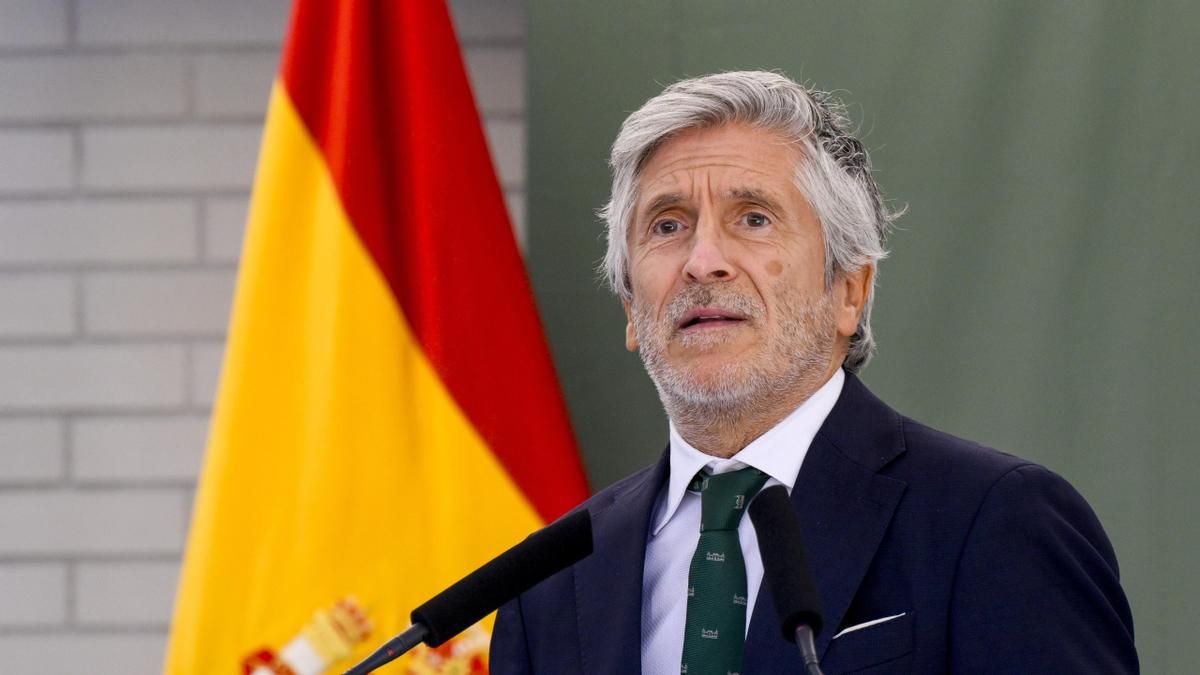
Spain's Interior Minister, Fernando Grande-Marlaska, said none of the migrants who arrived in Ceuta have entered any other EU country. "The impact has been zero" for other member states, he said.
In a written statement, Spain's Interior Ministry explained its opposition. It said the new rule fails to create "a truly European return system" and raises "serious legal, foreign relations and operational doubts" about the deportation centers. It also criticized the "lack of proportionality of certain measures."
The new rule gives legal support for deportation centers in third countries. Spain's government said it is "enormously concerned" about these centers. It warned they "cannot guarantee respect for the rights and obligations of the people who will be returned to a third country." It also warned of "a high risk of litigation" because the centers may violate the principle of non-refoulement — the rule that forbids sending a person back to a country where they face serious danger or torture. This principle is protected by the European Charter of Fundamental Rights and the European Convention on Human Rights.
The Interior Ministry also raised legal concerns about detention rules. Under the new rule, detention is no longer a last resort. The period of detention can be extended to 24 months, with renewals that could be unlimited. The rule also allows chain detentions across different member states with no time limit. Spain's government asked whether the EU will allow people in an irregular administrative situation to be detained longer than criminals convicted of serious crimes.
Irish Interior Minister Jim O'Callaghan said the rule supports the EU's migration and asylum pact and "will contribute to its effective implementation, while respecting fundamental rights."
The Council said in a statement that agreements to set up deportation centers in third countries can only be made if they respect international human rights law and the principles of international law, including non-refoulement.
Grande-Marlaska again asked other EU countries for more "operational, financial and political solidarity" to handle migration crises. He defended Spain's preventive policies in countries of origin. He said the Atlantic and western Mediterranean routes account for 17% of irregular arrivals to the EU, and Ceuta accounts for only 0.7% of the total.