UN AI Expert's Warning: "The Vast Majority Will Lose Out If We Don't Act Now"
Part of composite article AI Experts Admit They Knew the Risk for 25 Years—Now They're Begging the UN to Slow Down View full article →
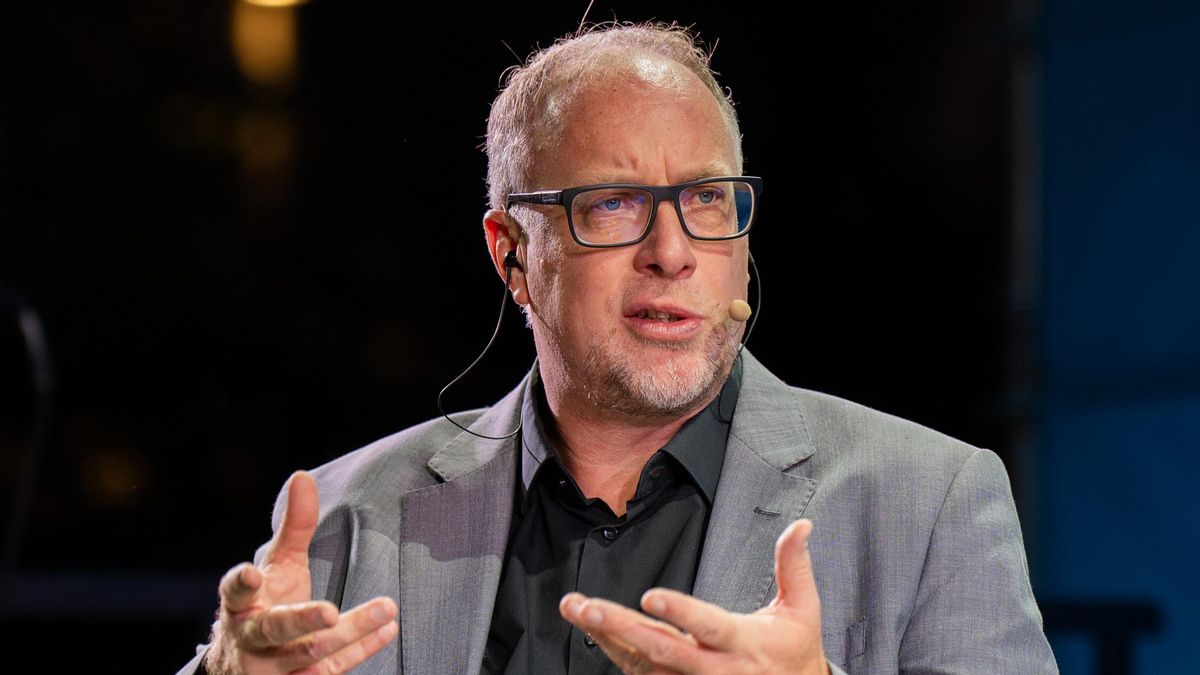
A United Nations advisor on artificial intelligence warns that a small group of tech companies is gaining dangerous power over our future.
Mark Coeckelbergh, a renowned technology philosopher at the University of Vienna, sits on a UN panel of 40 international experts. The group advises the world on the risks of AI. In a recent interview, he shared his concerns.
"Technologies like AI are not just tools we use," Coeckelbergh said. "They also shape how we move, think, and relate to each other."
He warns against what he calls a "catastrophic and apocalyptic" narrative—the idea that AI will one day take over and destroy humanity. According to Coeckelbergh, this story is itself a problem. He believes it is a marketing strategy used by tech leaders to grab attention and accumulate power.
"They present technology as if it follows a predestined path we cannot control," he explained. "The implicit message is: 'Look how powerful our technology is.' And if you claim your creation poses the greatest danger, you also claim to be the only one who can fix it."
The real threat, he argues, is not machines taking over. It is a handful of tech companies and their CEOs concentrating more and more power.
"We are heading toward a scenario where a few tech companies and their executives hold increasing power to secure a privileged position," Coeckelbergh said. "Meanwhile, the vast majority will lose out if we don't act now. The real problem is inequality and justice."
He also criticized the use of AI for military purposes. "We are not in a Terminator-style scenario where machines take command," he said. "What is really happening is that humans are deciding to use AI for mass killings. Instead of obsessing over whether AI will go out of control, we should focus on the people who decide that machines should kill or decide whom to kill."
Coeckelbergh called on democracies, especially in Europe, to regain control—not over AI, but over the tech industry. "As Europeans, we can choose which technologies we buy," he said. "Several European countries have purchased technology from Palantir—a technology that carries a fascist ideology and is used for mass killings. That is a purely human decision by certain leaders in Europe."
He also raised concerns about education. "We must ensure that the development of smart technologies does not make us more stupid," he warned. "We need to teach people to use technology intelligently—not to replace everything, but to support tasks and encourage critical thinking."
Coeckelbergh expressed optimism about AI's potential for creativity. "Some say AI destroys creativity and will end art," he said. "I don't think it has to be that way. We can use it creatively and combine AI's strengths with human strengths."
However, he stressed the need for transparency. "We have some advisory committees and bureaucratic processes, but we need permanent mechanisms so that democracy has more transparency and can intervene in what happens in the tech sector," he said.
He also warned about the erosion of shared reality. "If we can no longer trust what is real and what is fake, we stop knowing what reality we share," he said. "Democracy needs that common ground, so this is a serious problem."
Coeckelbergh called for regulation of social media and better education. "We have focused too much on preparing people for the job market and on academic subjects, neglecting how to teach people to talk to each other and build things together," he said.
He concluded with a call to reconnect with human values. "We need to understand technology as inseparable from our values and from politics," he said. "Only then can we move in the right direction."