Russia’s Hybrid War: The Battle for Europe’s Mind
Part of composite article Kremlin Threatens Starlink Strikes as Russian Jets Force NATO Scrambles Across Europe View full article →
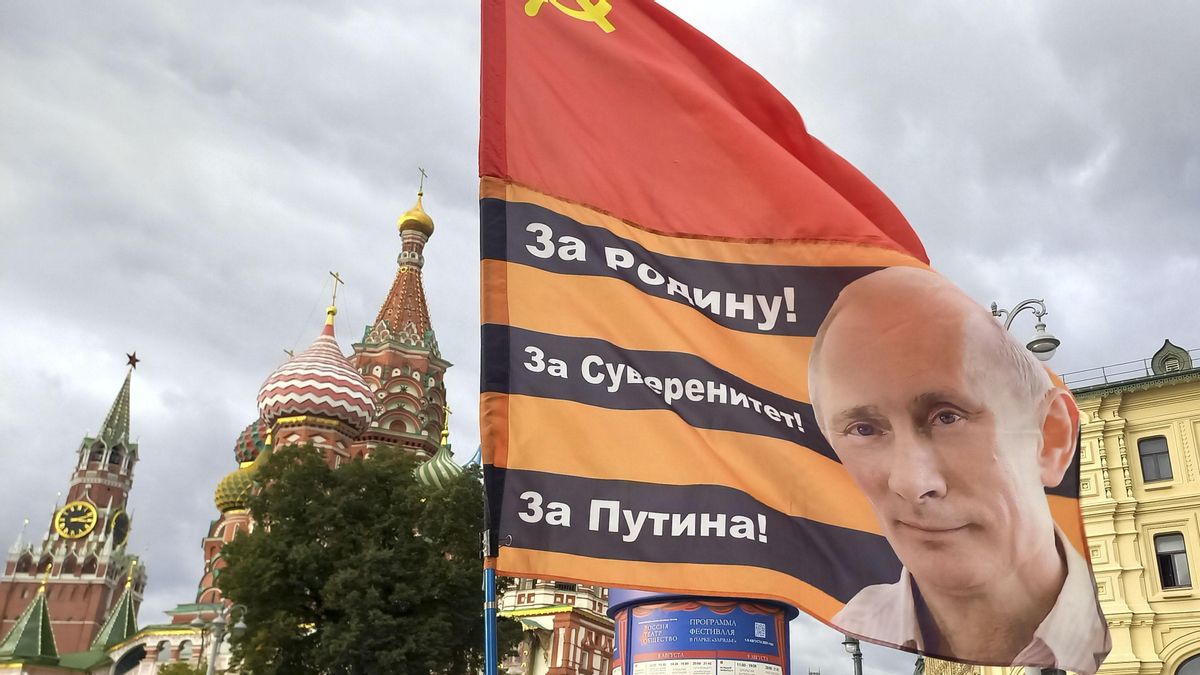
Russia is playing a psychological game with Europe. For months, Moscow has pressured NATO countries through hybrid warfare. This includes drone and fighter jet incursions near European borders, cyberattacks, and disinformation campaigns. On Friday, Swedish and Finnish jets scrambled after Russian military planes flew near the Gulf of Finland. On Sunday, Spanish jets in Romania responded to a drone approaching the border with Ukraine. Such alerts are now constant.
Last week, European intelligence services increased warnings about Russian actions against the continent. There is a fight to control the narrative of fear. Both the Kremlin and European countries are playing their cards.
Russian President Vladimir Putin denies responsibility for sabotage acts that European authorities blame on Moscow. He dismisses Western intelligence reports warning that Russia is preparing to attack NATO. Instead, Moscow says it feels threatened by Europe’s growing military buildup. Russian officials believe NATO is already in conflict with Russia. They see European countries as legitimate targets for hybrid war.
**A Disputed Intelligence Report**
On Thursday, the newspaper El Mundo reported that the CIA had warned of a Russian drone attack on Spain, France, or Italy. The information actually came from Lithuanian intelligence, based on an alleged U.S. intelligence report that no one seems to have seen. French President Emmanuel Macron said on television: "We can deny that information. The CIA has not informed French services of such an attack." Italian Defense Minister Guido Crosetto wrote on X that the alarm "serves no one and there is no confirmation." A Spanish government source told elDiario.es: "There is no record of that information; it has not passed through us."
However, the lack of confirmation does not mean the threat is not taken seriously. Macron admitted there is a "situation of increasing tension" that is worrying for Ukraine and for Europeans, as hostile acts have multiplied across Europe in recent weeks.
**Russia’s Strategy**
"Moscow wants to subdue Ukraine, at minimum, and recover its sphere of influence," Russian researcher Ígor Gretski told elDiario.es. Gretski works at the International Center for Defense and Security in Estonia. "To achieve this, it acts very aggressively and uses a wide range of tools, including threats of direct armed conflict and the use of nuclear weapons."
On Thursday, Danish intelligence (DDIS) published an analysis warning of a growing risk of a limited Russian military attack against one or more NATO countries bordering Russia. "There is a low, but growing, risk that Russia will launch a limited military attack against one or more NATO countries that border Russia," said DDIS director Thomas Ahrenkiel.
**A Psychological Game**
Why would intelligence services hold a press conference? A Spanish government source with deep knowledge of European intelligence explained: "We must understand that Russia has a strategy to test the commitment of the Atlantic alliance. They want to weaken the cohesion of NATO's 32 allies. It must be interpreted as a psychological game."
Russia's invasion of Ukraine has changed everything. Intelligence services are now forced to communicate more openly to counter disinformation wars.
**Russia’s View**
From Moscow's perspective, the situation looks different. "Russia is neither making plans nor has any intention of attacking NATO member states," Vasili Klimov told elDiario.es. Klimov is a senior researcher at the Center for International Security at IMEMO, a prestigious Russian institution for global policy.
Russian academics frame the tension as a "security dilemma." This concept describes a situation where one state's security measures make another state feel threatened, leading it to arm itself. Russia argues that NATO's approach to its borders partly justifies the invasion of Ukraine. European partners say Russian aggression was deliberate and that the Kremlin took the first step.
Putin believes his country is genuinely threatened by Europe's rearmament and the possible deployment of nuclear weapons in Baltic countries. He says leaders of these states use "anti-Russian hysteria" and fear of confrontation to unite society against an external enemy and boost the defense industry.
**No Capacity for a New Front**
Most experts agree that Putin cannot open a new front while stuck in Ukraine. "Russia does not have the resources to simultaneously wage a large-scale conventional war against Ukraine and against NATO," Gretski said. According to him, all Kremlin threats aim to make allies stop sending weapons to Ukrainian President Volodymyr Zelenski. That is why Russia "sows fear among European populations about the prospect of armed confrontation with Russia."
The European Union's response has been clear. EU diplomatic representative Kaja Kallas sent a message after the 27 member states agreed on conditions to unlock 6.6 billion euros from the European Peace Facility for Ukraine. "Moscow's hybrid attacks aim to intimidate Europe into reducing its support for Ukraine. Europe is doing just the opposite," Kallas said.
**Psychological Impact**
The perception of danger intensified in Europe after a Russian drone attack on Leipzig airport in Germany. NATO and the European Commission saw it as a new escalation of Russian aggression against European security. A senior European Commission official specializing in defense admitted: "Member states are taking the threat very seriously. Many are holding meetings at the highest level."
This defense expert noted that "the psychological impact of drone attacks must be considered. In fact, what Russians seek most is precisely that psychological impact. There is much work to do in preparation and response to this manipulation of information and the information space."
There is a battle to control the war narrative. Finnish President Alexander Stubb asked Europeans not to fall into "very exaggerated reactions," since Moscow's goal is to spread panic so the EU reduces support for Ukraine. "We must be very careful and understand that Russia is trying to destabilize and frighten Europe. Every time we overreact to a hybrid attack, Russia has actually won the battle in that area," Stubb said.
The Kremlin does not acknowledge sabotage or drone shipments. It often complains that EU authorities point fingers without evidence and overreact to normal incidents in a war context. While Russia does not claim responsibility, it suggests such acts could be justified given NATO's involvement in Ukraine. Russia also claims to be a victim of Western hybrid war, accusing European countries of spreading anti-Russian propaganda, funding groups trying to overthrow the regime, and imposing draconian sanctions.
**Fear as the Root Cause**
"The main cause of the current crisis, paradoxically, is the fear that Western elites have of Russia," Klimov said. "In the West, the historical fear of uncontrolled Russian military expansion in Europe persists, but that is an invention of intelligence services and leaders of Eastern European countries," he added.
Putin has raised his tone against Europe as Ukrainian long-range attacks have caused more damage inside Russia. He believes these attacks would be impossible without NATO's "direct participation." Moscow sees Kyiv as the executor of European capitals' will. "The goal of the West's current strategy is not to contain Russia, as during the Cold War, but to crush it," wrote Dmitri Trenin, president of the Russian International Affairs Council, an influential foreign policy think tank.
Trenin admits that destabilizing Europe could have positive consequences for Russia: friction among its members, exhausted economies after years of supporting Ukraine, and the rise of far-right and far-left groups more willing to negotiate with the Kremlin.
Analyst John Sipher of the Atlantic Council shares this view. In a report, he noted that Putin's goal "is to sow division" among European and U.S. allies and "promote Western far-right and radical groups."
"For Putin, the current turmoil represents an opportunity that may not last. Russia remains weaker than the West as a whole and has repeatedly suffered the consequences of its own aggression. Therefore, its best strategy is not to defeat the West, but to encourage the West to defeat itself. From Moscow's perspective, if your adversary is stumbling toward the precipice, this is precisely the moment to give it a push," Sipher concluded.
Trenin considers that the only "minimally acceptable basis" for future relations with Brussels and for restoring deterrence on the continent requires winning the war in Ukraine. Even then, he concludes, the clash between Russia and NATO will persist "for a long time," as we head toward a period "very different" from "the relative stability" of the second half of the 20th century.