China's Backdoor into Europe? Spain Pushes Flexible Rules to Keep Chinese Investment Flowing
Part of composite article US and China Clash Over Tariffs, AI, and Rare Earths as Summit Ends With No EV Deal View full article →
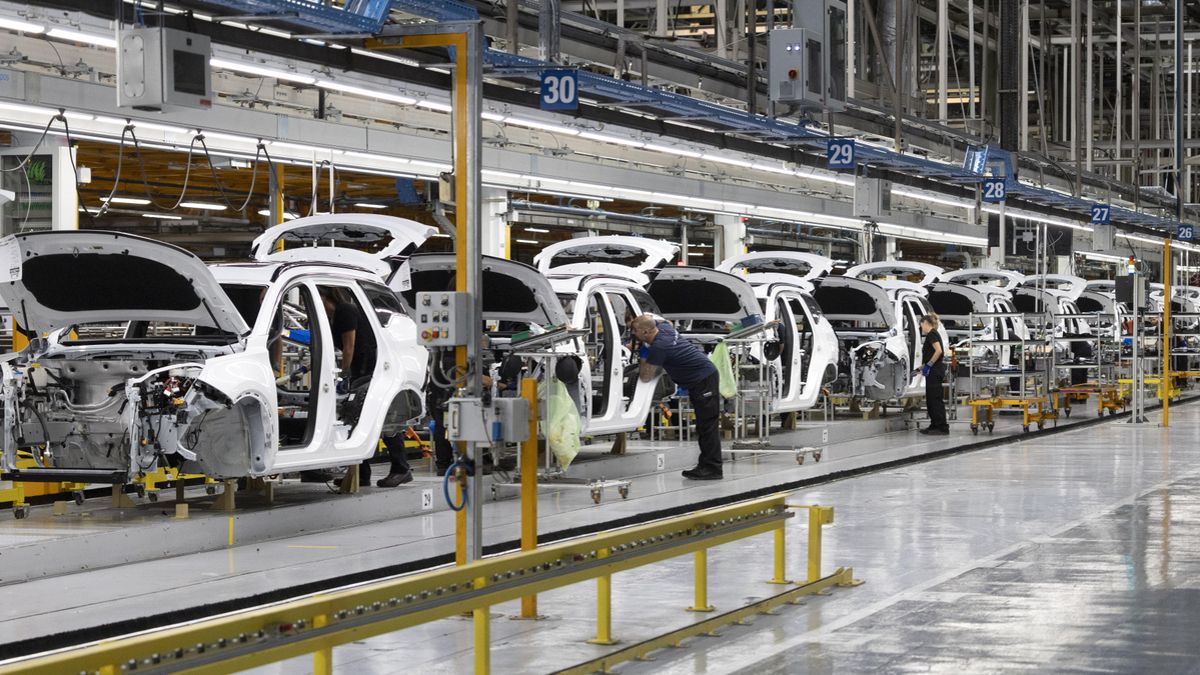
Spain has proposed a more flexible version of Europe's "made in Europe" rules. The goal: keep Chinese investment coming without cutting China off from EU subsidies and public contracts.
The proposal was presented Thursday in Brussels. EU industry ministers met there to decide how much of a product must be made in Europe to qualify for public procurement and EU aid programs.
The debate matters greatly for Spain. The country expects major Chinese investments in key sectors such as cars and batteries.
"This is a battle over the future of EU industry," said Jordi Hereu, Spain's Minister of Industry and Tourism. "We support strengthening European industrial production. But we also need a pragmatic view: many value chains depend on other regions of the world."
**A Three-Layer System**
Spain does not reject the European Commission's proposed thresholds for what counts as European. These cover steel, cement, aluminum, cars, and clean technologies.
But Spain wants a softer system. Under its plan, a country would not automatically lose access to subsidies and public contracts just because it fails to meet those thresholds.
The Spanish model works in three layers.
The first layer is the 27 EU member states — genuinely European production.
The second layer adds the European Economic Area (Norway, Iceland, and Liechtenstein). Other like-minded countries with closely integrated value chains could join. The United Kingdom is one example.
The third layer is the key difference. It adds about 80 more countries that have trade agreements, customs unions, or specific public procurement deals with the EU.
This third layer would include China — the very country the rules are meant to address.
**Why Include China?**
Spain argues that when Europe depends on China for a critical component, China should remain eligible while Europe develops alternatives.
The aim is to give China legal certainty. That way, Chinese companies keep investing in Spain without losing access to public aid or government contracts.
Here is a simple example. A city wants to renew its vehicle fleet. Under the Commission's plan, only cars with 70% European-made components (excluding the battery) could qualify. Under Spain's plan, brands would need 40% EU-made content. The other 30% could come from an expanded European industrial chain — for instance, Chinese parts assembled in Spanish factories.
"It protects European production capacity without demanding industrial self-sufficiency," Hereu said.
**France Wants Stricter Rules**
Not everyone agrees. France wants a tougher European preference and less room for third countries. Germany is more open to Spain's approach.
Spanish officials warn that strict rules could break supply chains. If a product depends on a component Europe cannot yet make — or cannot make in sufficient quantity — excluding that supplier could backfire.
**A Dynamic, Not Fixed, System**
Spain does not propose a permanent list of three layers. Instead, it wants a dynamic system based on country, sector, and component.
A country could move up or down a layer depending on its integration, reciprocity, and reliability toward Europe. The European Commission would manage a centralized system so public authorities know which brands and products qualify for aid or public tenders.
**Three "Footprints" for Foreign Firms**
Under Spain's plan, foreign companies would also need to leave three "footprints" in Europe.
Industrial: using local suppliers.
Technological: sharing technology.
Employment: hiring and training local workers.
Companies would also have to meet European social, labor, environmental, and governance standards.