Germany's Far Right Wins Big as Democracy Stumbles
Part of composite article Merz’s CDU Crashes to 4.9% as AfD Surges to 44% in Germany’s East View full article →
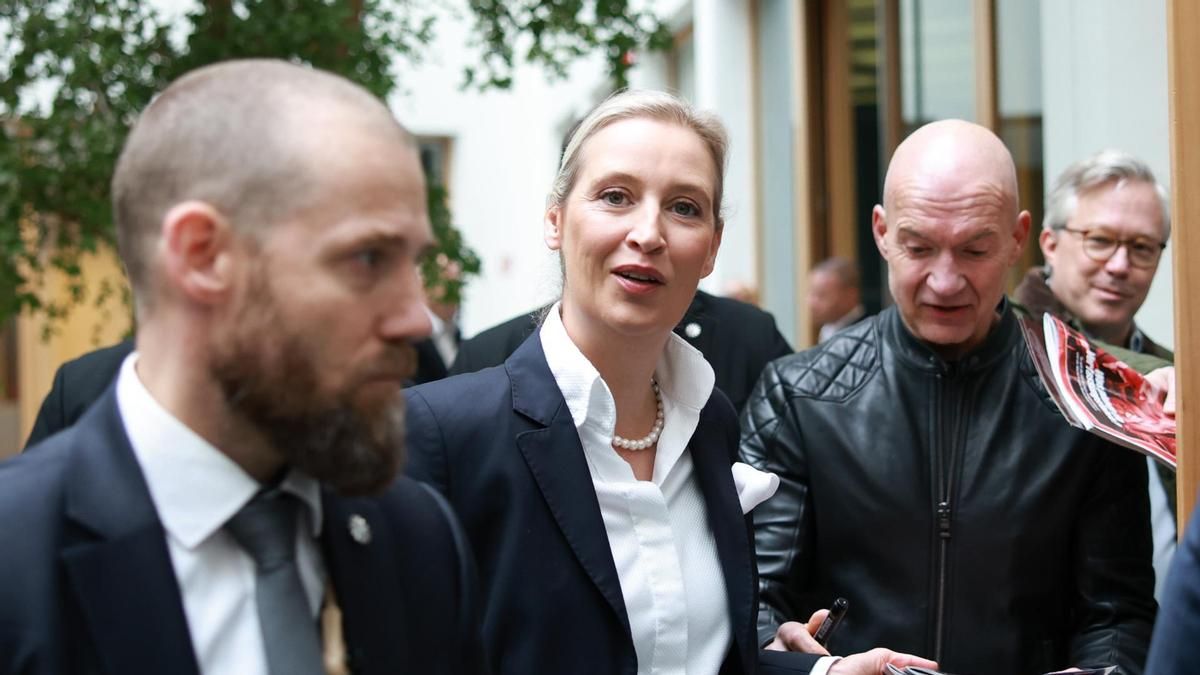
The far right is rising in Germany, and the center is collapsing.
In recent elections in Mecklenburg-Western Pomerania, the Christian Democratic Union (CDU) lost its seat in a regional parliament for the first time since 1949. Alternative for Germany (AfD) won 38.2% of the vote there and nearly 44% in Saxony-Anhalt.
Friedrich Merz, a CDU leader, blamed the loss on a growing "fascination with authoritarianism" in society. But that explanation is too simple. It lumps together the far-right AfD with the left-wing Die Linke, whose candidate won the most votes in Berlin's local elections with a campaign focused on the housing crisis.
The real problem is deeper. Mainstream parties — conservatives, social democrats, and liberals — have spent years passing the blame on governing without solving the concrete problems citizens face. People are tired of hearing there is "no alternative" to unchecked capitalism that turns everything into a product for profit.
The far right claims to care about everyday problems, including housing. But its solution is what sociologist Richard Seymour calls "disaster nationalism." This is a fixation on fantasies of collapse and, above all, the channeling of individual resentment and humiliation — economic and social — into a politics of cruelty. The target is usually the most vulnerable: immigrants.
This is what is happening in Ceuta, Spain. A far-right party called Vox talks about an "invasion." Recently, a local lawmaker, an activist, and a human rights lawyer were attacked. Words of hate lead to real violence.
The media's obsession with Ceuta — a real problem, yes — helps the far right and conservatives who try to outdo them with alarmism. Worse, it distracts from other urgent issues.
Take in-work poverty. In 2025, nearly 16% of people with jobs were at risk of social exclusion. Spain has a record 22.5 million people paying into Social Security. The gap between strong economic numbers and poor household finances explains the anger that fuels the far right in Spain and worldwide.
Then there is housing. Last week, Spain's Socialist Party (PSOE) abstained from a law that would ban companies and vulture funds from buying homes and buildings for speculation. The Socialists said it created legal uncertainty and preferred taxing non-resident foreign buyers and penalizing empty homes — things they have not done.
But Spain's biggest housing obstacle is legal: for decades, the law has protected commercial traffic and real estate profits. Investors always win, so they invest heavily. In the second quarter of this year, home foreclosures jumped 27.5% compared to last year. More than half were signed during the housing bubble between 2005 and 2008.
Twenty years paying a mortgage, only to lose both the money and the home. That, too, is a catastrophe.