Morocco Votes: Football Boss Could Become Prime Minister
Part of composite article Morocco Votes as 16 Million Decide Whether Football Boss Fouzi Lekjaa Becomes Prime Minister View full article →
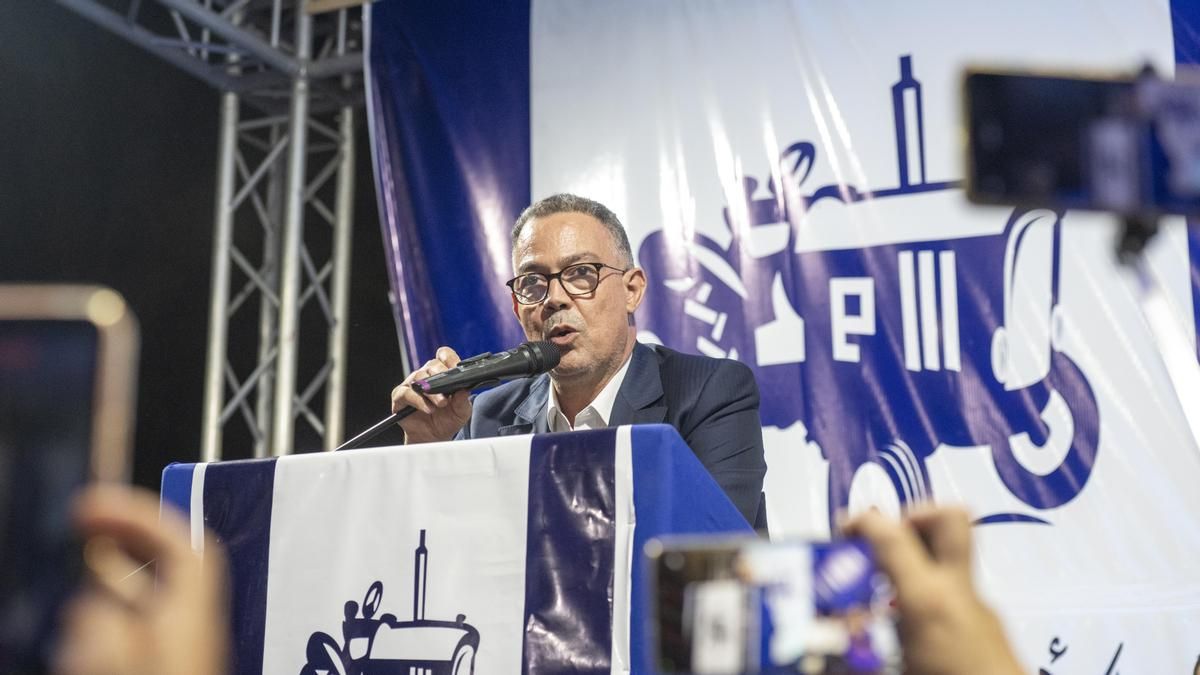
Morocco holds parliamentary elections on Wednesday. The vote is marked by public disconnection and comes just two months after a mass border crossing into the Spanish enclave of Ceuta.
Voters will choose all 395 seats in the House of Representatives. The result will decide which party leads the next government.
**A system built around the King**
Morocco looks like a constitutional monarchy. In practice, power is heavily tilted toward King Mohamed VI. The King leads the Council of Ministers and chooses who holds the key posts: Foreign Affairs, Interior, Military Affairs and Religious Affairs. Experts often call this a hybrid system. The government mainly manages priorities set by the King.
**Few young voters**
About 15.8 million citizens are registered to vote. The voting-age population is around 28 million. Registration is voluntary, and the gap between these numbers shows a major problem: voter disconnection.
In the 2021 elections, about half of registered voters did not go to the polls. The disconnection is strongest among young people. Only 4% of registered voters are aged 18 to 24. People over 60 make up more than 29%.
Young Moroccans have lived through a year of protests. They demand jobs, better public services like healthcare and education, and less social inequality. Whether they show up to vote is one of the big unknowns of these elections.
**Ceuta crisis still looms**
The link between the elections and Ceuta is youth frustration. On July 30 and 31, more than 70,000 people crossed the border into Ceuta, according to official estimates. The movement overwhelmed the enclave and raised tensions between Spain and Morocco.
Young people who crossed told reporters the same things: "We have no work in our country" and "salaries are very low." These images raised an uncomfortable question during the campaign: why are so many willing to leave?
The mass crossing briefly revived debate over Ceuta and Melilla. Several politicians, including Istiqlal leader Nizar Baraka and Justice Minister Abdelatif Uahbi, repeated Morocco's claim to both cities. But as the campaign went on, social and economic issues took over.
Ceuta still shapes election day itself. Morocco has heavily reinforced the border at Castillejos. About 3,000 officers, including police, gendarmes and military units, are deployed. The move follows social media calls for another crossing on election day.
**Economy grows, but not for everyone**
Social discontent stands alongside strong economic numbers. The High Commission for Planning estimated the economy grew about 4.8% year-on-year in the second quarter of 2026. Agriculture, services and domestic demand drove the growth. The IMF projects 4.4% growth for the full year.
Morocco is also investing heavily in roads, railways, airports, stadiums and urban projects linked to the 2030 men's football World Cup.
**Three parties, one divided Parliament**
Three parties have governed together since 2021: the National Rally of Independents (RNI), the Party of Authenticity and Modernity (PAM), and Istiqlal.
The RNI won the last elections with about 29% of the vote and put Aziz Akhannouch in charge of the government. The PAM came second with 14%, and Istiqlal won about 10%. Akhannouch has said he will not seek another term, opening a race to replace him.
Morocco's electoral system tends to split Parliament, making coalitions necessary. The Constitution says the King must name the head of government from the party that finishes first. But the chosen person does not have to have run for a parliamentary seat.
**Fouzi Lekjaa: the man to watch**
Fouzi Lekjaa has become one of the biggest figures of the campaign. Moroccan media and political experts place him among the possible candidates for prime minister if the PAM wins. Morocco does not allow election polling, so no public surveys show a clear favorite.
Lekjaa is currently minister delegate for the budget. Since 2014, he has also led the Royal Moroccan Football Federation. He joined the PAM just months before the elections and quickly became a central figure at campaign events.
His appeal comes from three things: a technocratic profile, close ties to state institutions, and high public visibility through football. Under his leadership, Morocco's national team reached the semifinals of the 2022 Qatar World Cup and the quarterfinals in 2026. King Mohamed VI also put him in charge of the committee for the 2030 World Cup, which will overlap with the next government's term.
Lekjaa gives the PAM a recognizable face as the party aims to finish first for the first time and push out the RNI. Lekjaa himself has avoided publicly confirming that he wants the top job.