Spain's Car Factories Are Hiring Even as Production Falls
Part of composite article Chinese EVs Are Eating Europe Alive: Sales Up 62.7% as BYD Beats Tesla View full article →
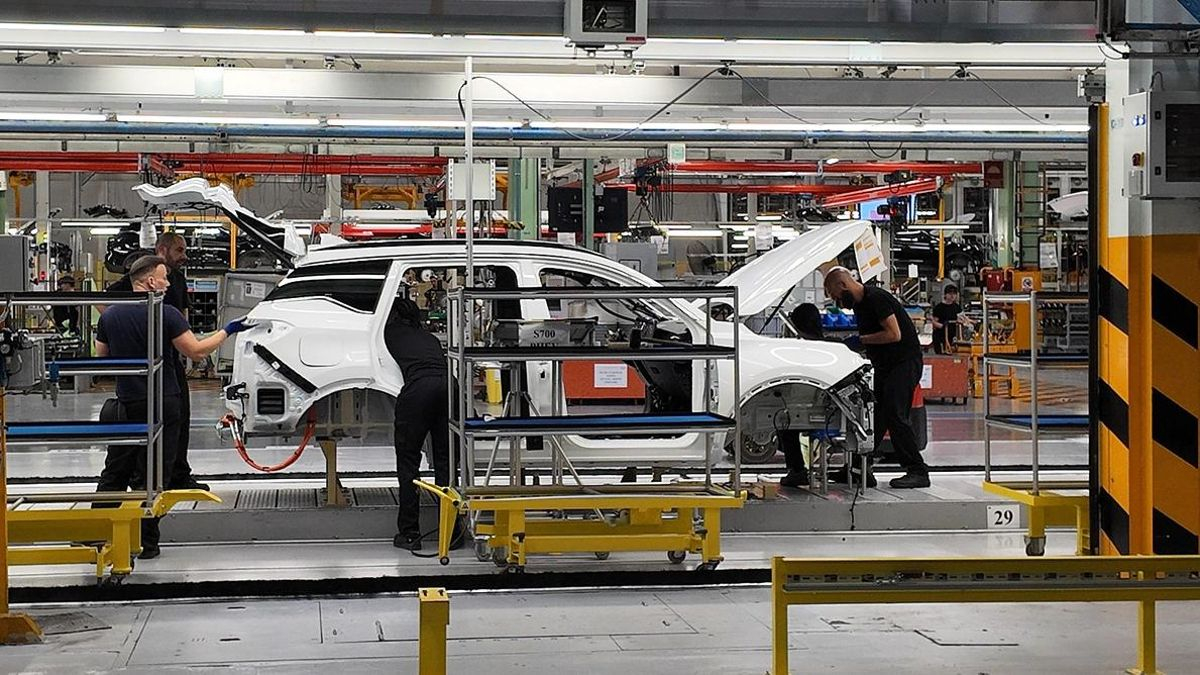
Spain's car industry is adding jobs even as it builds fewer vehicles. The number of workers registered with the Social Security system in vehicle manufacturing rose nearly 1% this year, reaching 145,899 in August 2026. That is about 1,200 more than in January and some 600 above the 2025 average, according to Ministry of Labour data.
The job growth comes despite weaker output. In June, vehicle production fell 4.9% to 205,142 units. So far this year, factories have made 1,199,542 vehicles, down 1.7% from the same period last year. Passenger car output dropped 4.3% in June and 2.4% over the year. Commercial and industrial vehicles fell 7.2% in the month, though they are up 0.8% for the year.
The reason for the split is electrification. Several plants are preparing to build new electric models, which is pushing manufacturers to add workers and expand shifts. This is happening at Seat in Martorell, Volkswagen in Pamplona, Mercedes in Vitoria, Stellantis in Zaragoza and Vigo, Renault in Palencia and Valladolid, and Ebro in Barcelona.
Anfac, the industry association, says the technical overhaul of assembly lines is a demanding process that explains the temporary adjustments. Its director general, José López-Tafall, calls this work "the best guarantee of the future." He also urges competitive energy costs, clear regulation, and demand measures such as the Auto+ plan to speed up fleet renewal.
Unions are watching the transition closely. Both CCOO and UGT have warned about risks to jobs. Jordi Carmona of UGT FICA said the union supports electrification, "but not just any electrification. We want a fair, orderly transition with jobs. We cannot allow technological change to mean lost jobs or industrial relocation."
CCOO's industry federation told Anfac recently that decarbonization is "non-negotiable," but said any easing of European emissions targets must come with "social conditions" that protect employment, investment, and industrial activity.
The rise in vehicle-factory employment matches other labour data, such as the EPA survey. It stands out against heavy job cuts in other European countries, especially Germany, where the car industry is undergoing deep restructuring.
The auto sector's gains fit a broader positive trend in Spain's labour market. In August, Social Security added 679,023 members for the year (+3.13%), reaching 22,345,226 workers in total. Adjusted for seasonal factors, employment has now risen for 67 straight months, helped by the integration of 337,917 foreign workers after regularization processes and by a record-low temporary contract rate of 13.4%.