Germany Blames Russia for Leipzig Drone Attack — But Voters Are Split
Part of composite article Germany’s Far-Right AfD Poised for Historic State Win — First Since WWII View full article →
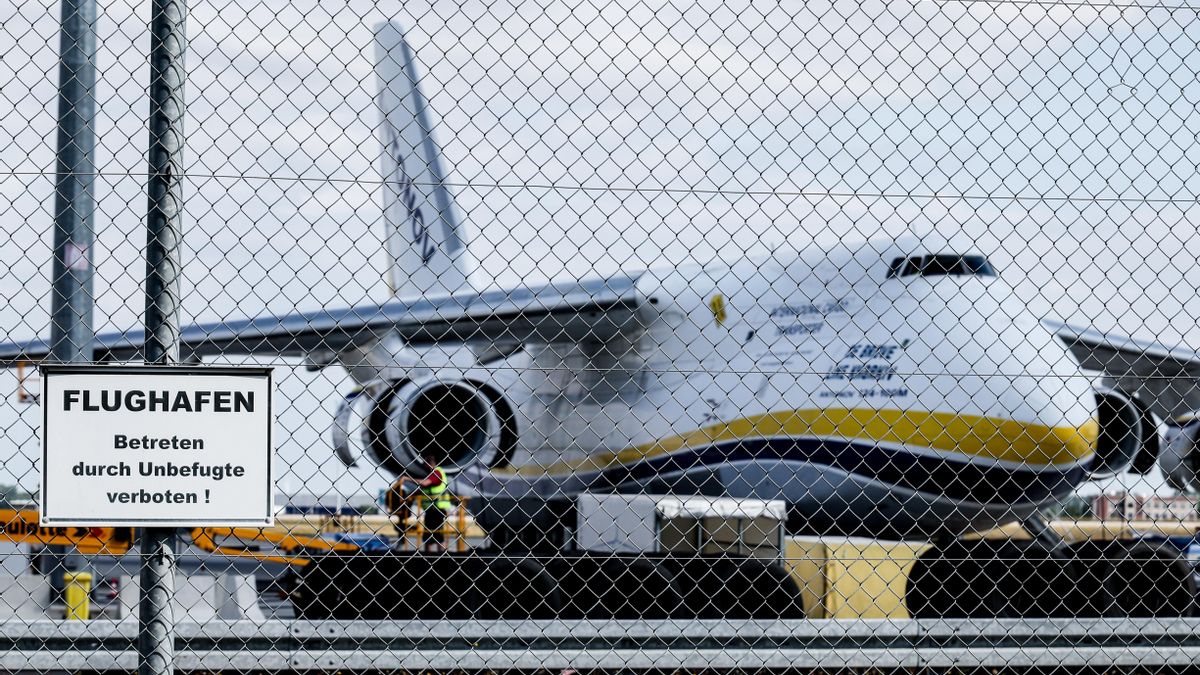
Berlin has accused Moscow of orchestrating a drone attack on Leipzig airport in early August, calling it an act of hybrid warfare. The accusation comes just days before key regional elections in the eastern state of Saxony-Anhalt, where the far-right party Alternative for Germany (AfD) is leading in the polls.
The German government’s tougher stance on Russia has deepened political divisions. The AfD has long called for closer ties with the Kremlin and for the return of cheap Russian gas, despite Moscow’s ongoing offensive in Ukraine. The party now leads national surveys and is close to forming its first state government since World War II, with around 42% support in Saxony-Anhalt.
The announcement has put the country on edge. On Wednesday, police were investigating a second suspected act of sabotage, this time targeting the electrical grid. An explosion at Augsburg train station was also initially linked to sabotage, reflecting widespread anxiety over potential attacks on critical infrastructure.
Authorities warn against jumping to conclusions, but they are investigating possible links between the Leipzig incident and recent cases in Serbia and Poland. Moscow denies any involvement and accuses Berlin of distracting from domestic issues, including the rise of the far right.
The uncertainty is fueling the AfD’s narrative. Its foreign policy spokesperson, Markus Frohnmaier, accused the government of classifying sabotage acts “according to political convenience.” He pointed to the 2022 Nord Stream pipeline attack, for which two Ukrainian citizens are suspects, and argued that Berlin applies a double standard.
The AfD wants negotiations with Moscow, an end to sanctions, and a sharp cut in support for Ukraine. It is also demanding that the government release evidence of Russia’s involvement in Leipzig, saying current proof is insufficient.
The government, led by Friedrich Merz, waited several days before publishing its conclusions. Foreign Minister Johann Wadephul said: “We are not at war, but we are a daily target of hybrid warfare.” It is the most direct admission yet from Merz’s administration.
The far-left party Die Linke also criticized the government’s response. Its senior lawmaker, Dietmar Bartsch, said closing the Russian consulate in Bonn and the Russian cultural center in Berlin increases the risk of a “large-scale war” rather than improving security.
Within Merz’s own party, some are pushing for a harder line. CDU foreign policy expert Roderich Kiesewetter said Germany must abandon its “romantic idea of Russia as a great cultural nation.” He criticized Merz for recently using that phrase, adding: “Great cultural nations do not subject neighboring nations to war, violence, and the abduction of children.”
Green Party foreign policy spokesperson Konstantin von Notz praised the government’s “significantly clearer language” toward Moscow but called it “very late.”
The election in Saxony-Anhalt will show whether voters fear further deterioration in relations with Russia — or whether they see the government’s response as too little, too late.