Icequakes in Doomsday Glacier? New Tech Spots Them Early.
Part of composite article Title: Methane Leaks, Icequakes, and a $40% Fix: The Climate Wins You Missed View full article →
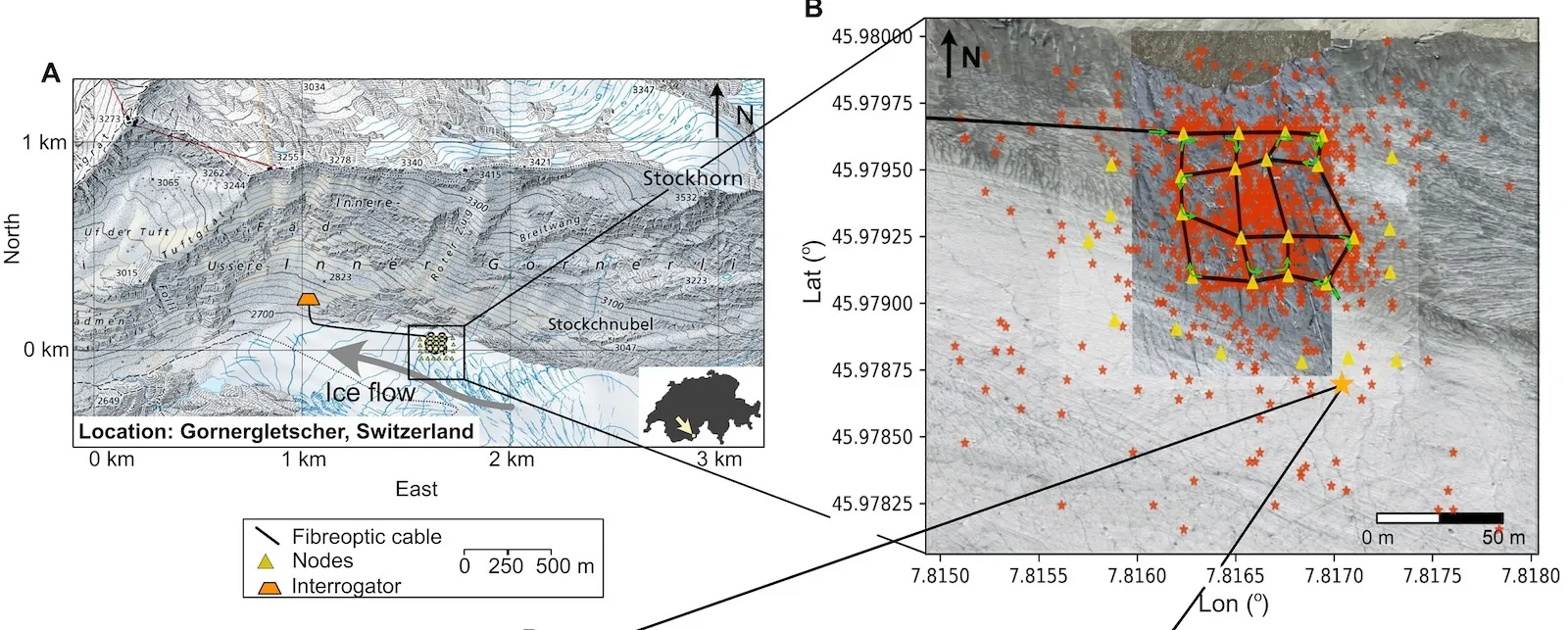
Scientists are using fiber optic cables to detect "icequakes" inside endangered glaciers. These tiny tremors could reveal hidden fractures before they lead to major ice loss.
The method works by sending laser pulses through standard telecom cables laid on or near the ice. When an icequake shakes the ground, it stretches the cable slightly. That stretch changes the laser signal, letting researchers pinpoint the exact location and strength of the event.
Current monitoring relies on surface sensors, which miss deeper activity. Fiber optics, by contrast, act like thousands of sensors along a single line. This gives a far clearer picture of what is happening inside the glacier.
The technology could help create an early-warning system for changes in ice stability. If scientists can detect when a glacier starts to crack or shift, they may be able to predict which ice shelves are at risk of breaking apart.
That matters because glaciers like Thwaites in Antarctica hold back massive inland ice. If they collapse, sea levels could rise by several feet over the coming decades.
The new approach is still being tested, but early results are promising. It offers a low-cost, high-detail way to listen to the ice from within—before it gives way.