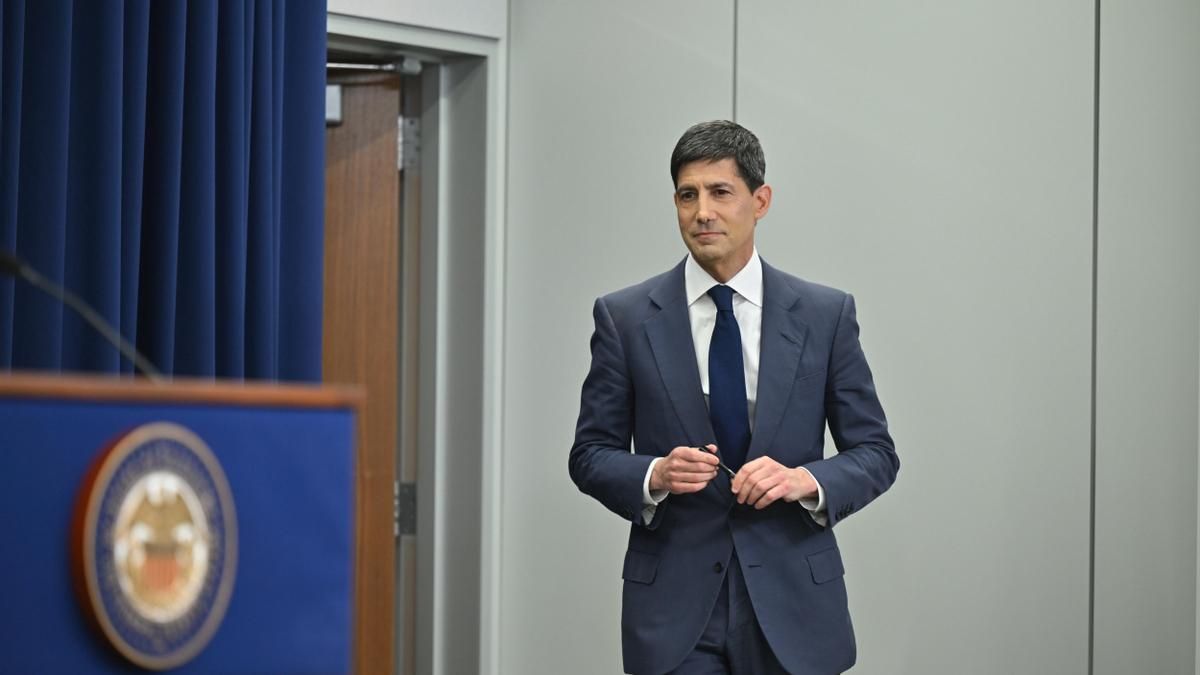
Fed Chief: Inflation Fight 'Not Over,' Signals Less Market Guidance
Kevin Warsh, president of the US Federal Reserve (Fed), said Friday that while recent summer inflation data came in better than expected, the overall trend is still unclear and the central bank has "work to do."
Speaking at his first major policy conference in Jackson Hole, Wyoming, Warsh stressed the need for the Fed to be more discreet in its communications. He argued that sharing too much about future policy decisions can confuse markets, businesses, and households.
"The data on PCE and CPI inflation over the summer are better than expected, but they do not clarify that underlying trends have improved significantly," Warsh said. He added that the Fed will have "work to do" if inflation does not soon reach its 2% target.
Warsh took direct responsibility for the central bank's role in recent price rises, stating that the "responsibility for 65 months of sustained and elevated inflation falls directly on the central bank."
He insisted that the Fed must be certain that core inflation is moving clearly and quickly toward its target. "Otherwise, we have work to do. That is our job, our mandate, and our responsibility," he concluded.
Warsh also pointed to rising commodity prices as a potential risk. "We must evaluate whether the trends indicate upside risks to inflation," he said.
On communication, Warsh was explicit about his preference for caution. "For a long time, I have been uncomfortable with advance announcements about future monetary policy decisions. I prefer another path and will defend it," he said.
He argued that transparency is not a virtue in itself. "Forward guidance must serve the Fed's primary responsibility: getting monetary policy right," Warsh noted. "Over-sharing deliberations and over-committing to future decisions can mislead markets."
Warsh emphasized that the Fed needs clear, direct market signals to formulate proper policy. These include asset prices, Treasury trading volumes, the dollar's value, credit availability, and a wide range of commodity prices.
His remarks were closely watched by investors looking for any divergence from the White House's position.