Title: Nights Above 30°C: Spain's 'Hellish Nights' Are Here and They're Killing
Part of composite article Heatwaves Are Cooking the Global Food System — And Prices Are Already Spiking View full article →
**Article:**
MADRID — Spain is used to hot days, but now the heat is refusing to leave at night. Meteorologists are warning that a new, dangerous phenomenon is on the rise: "hellish nights," where temperatures never drop below 30 degrees Celsius.
For decades, Spain has tracked "tropical nights" (above 20°C) and "torrid nights" (above 25°C). This summer, the state weather agency AEMET has confirmed that minimum temperatures have exceeded 30°C in several towns in the Canary Islands. The term "hellish night" is not yet official, but the reality is already here.
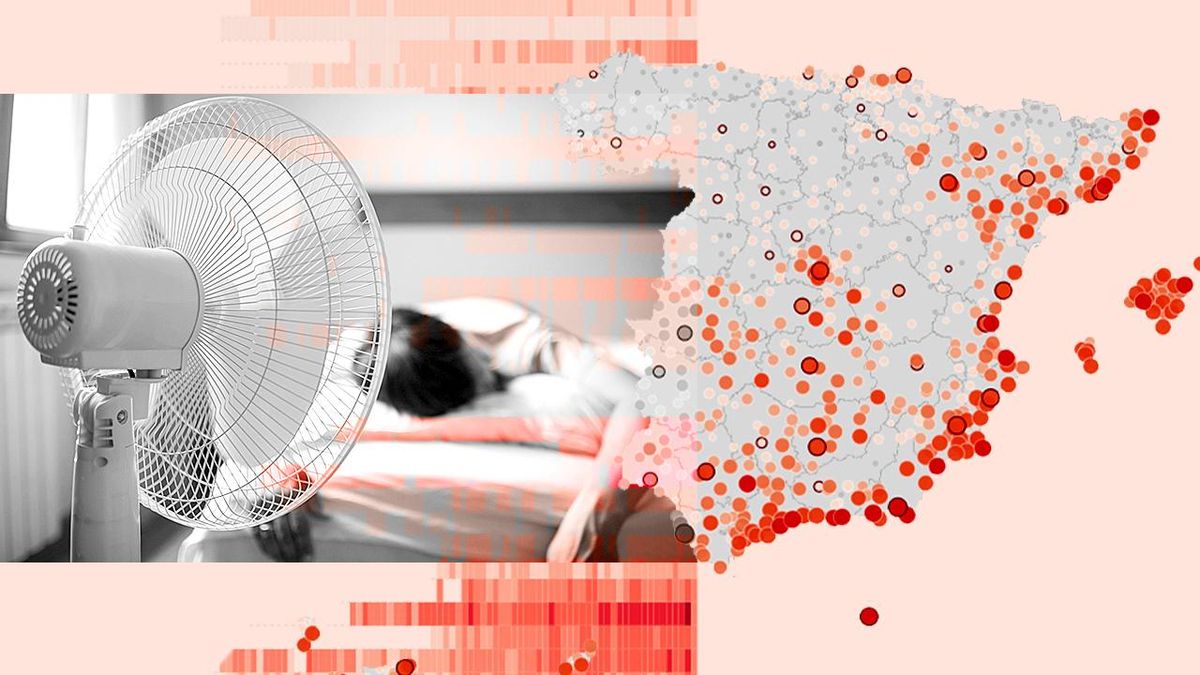
The data shows a clear and worrying trend. In 1950, Santa Cruz de Tenerife recorded 68 nights above 20°C. By 2025, that number had jumped to 158. Almería has seen a similar surge, from 41 such nights in 1968 to 114 in 2025. The increase is not limited to the south; it is spreading across the Mediterranean coast and the Canary Islands.
**The Health Toll**
This lack of overnight cooling has a direct impact on public health. The Spanish health ministry’s monitoring system (MoMo) estimates that more than 3,700 deaths this year have been linked to high temperatures. While daytime heat remains the biggest killer, experts warn that warm nights are a growing threat.
"We are seeing that minimum temperatures are rising faster than maximum ones," says Antonio Fernández, a specialist in internal medicine in Seville. The problem is sleep disruption. When the body cannot cool down, it cannot enter deep sleep phases. This leads to fatigue, poor concentration, and a weakened immune system.
The long-term effects are more severe. Fernández notes that chronic sleep loss increases the risk of dementia, high blood pressure, heart attacks, and strokes. It also worsens blood sugar control for diabetics. A 2025 study in the journal *Environment International* found that hot nights are linked to a 3% increase in mortality in Southern Europe, specifically citing Spain and Italy.
**A Social Divide**
The heat is not felt equally. Urban "heat islands"—often in lower-income neighborhoods with little greenery and poor building materials—absorb heat during the day and release it at night. Residents in these areas have fewer options to cool down, creating a dangerous social divide.
Experts advise simple measures to cope, such as taking a cool shower before bed and avoiding heavy meals and alcohol at night. But they stress that these are short-term fixes. As nights get hotter, the pressure on Spain's health system is set to intensify.