China’s AI Future Hangs on Its Own Tech Path, Analyst Says
Part of composite article Chinese AI Chipmaker Biren Sees Revenue Soar Up to 2,107% on Domestic Demand View full article →
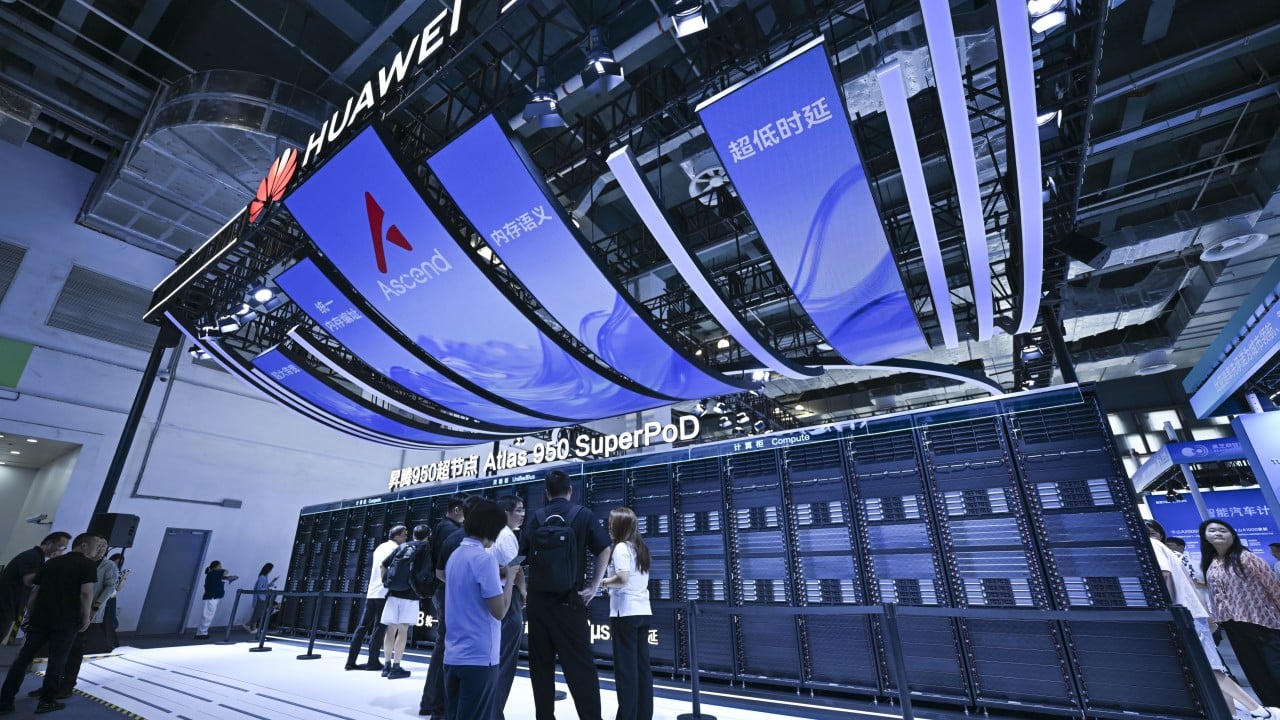
China’s ability to build its own technological foundation, despite strict US export bans, may decide the outcome of the artificial intelligence (AI) race between the two superpowers, a top academic argues.
Zheng Yongnian, dean of the school of public policy at the Chinese University of Hong Kong (Shenzhen), makes this case in the preface to a new book on Huawei’s Atlas 950 SuperPoD computing system.
The system, developed by the Chinese tech giant, is a high-powered computing platform designed to train large AI models. Zheng says such homegrown hardware is central to China’s strategy of reducing reliance on foreign chips and software.
According to Zheng, Washington’s restrictions have forced Beijing to accelerate its own research and development. Rather than slowing China down, the pressure may be pushing it toward a unique “technological path” independent of the US.
The book, titled *The Rise of Atlas*, details how Huawei built the system amid these restrictions. Zheng’s preface frames the project as a test case for whether China can sustain innovation without access to American technology.
The analyst’s comments come as both nations compete fiercely in AI, a field seen as critical to economic and military power. The Atlas 950 SuperPoD represents one of China’s most visible attempts to close the gap with US-made systems.