5,000 migrants stranded in Ceuta as Spain and Morocco trade blame
Part of composite article Ceuta's Beach Prison: 5,000 Migrants Watch Europe From a Sandbar as Water Runs Out View full article →
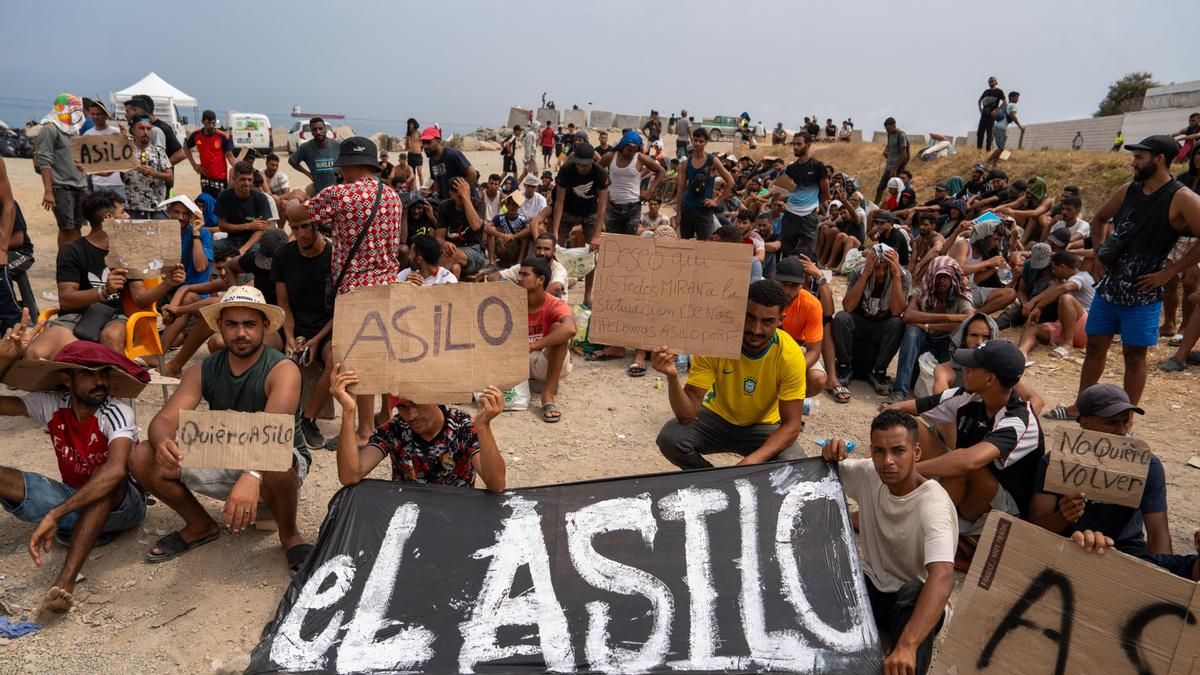
The recent surge of migrants into the Spanish enclave of Ceuta was preventable, but a 2007 agreement between Spain and Morocco to return unaccompanied minors has never been enforced, leaving thousands in legal limbo.
The deal, negotiated by Spain’s Socialist government and ratified by Morocco in 2012 under a conservative administration, was designed to speed up the return of minors and prevent irregular migration. However, Moroccan authorities have ignored every request for repatriation. Spain’s prosecutor’s office has sent detailed lists of eligible minors each year since 2014, but has received no response. As a result, the number of unreturned minors reached 14,600 by 2024, with roughly 2,000 more added in the past week.
Both major Spanish parties, the PSOE and PP, agreed to the deal but have since refused to publicly criticize Morocco for failing to honor it. Government ministers from both parties have repeatedly called Morocco a reliable partner, avoiding any mention of the breach.
This silence is a problem, say analysts, because it prevents any honest strategy for managing the crisis. The issue extends beyond Moroccan minors to include thousands of sub-Saharan Africans using Morocco as a “waiting room” before attempting to enter Europe. The European Union pays Morocco to manage this population, but the situation remains volatile.
Local reports from Ceuta describe a stark divide on the beach known as El Trampolín. On one side, Moroccan adults line up for food from the Red Cross, knowing they will likely be expelled. On the other, around 2,000 sub-Saharan migrants have set up camp, holding onto documents from the countries they fled, hoping for asylum.
Spanish judicial authorities have ruled that Ceuta cannot block asylum applications, meaning many of these migrants—including minors and non-Moroccans—will have to be moved to mainland Spain. Estimates suggest around 5,000 people cannot be repatriated: Moroccan minors because no return has ever succeeded, and sub-Saharan Africans because Spain has no extradition agreements with their home countries.
The crisis was avoidable, but it has happened. With political tensions high in Spain, the EU, and globally, there is little optimism for a legal solution that would prevent a repeat. Still, experts argue that attempting to find one is necessary, as migration pressures will not disappear.