Spain’s Foreign Minister Vows to Return All Migrants: Is It Legal?
Part of composite article 72,000 Migrants Swim to Ceuta, Leaving 4,000 Kids Alone and Abused on the Streets View full article →
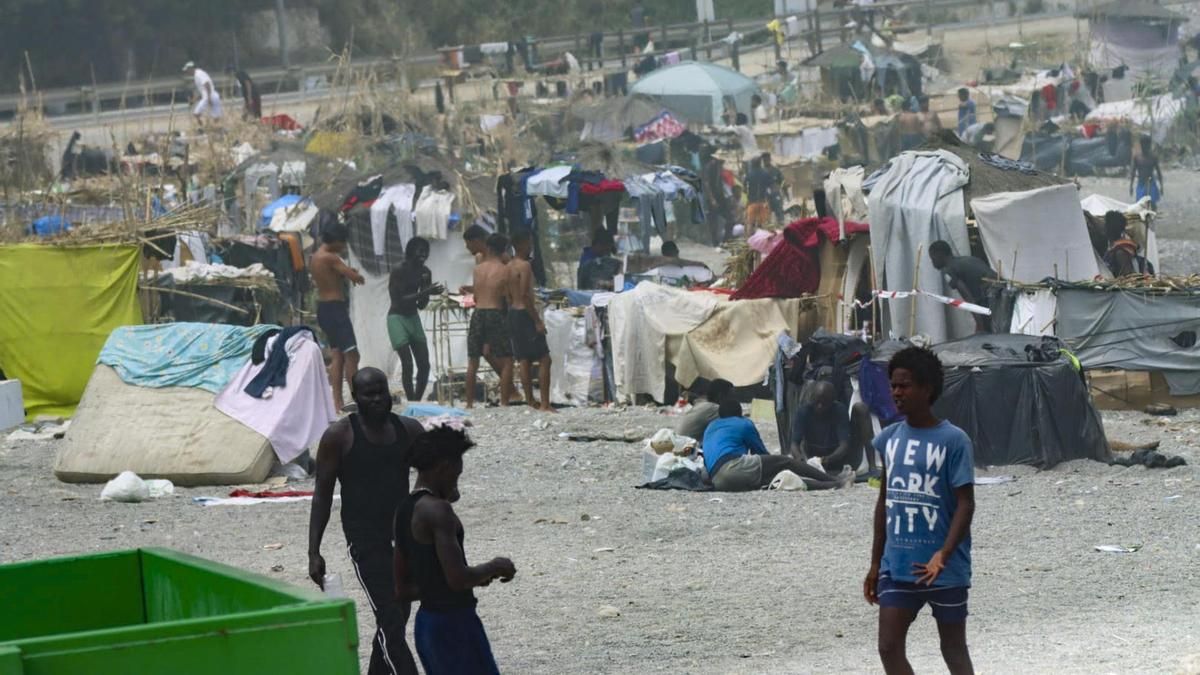
Spain’s Foreign Minister, José Manuel Albares, has made a bold promise: every person who entered Ceuta irregularly on July 30 and 31 will be returned to Morocco. He said this to end any debate about the future of the thousands of people still in the Spanish enclave.
But experts and legal analysts say this promise may be impossible to keep. Not because Spain cannot deport people who entered illegally, but because the law requires Spain to first know exactly who each person is. Before any return, authorities must check if that person has a legal right to stay.
Under Spanish law, a return order cannot be executed if the person asks for international protection, is a victim of trafficking, is an unaccompanied minor, or has a serious illness or pregnancy. The law also gives every person the right to a lawyer and an interpreter.
The government itself admits that about 2,500 people still in Ceuta could be potential asylum seekers. Yet, so far, the Interior Ministry has only completed around 500 files, and most were rejected. The Ombudsman has asked the government for details on how these decisions were made and what guarantees were given.
The situation is even more urgent for children. The government says 1,898 minors are under its care. But Save the Children estimates that around 4,000 more could still be outside the protection system, unidentified and without a safe place to stay.
Spanish law requires that unaccompanied minors be placed in the care of protection services. Any decision to return them to Morocco must be made individually, based on what is best for each child. It cannot be a mass decision.
This is not a theoretical warning. In January 2024, Spain’s Supreme Court ruled that the return of minors during the 2021 Ceuta crisis was illegal. The court said the government had completely ignored the legal procedure and violated the children’s rights. In September 2025, a court in Cádiz convicted two former officials for their role in the swift return of 55 minors to Morocco.
While these children remain outside the protection system, they are at risk of sexual violence, exploitation, and trafficking. Ceuta’s medical services have already treated at least four migrant girls for sexual assault. At least six complaints related to such violence have been filed.
The author of the original piece, who appears to be a legal expert, directly addresses Prime Minister Pedro Sánchez. The message is clear: this crisis is happening on Spanish soil, and the government has a duty to protect people, especially children. Spain has shown it can respond to emergencies, as seen with recent fire evacuations. The difference here is that the lives at risk are mostly foreign, poor, and non-white.
Cooperating with Morocco is legitimate. But using that cooperation to break the law is not.