US security umbrella fraying? Gulf pact opens door for China.
Part of composite article New Saudi-Turkey-Pakistan Defense Pact Shakes Up Middle East, But Can It Survive First Test? View full article →
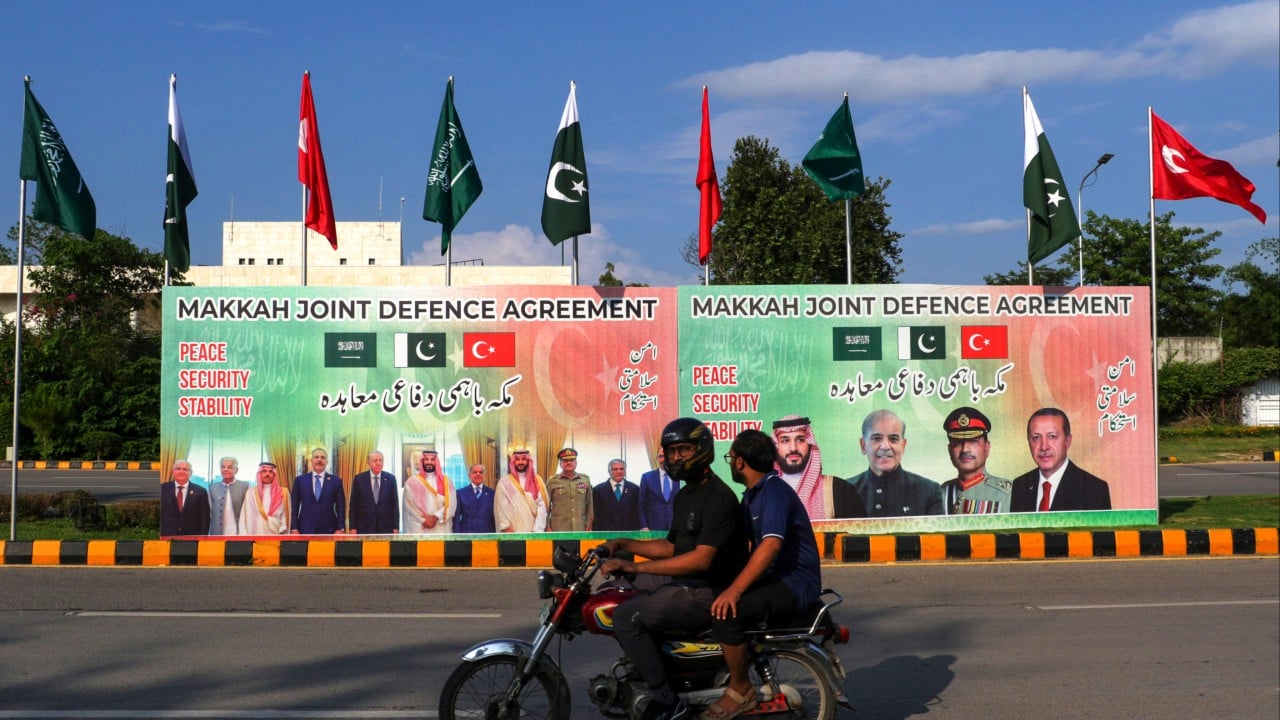
The long-standing security arrangement between the United States and Gulf Arab states is showing clear signs of strain, analysts say, creating new room for China to expand its influence in the region.
For decades, Saudi Arabia and its Gulf neighbours relied on Washington’s military protection. In return, the United States gained access to regional bases, steady energy supplies, and political leverage.
That balance is now shifting. Riyadh’s decision to sign a mutual defence agreement with Turkey and Pakistan is the strongest signal yet of change.
The pact, signed this week in Mecca, marks a departure from the Gulf’s traditional reliance on American security guarantees. It also highlights a growing willingness among regional powers to build alternative alliances.
While the agreement does not directly involve China, Beijing is widely seen as a potential beneficiary. A less central US role in Gulf security could open space for Chinese diplomatic and economic engagement, particularly in trade and infrastructure.
No formal moves by Beijing have been announced. But analysts note that China has long sought deeper ties with the region without challenging US dominance directly.
For now, the Gulf states are not abandoning Washington. But the Mecca pact suggests they are preparing for a future with more than one security partner.