117 Migrants Rescued off Ceuta; Two Bodies Found as Leader Declares 'National Emergency'
Part of composite article 8,000 Migrants Storm Ceuta in One Day — Spain Sends Army to Seal Border View full article →
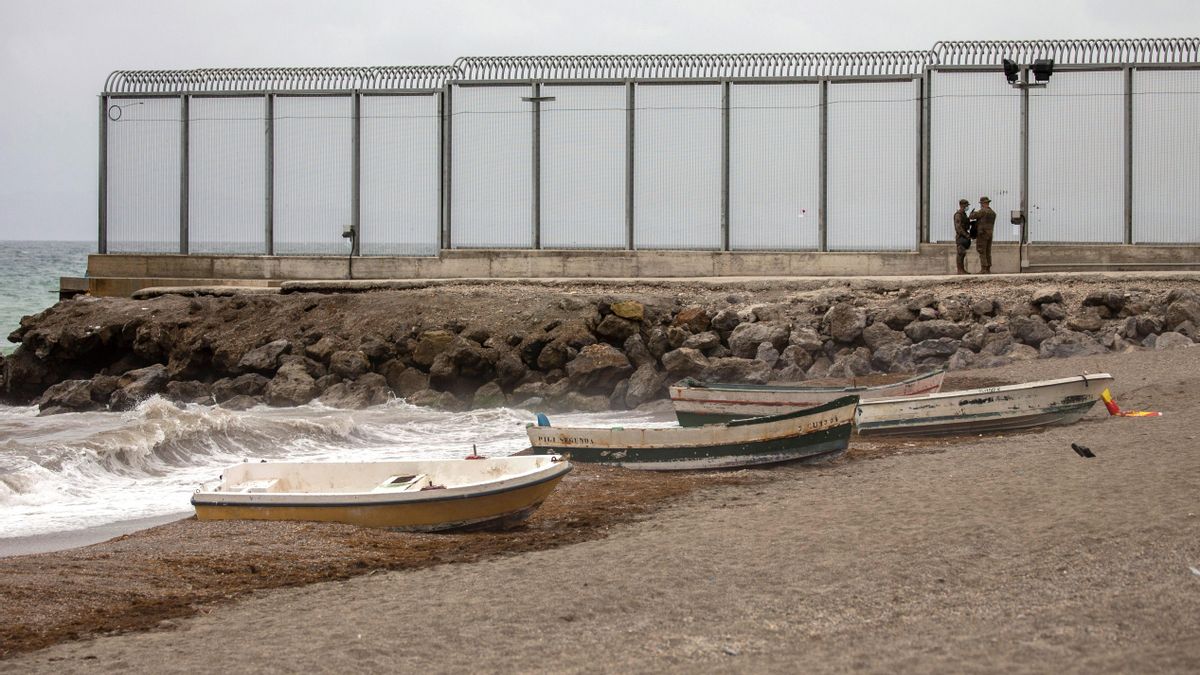
Spanish rescue services saved 117 migrants attempting to swim from Morocco into the Spanish enclave of Ceuta between midnight and 3:00 PM on Wednesday. The Salvamar Atria and a Red Cross vessel assisted the Guardia Civil in the operation. All rescued individuals were handed over to the National Police for transfer to the Temporary Stay Center for Immigrants (CETI), which is currently full.
Separately, the Guardia Civil recovered two bodies of migrants believed to have died trying to reach Ceuta in recent days. The first body, a young man in a swimsuit showing signs of decomposition, was found at 7:00 AM near Almadraba. A second body, a man aged 25-30 wearing a wetsuit and more recently deceased, was found at 2:30 PM near Piedra del Pineo. Both bodies have been taken for autopsy.
These deaths bring the total number of migrants found dead on Ceuta's coast this year to 29. Ten of those deaths occurred in July, with six since last Saturday.
Ceuta's president, Juan Jesús Vivas, called the situation a "national emergency." He noted that migration pressure on Ceuta is constant but said recent "peaks of special intensity" demand an "energetic, proportional, and immediate" response coordinated through a "single command." Vivas stated that 1,500 people entered Ceuta last week, equivalent to nearly 2% of the city's population.
However, sources from Spain's Moncloa Palace rejected the request for a national emergency declaration. They explained that Spain's civil protection law does not classify migration flows as a risk, making activation of such a mechanism impossible.
Mohamed Benaissa, president of the Northern Observatory for Human Rights in Morocco, attributed the recent flows to a Spanish Supreme Court ruling banning "hot returns" of migrants who arrive by swimming, as well as the summer season.
The Federation South Acoge noted that this crisis repeats every summer, emphasizing that most of those risking their lives are young people, including minors. "They do not jump into the sea by choice, but because they feel they have no future on the other side," the group stated, adding that "each new barrier focused solely on border control does not eliminate the need to migrate. It pushes people onto more dangerous and deadly routes."