Tiny Brazilian Toad Stopped a Dam. Now Climate Change Threatens Its Only Home.
Part of composite article War and Climate Are Destroying 6 UNESCO Sites in Africa — And a Tiny Toad’s Only Home View full article →
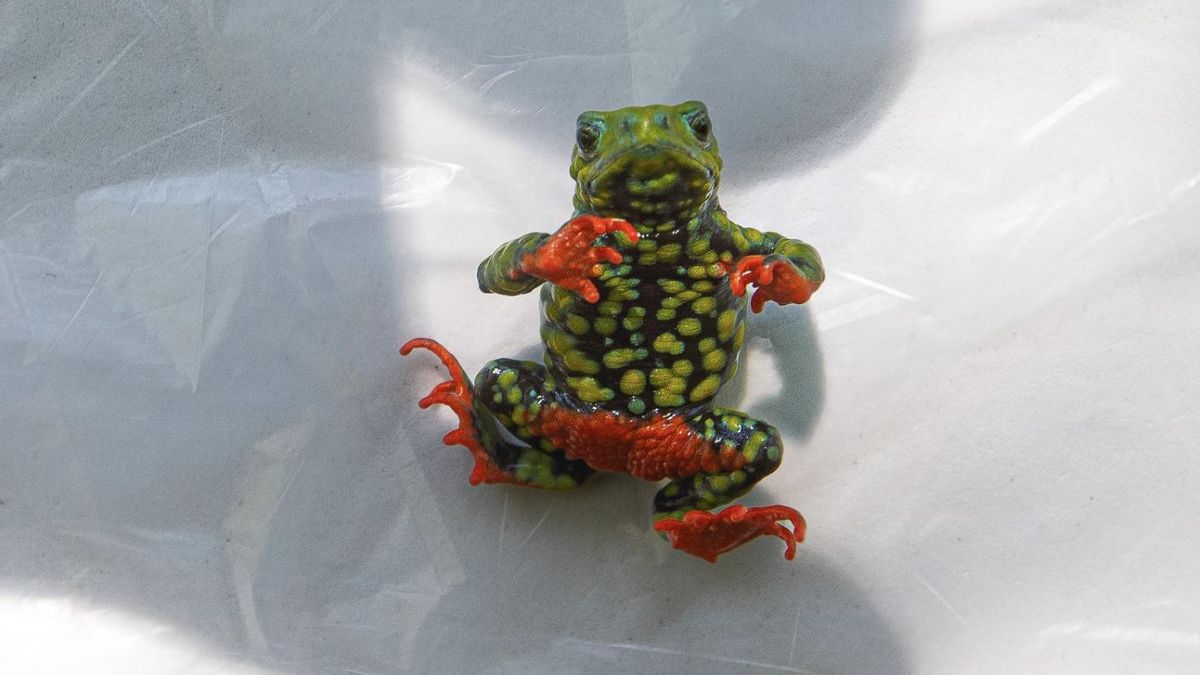
A toad the size of a thumb once stopped a major hydroelectric dam in Brazil. Now, scientists fear extreme weather could finish what the dam builders started.
The tiny toad, *Melanophryniscus admirabilis*, lives only along a small stretch of the Forqueta River in southern Brazil. In 2014, scientific data helped halt construction of a dam less than 300 meters from its habitat. The species was declared critically endangered in 2013.
But in 2024, the worst climate disaster in Rio Grande do Sul state history hit the region. Floodwaters rose at least 20 meters, reshaping the riverbank and destroying the toad’s breeding grounds.
In October 2025, a team of biologists returned to check if the species survived. Over two days, they found 111 adults, juveniles, tadpoles, and mating pairs. The number was not the highest ever recorded, but it was a hopeful sign. The toads were still reproducing.
“The vegetation is recovering the microhabitat,” said Michelle Abadie, a biologist leading the research. She works with the Herpetology Laboratory at the Federal University of Rio Grande do Sul.
The team uses a special method to track the toads. Since 2010, they have divided the riverbank into 31 squares, each 15 square meters. They photograph each toad’s belly. The green spots on the abdomen form unique patterns, like fingerprints. A computer program compares the images to count the population each year.
The toad’s bright colors warn predators it is toxic. This defense, called aposematism, also attracts illegal collectors.
The toad’s entire known population lives in a tiny area of the river. It needs exposed rocks and a forested valley to keep the humidity needed for temporary pools. No other spot along the 150-kilometer river meets these conditions.
Graziela Civa, a local resident, first reported the toad’s location. Her family rents the land. She described the 2024 flood as unlike anything the community had seen. “The landscape became unrecognizable,” she said.
Climate projections make the future uncertain. A study by Brazil’s National Water Agency estimates that southern Brazil could see maximum river flows 20% higher and extreme floods up to five times more frequent.
The 2024 floods affected about 2.4 million people across 478 cities.
The Brazilian government has included the toad in its National Action Plan for Endangered Species. Monitoring will continue for three more years using the same method from 2010.
The area was recognized in 2018 as a site of international biodiversity importance and a Zero Extinction Alliance site. But it has no official protection.
A state bill, proposed by deputy Matheus Gomes, aims to recognize the toad as a genetic heritage of Rio Grande do Sul. If passed, it would give political support to conservation efforts that currently rely on a private farm and tourism linked to a nearby waterfall. The area is also threatened by tobacco, soy, and eucalyptus plantations.
The toad that stopped a dam now faces a new and bigger enemy: climate change.