Canadian Wildfire Smoke Chokes US Cities, Air Quality 'Dangerous' for 100 Million
Part of composite article Trump Threatens New Tariffs on Canada as 838 Wildfires Choke 100 Million Americans View full article →
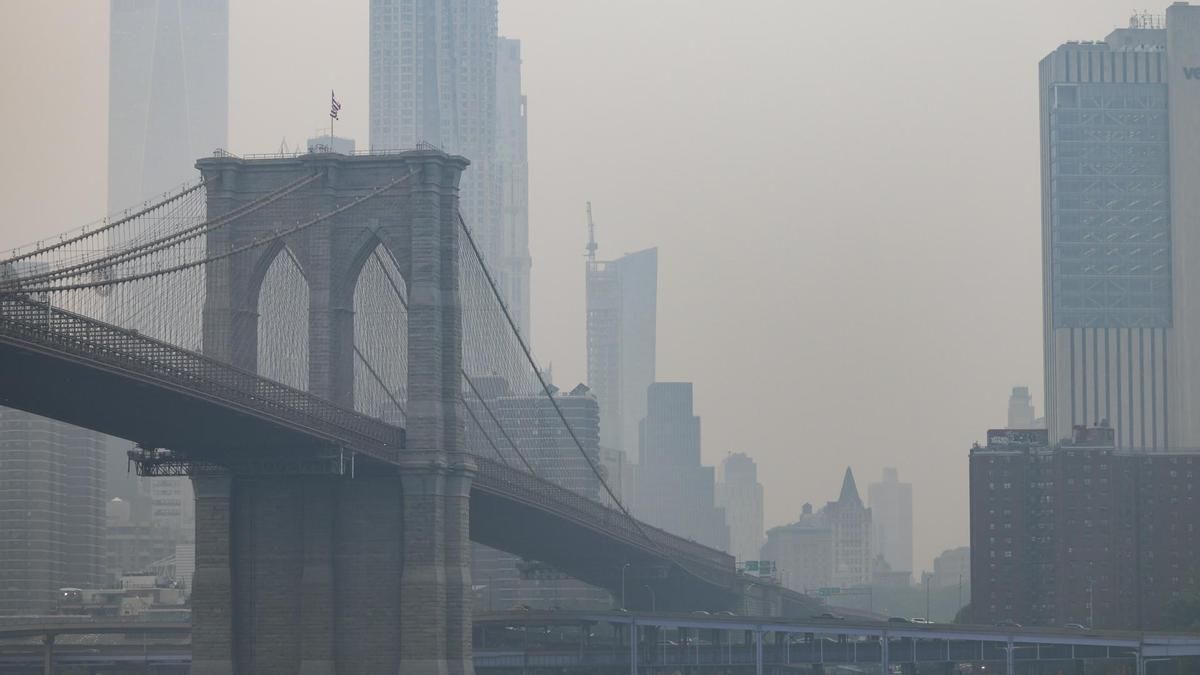
More than 100 million people in the United States and Canada are under air quality alerts as smoke from hundreds of active wildfires in Canada drifts south. Toronto recorded the worst air quality in the world on Thursday, according to Swiss monitoring firm IQAir. Chicago, Detroit, and New York also ranked among the five most polluted cities globally.
Canada currently has 858 active fires, including 30 new ones reported Thursday, according to the Canadian Wildland Fire Information System. Most remain out of control. The most intense fires in northwestern Ontario are producing massive smoke columns that have crossed the border, blanketing cities in a thick haze.
In the US, the National Weather Service has issued air quality alerts for the Upper Midwest, the Great Lakes region, and the Northeast. Smoke first hit Minnesota, Wisconsin, and Michigan before moving east and south. It has now reached New York, Boston, Buffalo, Philadelphia, Detroit, Milwaukee, and Green Bay. Officials expect conditions to worsen in Cleveland, Columbus, Baltimore, and Washington, D.C.
The US Air Quality Index rated conditions as "dangerous" across large parts of Michigan and Minnesota. Authorities urged residents to stay indoors to limit exposure to fine particles in the smoke.
In New York and Boston, the smoke has obscured the skyline and triggered health warnings. The pollution is also a concern ahead of the 2026 World Cup final between Spain and Argentina, scheduled for Sunday in New York. No restrictions for the event have been announced so far.
This summer, smoke from US fires had already affected western states, the Great Plains, and the Midwest. But the current intense pollution event in the Great Lakes and Northeast is driven by Canadian fires, especially in Ontario.
While Canada's wildfire activity this year remains below the record levels of 2023, the combination of fires in Ontario and a heat dome over the central US is trapping smoke and pushing it south.