Trump Claims China Stole 2020 Election, Calls US Voting 'Third World'
Part of composite article Trump Drops 'Proof' China Stole 2020 Election, Claims 220 Million US Voter Files Hacked View full article →
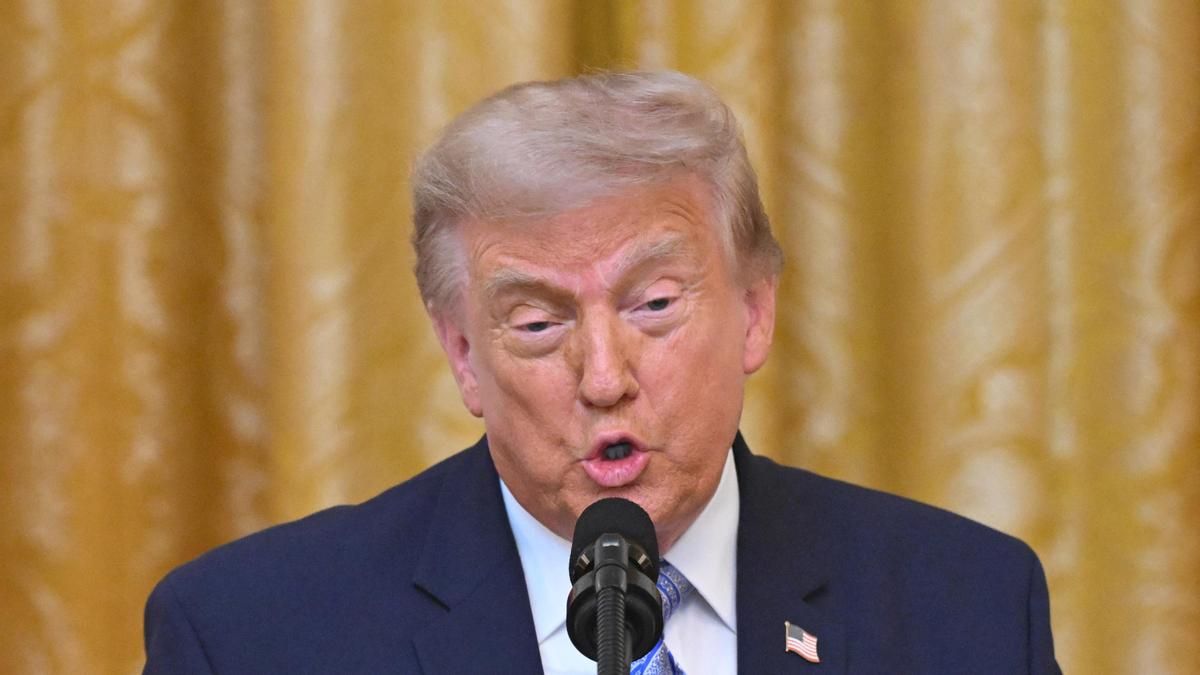
WASHINGTON — President Donald Trump on Friday revived his baseless claims of widespread voter fraud in the 2020 election, accusing China of helping him lose to Joe Biden and describing the US electoral system as worse than "any third world country."
Speaking in a televised address without taking questions, Trump offered no evidence for his allegations. He stood before about 55 people, including Vice President JD Vance, Cabinet members, and other officials, who applauded after his speech.
"Every American deserves to know that when they cast their vote, it will be counted accurately in a secure system," Trump said. "Unfortunately, the current system falls far short of this standard."
Trump announced the release of what he called previously censored documents. He claimed these files show that China stole 220 million US voter records and attempted to create fake ballots for Biden. He also alleged that "deep state" officials hid evidence of Chinese interference.
The president cited CIA reports he said proved China wanted him to lose reelection because of his tariffs and military buildup. He added that foreign adversaries, including Russia, China, Iran, and North Korea, can hack US voting machines.
Trump used the speech to push Congress to pass his "Save America Act," which would require photo ID to vote, proof of citizenship, and severely limit mail-in voting. "The only reason you wouldn't do this is because you want to cheat," he said.
He also threatened NBC and ABC, calling them "fake news" for not covering his address, and suggested their broadcast licenses should be revoked.
China responded Friday, dismissing Trump's accusations as "complete falsehoods." Foreign Ministry spokesman Lin Jian said Beijing "has no interest in and has never interfered in US elections." He called Trump's claims "pure fabrication" and "a malicious smear campaign," urging Washington to stop using China as an election issue.
Lin declined to say whether the allegations would affect Chinese President Xi Jinping's planned visit to the United States in late September.