Wildfire Exposes Cracks in Spain’s Firefighting Force: "We Warned Them"
Part of composite article 13 Dead, 23 Missing: Spain's Wildfire System "Not Ready" as Power Line Sparks Tragedy View full article →
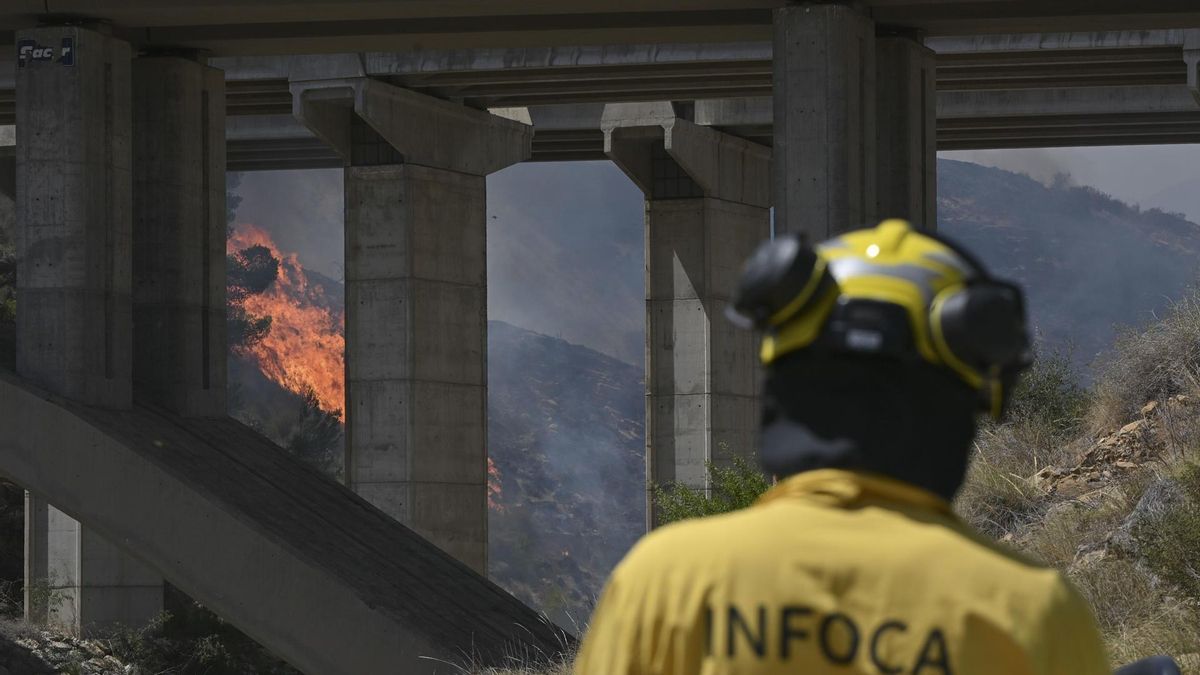
A deadly wildfire in Almería has exposed serious weaknesses in Andalusia’s firefighting system. Firefighters say they are working with fewer staff, old equipment, and unsafe conditions—despite government claims of record spending.
The fire in Los Gallardos killed 12 people. As it burned, firefighters on the ground told local media that the firefighting plan, called INFOCA, is not working as it should. They say the force is operating at only 75% of its needed staff during the high-risk summer season, which lasts until October. "We have been warning about this for a long time," one firefighter said.
Around 500 personnel were deployed to fight the Almería fire. Of those, 200 were from INFOCA, 200 from the Spanish military, and the rest from other agencies. But firefighters say this is not enough. They report that some fire trucks, known as VCI units, have only one crew member, forcing others to work extra hours without proper rest.
The regional government of Andalusia, led by Juanma Moreno, says it is investing more than ever. This year, the INFOCA budget is 271.6 million euros—60% higher than in 2018. Officials say they have 4,700 staff, 43 aircraft, and over 100 fire trucks, with 84% of them recently upgraded. They also point to new heavy machinery and better communication systems.
But six different labor unions—CGT, CCOO, UGT, CSIF, SIBFI, and UITA—all disagree. They say the force started the summer season without enough people. CCOO estimates that 10% of the workforce, or about 400 people, is missing. CSIF says the force was only 90% staffed at the start of July. UGT adds that, for the first time, three special rapid-response brigades began the season with empty positions.
The government rejects these numbers. It says only about 5% of positions are unfilled, mostly due to temporary leave or staff over 55 moving to lighter duties. It also says it has launched two new public job offers for 234 and 348 permanent positions.
Beyond staffing, firefighters report serious problems with equipment. Unions say some vehicles cannot reach the fire front, forcing crews to wait for other trucks. Radio systems fail in some areas, and there is no mobile phone coverage to replace them.
Personal protective equipment (PPE) is another major issue. Unions say there is not enough stock to replace worn-out gear. They also criticize the lack of a service to clean and decontaminate PPE, which is exposed to cancer-causing particles from smoke. Only one province, Huelva, has this service.
The government denies these claims, saying it has thousands of items in storage, including over 4,500 fire-resistant shirts and 5,300 pairs of fire-resistant pants.
There are also complaints about staff management. UGT and CSIF say the agency is refusing requests for family-related transfers, even for childcare. They also say job pools are nearly empty, forcing the agency to use outside recruitment while trained INFOCA workers are available.
The largest union, CGT, says the problems have gotten worse since the government created a new emergency agency, the EMA, in 2022. They accuse the government of focusing on press announcements instead of fixing real issues on the ground.
The government insists that the EMA has improved coordination and that Andalusia now has one of the most advanced wildfire systems in Europe.
But for the firefighters, the picture is different. With the hottest weeks of summer still ahead, they warn that the system is not ready. Staffing is low, equipment is failing, and the risks are growing. "We told them," they say. "Now the fire has shown it."