Iran’s Trump Card: Strait of Hormuz Control Decides Peace Deal
Part of composite article US and Iran Trade Strikes Again, Strait of Hormuz Blocked – 20% of Global Oil at Risk View full article →
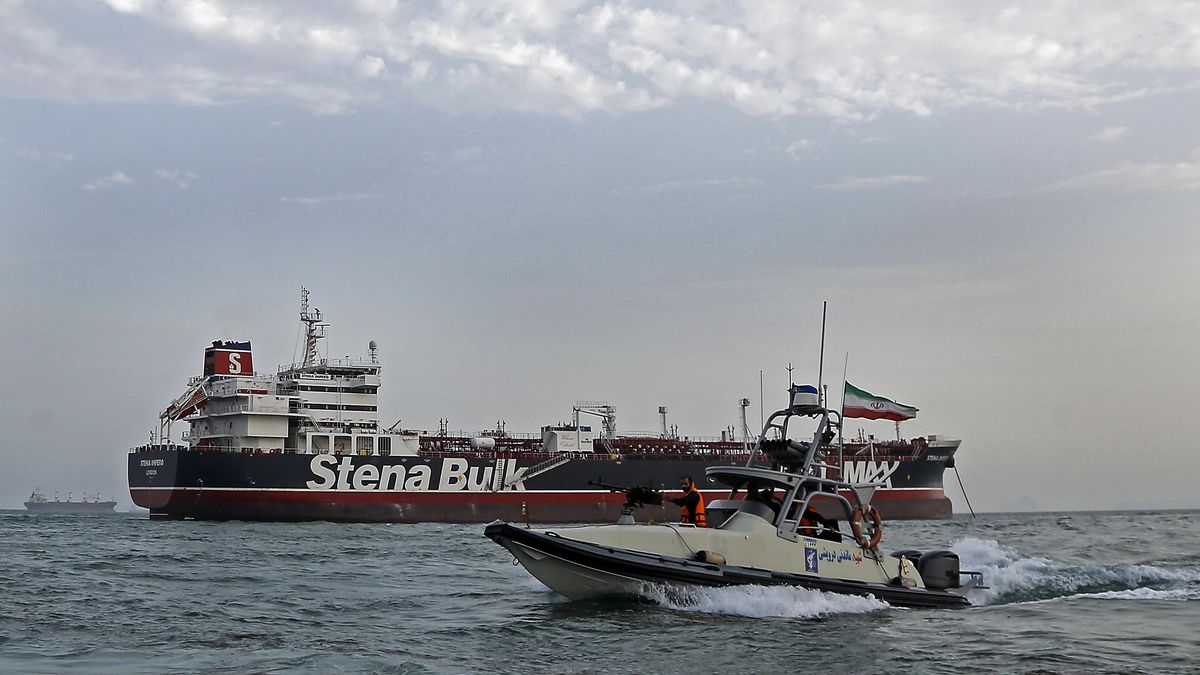
Iran is holding onto control of the Strait of Hormuz, a key waterway for global oil trade. This has become the main point of conflict with the United States. The future of their fragile peace agreement depends on who controls this narrow sea passage.
On June 18, the US and Iran signed a memorandum of understanding. It gave them 60 days to negotiate a final peace deal. The first major issue is reopening the Strait of Hormuz. The waterway was almost completely blocked after the US and Israel launched their war against Iran on February 28.
Iran closed the strait as a response to the attack. It has used control of Hormuz as its main bargaining tool. Analysts say Iran will keep doing this. “Iran will keep fighting for control of Hormuz throughout the negotiations,” said Luciano Zaccara, a Middle East analyst. “It is the best card they have to tip the balance in their favor.”
**Renewed Violence**
This week saw the biggest escalation in the Persian Gulf since the ceasefire. The US launched intense airstrikes on Iranian coastal defenses, missile storage sites, and military ships. The trigger was Iran’s attempt to impose its own rules for ships passing through the strait.
Iranian forces were accused of attacking a Saudi oil tanker, a Qatari gas ship, and a third vessel on July 6 and 7. The US responded with multiple bombing rounds. President Donald Trump then announced the ceasefire was over. However, talks continue through regional mediators like Pakistan and Qatar.
**The “Tug of War” for Control**
The memorandum requires both sides to act. Iran must prepare for safe ship passage and start clearing mines within 30 days. But Iran says free passage is only for the 60-day negotiation period. It has already said it wants to charge fees for ships using the strait.
The US agreed to lift its naval blockade. But Washington has threatened to reimpose it if Iran does not guarantee free navigation.
Before the war, over 100 ships passed through the strait daily. Since the ceasefire, fewer than 30 ships a day have crossed. Oil traffic did increase by 70% after June 18. But the International Energy Agency warns that global supply could still be at risk if there is no lasting peace.
**Disputed Shipping Routes**
Iran’s Revolutionary Guard now demands ships ask for permission 48 hours in advance. They must use routes set by Iran’s new “Strait Authority.” These routes are in Iranian territorial waters, closer to the coast. This makes ships easier to monitor and attack.
The old routes were in the center of the strait, which is only about 30 kilometers wide at its narrowest point. Those routes may now be mined. Iran threatened to mine the strait to pressure the international community.
**The Oman Alternative**
Some ships have tried using a route through Oman’s territorial waters. The US approved this route, but Iran did not. The International Maritime Organization tried to use it for an evacuation mission. It had to stop after a cargo ship was hit by a projectile near Oman.
The memorandum says Iran and Oman must talk about future management of the strait. That has not happened yet. “Oman does not agree with Iran’s view,” Zaccara said. “But they could negotiate technical details to unlock the situation.”
With the ceasefire now over and tensions high, fewer ships will likely risk crossing the strait. This could reverse the positive trend of the past three weeks. The fight over Hormuz will shape the next round of talks. Mediators are trying to stop the violence from destroying months of diplomatic work.