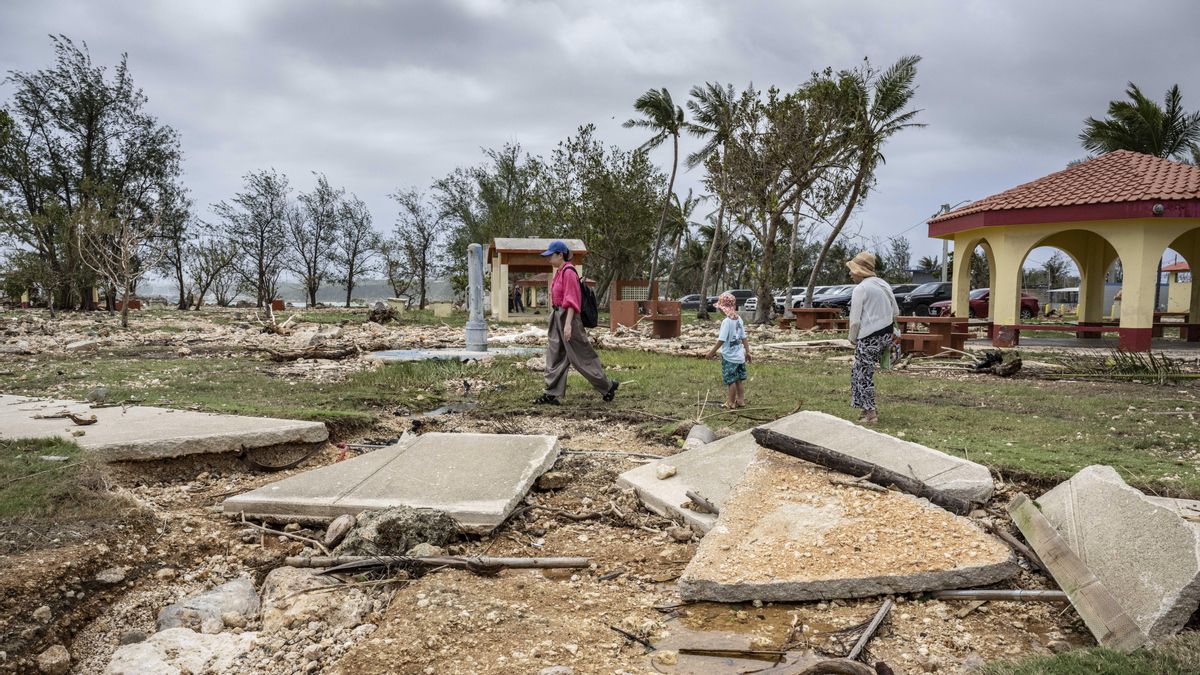
Supertyphoons hit Pacific islands before season starts. "A warning for the world."
The small island of Rota in the Northern Marianas was still recovering from Typhoon Sinlaku in April. Then Super Typhoon Bavi hit. It was a Category 5 storm with winds of 270 km/h. It caused heavy damage.
The typhoon season has not officially started yet. But these two storms are among the most destructive in the islands' history. Residents and officials know this is just a preview.
“Our climate is very fragile in this part of the world,” said Mayor Aubrey Hocog, 37. “We know that this year with El Niño we can expect many more super typhoons. We must prepare as best we can.”
The Northern Mariana Islands sit in the path of tropical cyclones that form in the Pacific and move west. If a "Super Niño" develops—the most intense version of El Niño, where warming in the eastern Pacific changes global weather—things could get much worse.
Scientists say two very strong storms so early in the year are unusual. “Sea surface temperatures and ocean heat content are higher than normal because of El Niño,” said Jon Gottschalck of the NOAA Climate Prediction Center. “This raises the chance of such events.”
Typhoon Sinlaku was also record-breaking in how long it lasted. It brought strong winds for about 192 hours. The average for the region is 61 hours. Experts say climate change is slowing down typhoons, making them more destructive.
“The severe El Niño event this year is a big threat to the Marianas,” said Xiangbo Feng, a researcher at the UK National Centre for Atmospheric Science. “This area is a gateway for El Niño. Small islands are very vulnerable because they are tiny, making it hard to recover from storm damage.”
Mayor Hocog wants the island to become more self-sufficient. “We are focusing on food sustainability,” she said. “Why import fruits and vegetables when we can grow them ourselves?”
Residents say they feel the change. “The water used to be farther from the shore. Now it comes further inland. And it is hotter,” said Eloy Ayuyu, a forestry worker.
James Manglona, who leads reforestation, added: “We are learning from the people in the Marianas. We must prepare for more extremes. This should be a wake-up call for the rest of the world.”