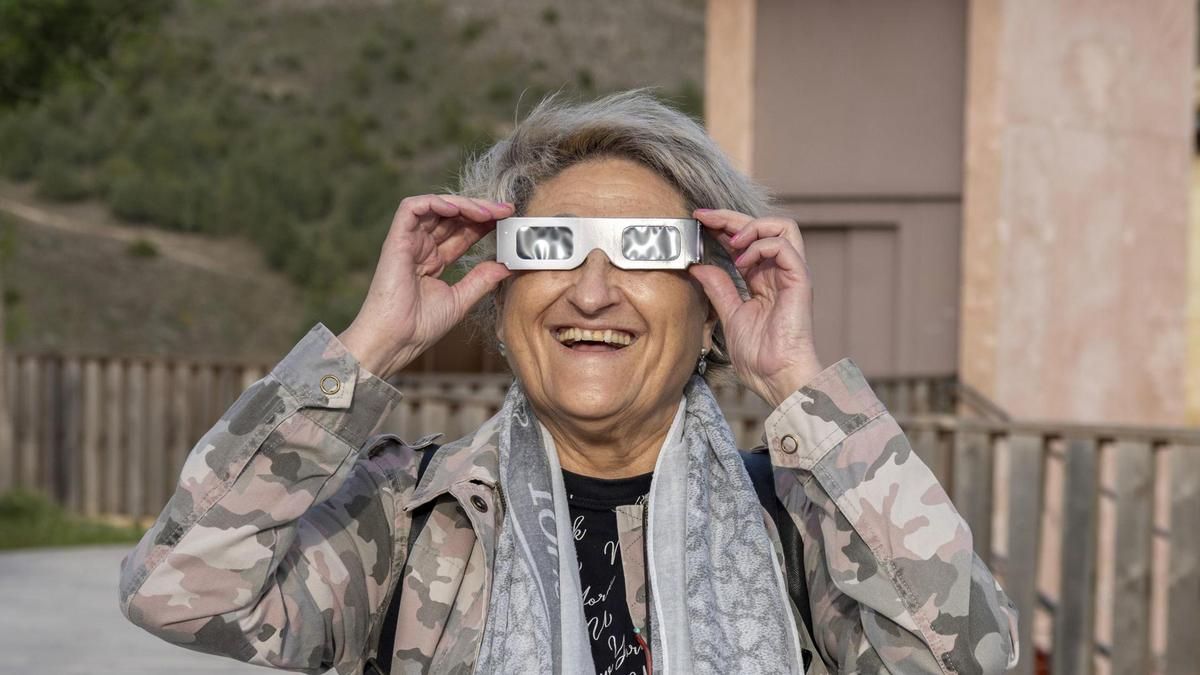
Catalunya seeks 5,000 volunteers to study how the human body reacts to a solar eclipse
On August 12, a total solar eclipse will pass over Catalunya. For the first time in over a century, the region will experience this rare astronomical event. But researchers want to know more than just where to watch it. They want to know what happens inside the human body.
The Government of Catalunya has launched a pioneering citizen science project called Solaris. It aims to recruit 5,000 volunteers to measure physiological changes during the eclipse. Using smartwatches and other portable devices, the study will collect anonymous data on heart rate, breathing, and other bodily responses.
"Does the heart beat differently? Does breathing change? Do emotions leave a mark on our bodies?" These are the questions the study hopes to answer, said Núria Montserrat, the regional minister for Research and Universities, at a press conference on Friday.
Volunteers will need to download an app from the Institute of Space Studies of Catalunya (IEEC). Data will be collected on August 12, as well as two days before and after. All information will be sent to the Vall d’Hebron Research Institute (VHIR) for analysis.
The government expects at least 5,000 participants. Officials estimate that more than 50,000 people will watch the eclipse from 18 designated observation points in the provinces of Lleida, Tarragona, and Terres de l'Ebre. However, anyone can join, regardless of location.
Previous studies on animals show that total solar eclipses change behavior. Birds stop singing and return to their nests. Some insects pause their normal activities. Flowers even close temporarily.
Now, researchers want to measure the same effect in humans. The study is based on the idea that emotions alter the body. Another key question: what happens when thousands of people witness the same extraordinary event at the same time?
The government expects to release initial findings by the end of September.