Spain’s migrant regularization closes with nearly 1.2 million applications
Part of composite article Spain’s Migrant Amnesty Draws Over 1.2 Million Applicants, Sparks Legal Battle with EU View full article →
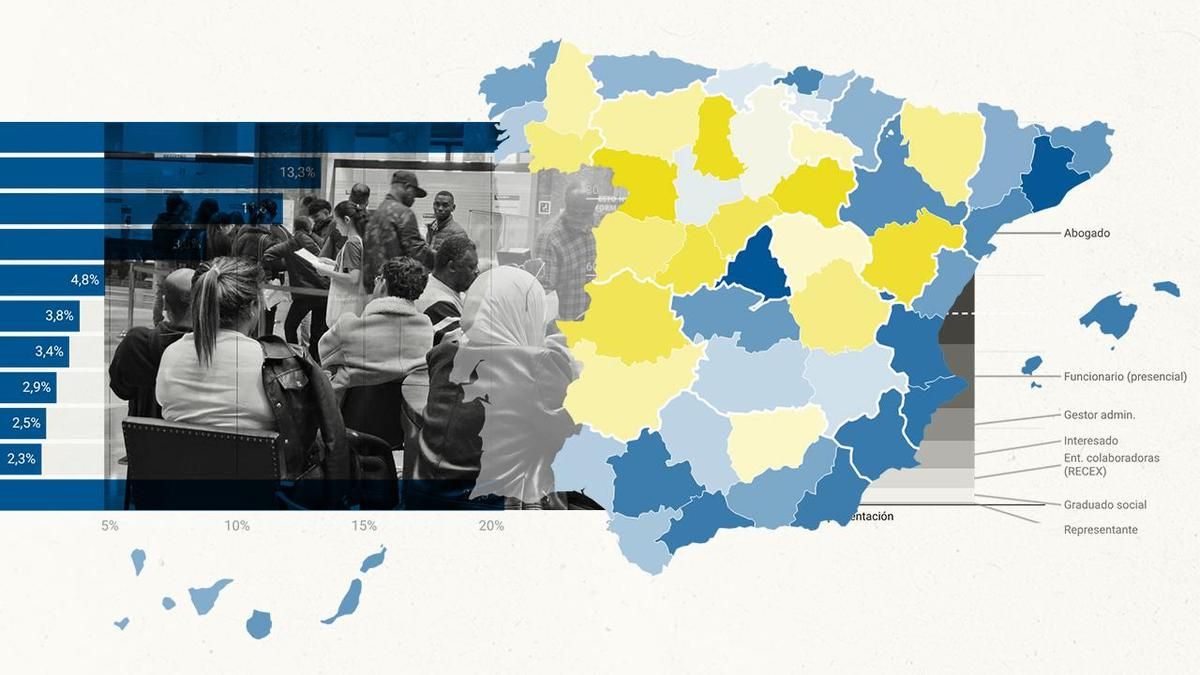
A young Colombian man, aged 25 to 34, living illegally in Madrid: this is the typical profile of someone who applied for Spain’s extraordinary migrant regularization process. The program closed with almost 1.2 million requests, most from Latin Americans.
Brayan, a 25-year-old from Colombia, spent a night outside a social services office in Madrid to get the documents he needed. More than two months later, he has his foreigner identification number (NIE), a work permit, and a Social Security number. His story represents the majority of applicants.
**Who applied?**
Men made up 57% of applicants, women 43%. The gap was smaller among those seeking international protection. For minors and people aged 45 to 54, the split was equal.
81% of applicants were under 45. Six out of ten were under 34, like Brayan. Spain’s Social Security secretary stressed this age concentration could help the labor market.
**Children included**
Over 130,000 applicants were under 15, making up 11.1% of all requests. Valeria, an Ecuadorian woman living illegally for two years, applied for her baby daughter, who was born in Spain but had no papers. “I dreamed about this appointment for days,” she said.
**Where do they come from?**
67% of applicants were Latin American. Colombians led with 26%, followed by Moroccans (13.4%), Venezuelans (11.7%), and Peruvians (8.8%). Hondurans made up 4.8%, Paraguayans 3.8%, and Algerians 3.4%. Senegal was the only sub-Saharan country in the top ten, with 2.9%. Pakistan (2.5%) and Argentina (2.3%) also appeared.
**Where are they working?**
Of the 608,000 applications accepted for processing, 159,097 people are now registered with Social Security. This number includes some international protection seekers who may have already been paying contributions. The ministry said it is still analyzing the data.
83.4% of those registered are in the General Regime, where permanent contracts are most common. The top sectors are hospitality (38,776), commerce (20,195), administrative activities (19,327), and construction (18,310).
**Where did they apply?**
Catalonia led with 257,602 requests, followed by Madrid (202,424), Valencia (167,286), and Andalusia (161,557). These four regions hold more than half of all applications.
In Andalusia, provinces like Huelva and Cádiz saw many applications handled by social organizations, suggesting higher vulnerability among seasonal farm workers.
Other regions: Castilla-La Mancha (over 52,000), Basque Country (nearly 50,000), Murcia (about 45,000), Castilla y León (nearly 40,000), Galicia (38,747), Canary Islands and Balearic Islands (over 30,000 each). Navarre, Asturias, Extremadura, Ceuta, and Melilla had much lower numbers.
**How and why did they apply?**
79.6% of applicants were migrants living illegally in Spain for more than five months, who could prove ties through work, family, or vulnerability. The other 20.4% were international protection seekers who arrived before January 1, 2026, and had no criminal record.
58% of online applications were submitted by lawyers, followed by authorized officials (16.8%), administrative managers (8.4%), applicants themselves (7.3%), collaborating organizations (5.1%), and social graduates (3.6%).
The government noted that 495 non-profit organizations and unions helped prepare documents and guide applicants, especially for vulnerability certificates that caused delays early on.
Brayan, after waiting all night at the municipal office, got no news from the city hall. He went to Altius, an NGO registered to support applicants. “That same day I had an appointment and the certificate,” he said. The organization did not submit his file, but its quick help meant Brayan could start looking for work like any other citizen.