Victim of Spain’s ‘fire cloud’ now leads volunteer fire crew
Part of composite article Europe Sizzles: Record Heat and Wildfires Burn 67,000 Hectares, Kill 2,000+ View full article →
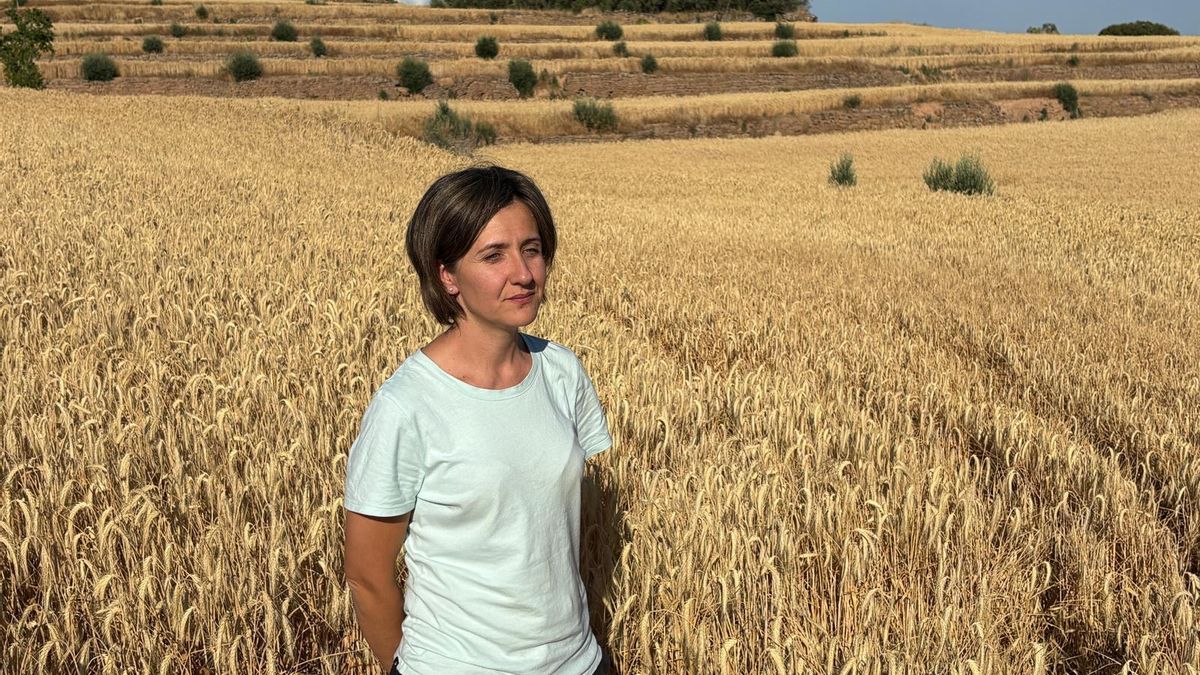
A year ago, a fast-moving wildfire destroyed Neus’s crops in Lleida, Spain. Now, the young farmer leads a team of volunteers fighting to stop it from happening again.
On July 2, 2025, a “sixth-generation” fire swept through the Torrefeta i Florejacs area. It created a pyrocumulus, or “fire cloud,” a column of smoke that rose 14 kilometers into the sky. The fire burned nearly 6,000 hectares of land, making it the largest in Catalonia last year. It was one of the fastest fires recorded in Europe, moving at speeds of up to 30 km/h. Two people died.
Neus, a 34-year-old farmer, lost about 100 hectares of cereal crops. “I felt helpless,” she says. “Then the helplessness turned into anger.” She now leads the local branch of the Forest Defense Association (ADF), a volunteer group of farmers and ranchers who help prevent and fight wildfires. They are often the first to arrive at a fire, even before professional firefighters.
“There are fewer and fewer of us living in the villages,” Neus explains. “If no one takes care of the land, it will be abandoned. And if it is abandoned, it will burn.”
Marc Jou, 30, is another young volunteer. He remembers the day of the fire. He was working in the fields when he saw a message on the group’s WhatsApp chat. He grabbed his truck, which carried 600 liters of water, and drove toward the flames. “The fire was reaching the houses,” he recalls. “The helicopters were dropping water, but the flames were already very intense. You couldn’t see anything. It was all smoke.”
**Faster, more dangerous fires**
Experts say fires like this are becoming the new normal. Marc Castellnou, a chief fire inspector, says pyrocumulus clouds are appearing more often. In the last five years, Catalonia has recorded 38 of these fire clouds. In the 20 years before that, there were only two. “Climate change has arrived,” he says. “We have to be aware.”
The fire spread quickly because of the dry, hot weather and the type of land. The region is covered in cereal crops like barley and wheat. Victor Resco de Dios, a forestry professor at the University of Lleida, explains that these crops are “ideal fuel” for fires. They can carry more than 10 tons of biomass per hectare.
To reduce the risk, experts suggest creating a “mosaic” landscape. This means mixing small fields of different crops to break up the fuel. “We know how to prevent these fires,” Resco de Dios says. “But it takes political will and public education.”
**Bureaucracy blocks prevention**
A year after the fire, the land has healed faster than the frustration of local farmers. They say bureaucracy is stopping them from taking simple prevention steps, like clearing weeds or plowing around their fields.
“Farmers are only talked about when there is a tragedy,” says Ramon Sala, a veteran volunteer. “The rest of the time, we are forgotten.”
The mayor of Torrefeta i Florejacs, Josep Maria Castellà, agrees. He says farmers need permission to clear land, but the permits rarely arrive in time. “Thirty years ago, farmers could do this work without asking,” he says. “Now, if you clear a margin, you risk a fine or losing your subsidies.”
The problem is tied to European farming rules. The Single Crop Declaration (DUC) links each plot of land to a specific use. Any change can lead to an inspection or a loss of payment from the Common Agricultural Policy (CAP). This makes it hard for farmers to adapt quickly to fire risks.
“We need politicians who are willing to take unpopular measures,” Resco de Dios says. “Planting trees gets applause. Explaining that sometimes you need to cut them down, or do controlled burns, does not.”
For now, Neus and her team of volunteers continue their work. They have a pickup truck, a water truck, two fire trailers, and seven tractor tanks. They are ready to respond. “We are the ones who stay,” Neus says. “We have to push forward.”