Madrid heatwave: No trees, no escape for poor neighborhoods
Part of composite article Europe’s Buildings Are Killing 100,000 a Year in Heatwaves—No AC, No Escape View full article →
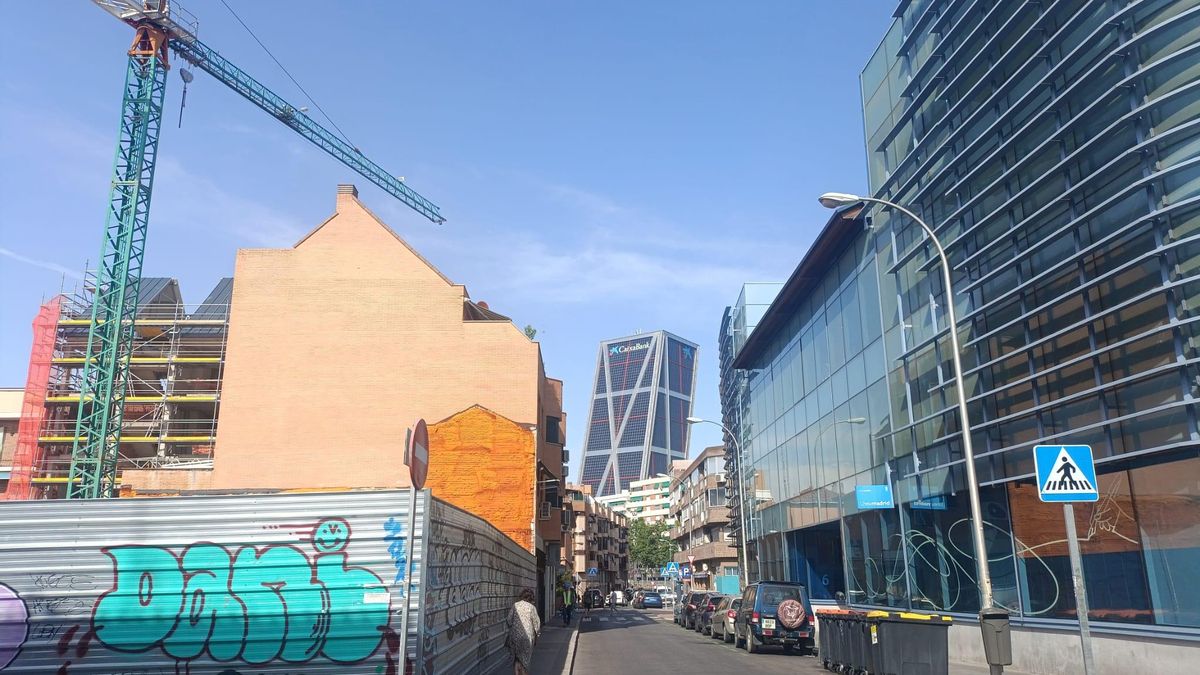
MADRID – The temperature on Calle Margallo in Madrid’s Tetuán district reached nearly 38°C on Wednesday, the last day of a heatwave that scorched Spain and much of Europe. “I guarantee it feels like 43°C,” said Beatriz, a waitress fanning herself outside a small bar with no air conditioning and no customers. “Part of the blame is the cement. Everything is concrete in this neighborhood.”
She is right. Trees in this area are rare. A few line Bravo Murillo, a wide main road. But narrow streets like Limonero or San Felipe have almost none. There are cars, sidewalks, buildings, and shops. But urban nature – the color green – is missing. Trees are central to adapting to extreme heat.
Tetuán is home to about 169,500 people. It is one of the most densely populated districts in Madrid. Known for its history of welcoming immigrant workers, it is now facing tourism and real estate speculation. More than 20 new buildings have gone up in the last three years.
Local neighborhood groups are fighting two battles. They want to stop a city plan that could double new housing in an already crowded area. They also want better access to nature. When summer hits, the lack of green space makes the “heat island” effect worse. This phenomenon makes cities significantly hotter than surrounding rural areas – sometimes by 1°C to 12°C.
A new report from environmental group Amigas de la Tierra and the Polytechnic University of Madrid says Tetuán is one of the areas that “urgently needs renaturalization.” This means adding plants and trees not just for ecology, but to help residents adapt to high temperatures. Poorer people cannot afford air conditioning or home renovations.
The study looked at access to green space in ten Spanish cities. It used the World Health Organization’s “3-30-300” rule: see three trees from your window, have 30% tree cover in your neighborhood, and be within 300 meters of a park of at least one hectare.
Madrid has about 17 square meters of green space per person, which is good compared to other cities. But 62% of its people do not have a large public green area within 300 meters of home. That is nearly two million people.
The report identifies four priority areas for adding vegetation: Puente de Vallecas, San Blas-Canillejas, Carabanchel, and Tetuán. These combine few green spaces with low incomes.
“On Calle Serrano in Madrid, there is also low access to nature. But high incomes allow people to adapt to extreme heat better. That is not the case in Tetuán,” said Miguel Díaz-Carro, biodiversity director at Amigas de la Tierra and a co-author of the study.
On the street, the heat is inescapable. Ángela and her two children, ages five and eight, rest at the metro entrance. The warm air from the tunnel still offers some relief. On Calle Margallo, heat from parked cars makes it worse. “If the weather were different, I would sit at a terrace for a drink. But with this heat, I stay inside with the air conditioning on,” said Miguel, a delivery driver.
All the terraces on Calle Sor Ángela de la Cruz are empty. Umbrellas are up, but hot air is trapped under the fabric. A concrete plaza in the middle of the avenue is empty too. No one sits on the benches until nightfall.
Victor, a mechanic who has lived in the neighborhood for 45 years, said: “It is unhealthy not to be able to enjoy the shade of a tree.” He considers himself lucky to have air conditioning at home. “Many neighbors do not. Their homes are hell. And the streets, with nothing green, are also hell.”
Trees can lower air temperature by 2°C to 5°C and surface temperature by 10°C to 12°C through shade and evaporation, said Isabela León Cesín, an architect and urban planner at Ecodes. “In an extreme event, that difference can save lives.”
But giving everyone air conditioning is not the answer. “A city that can only be lived in during summer if you can pay for air conditioning is not a city prepared for climate change,” she said.
Paula, a mother playing with her children in one of Tetuán’s few parks, said: “This shade is giving us life in these hot days. We need more children’s areas that can be used in summer.”
Miguel Díaz said cities cover only 2% of the Earth’s surface, but more than half of the world’s population lives in them. In Spain, that number is 80%. “In a climate and ecological crisis, cities are a key point for adaptation.”
He said the situation can be fixed. “That two million people in Madrid have no access to nature is outrageous. The good news is there are solutions. Administrations have the tools.”
He pointed to Tetuán’s concrete plazas. “These spaces are one of the biggest assets for expanding green zones.” The report says turning a plaza green is not just an environmental improvement, but a historical restoration. It means adding permeable surfaces, planting areas, and trees.
“Tetuán may not have room for a big park due to its density. But there are many renaturalization strategies. It is a matter of political will,” Díaz said.
Renaturalization means creating or encouraging wild biodiversity and natural processes in cities. “Every empty lot in Madrid should become a green zone. It is about resilience, adaptation, and physical and mental health.”
But green planning must come with policies to control land and rent prices, and to create public housing with green spaces. The report says it is possible to give poorer people access to nature without putting their right to decent housing at risk.
If Tetuán is transformed, delivery driver Miguel might one day take his breaks in a green space instead of sitting in his car with the engine running.