Iran and US start historic peace talks in Switzerland
Part of composite article US and Iran Locked in Midnight Talks as Lebanon War Threatens 60-Day Nuclear Deal View full article →
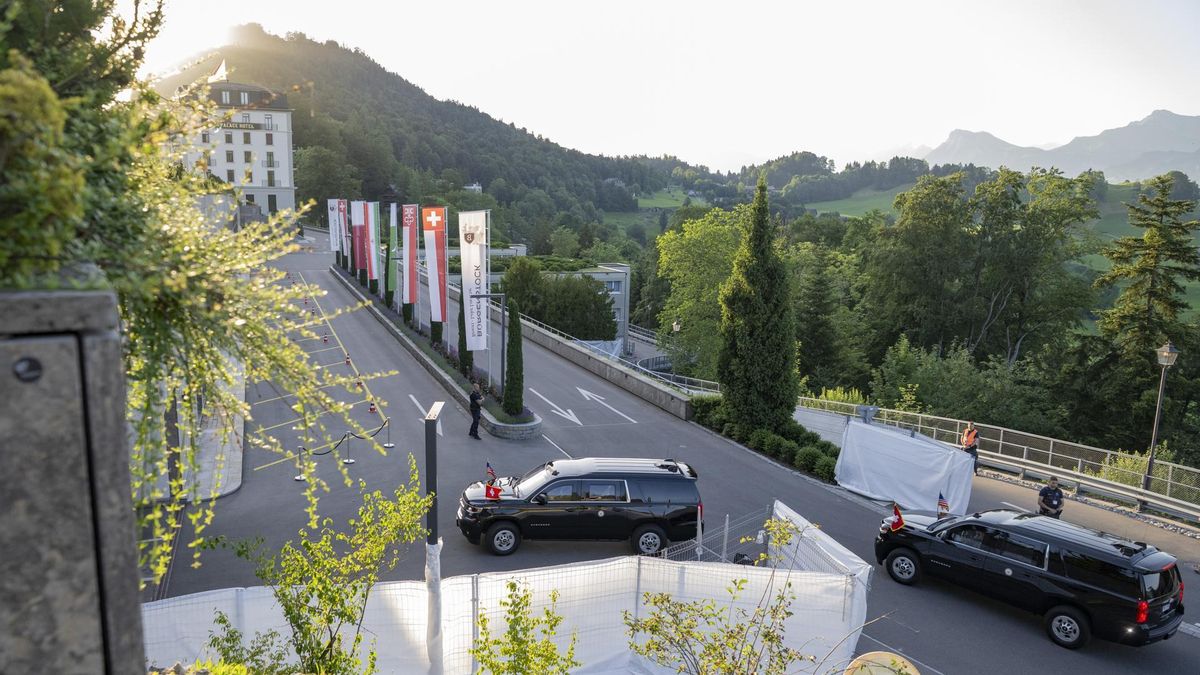
The United States and Iran began their first direct negotiations in Switzerland on Sunday, marking a potential turning point in decades of hostility.
US Vice President JD Vance and Iranian chief negotiator Mohamed Baqer Qalibaf led the talks at the mountain complex of Bürgenstock, near Lake Lucerne. Mediators from Qatar and Pakistan also attended.
Vance called the meeting "historic" and said the two sides had made "great progress." He added that if Iran gives up its nuclear ambitions and stops being a source of regional instability, the US is ready to "fundamentally transform" relations.
The talks focus on ending the war on all fronts, including Lebanon, Iran's nuclear program, and frozen Iranian funds. The negotiations follow a memorandum of understanding signed on June 17, which established a 60-day truce.
Iran suspended the talks on Friday after a major Israeli attack in southern Lebanon killed more than 100 people. But the two sides resumed discussions on Sunday.
Iranian Foreign Ministry spokesman Ismail Bagaei said the main issue is the violence in Lebanon, which he said violates the preliminary peace deal. "The Zionist regime continues to break its commitments," he said.
Despite Iran's military announcing a new closure of the Strait of Hormuz after the Lebanon attacks, US Energy Secretary Chris Wright said oil traffic is flowing normally. He reported that 67 ships passed through the strait in the last 24 hours, similar to pre-war levels.
US President Donald Trump warned Iran to stop its "paid agents in Lebanon from causing problems" or face renewed US attacks.
Iranian President Masud Pezeshkian said the preliminary deal benefits his country. He confirmed that $6 billion in frozen Iranian funds in Qatar will be returned as part of the agreement. He also repeated that Iran does not seek nuclear weapons.
Separately, Egypt hosted a four-party meeting in Cairo with foreign ministers from Saudi Arabia, Turkey, and Pakistan to discuss the Middle East situation after the US-Iran deal.
The Swiss talks also cover Lebanon and the role of the International Atomic Energy Agency, whose director Rafael Grossi attended the meeting.