Iran Closes Strait of Hormuz After Israel Strikes Kill Dozens in Lebanon
Part of composite article Iran Shuts Strait of Hormuz as U.S.-Iran Talks Start, 50+ Killed in Lebanon View full article →
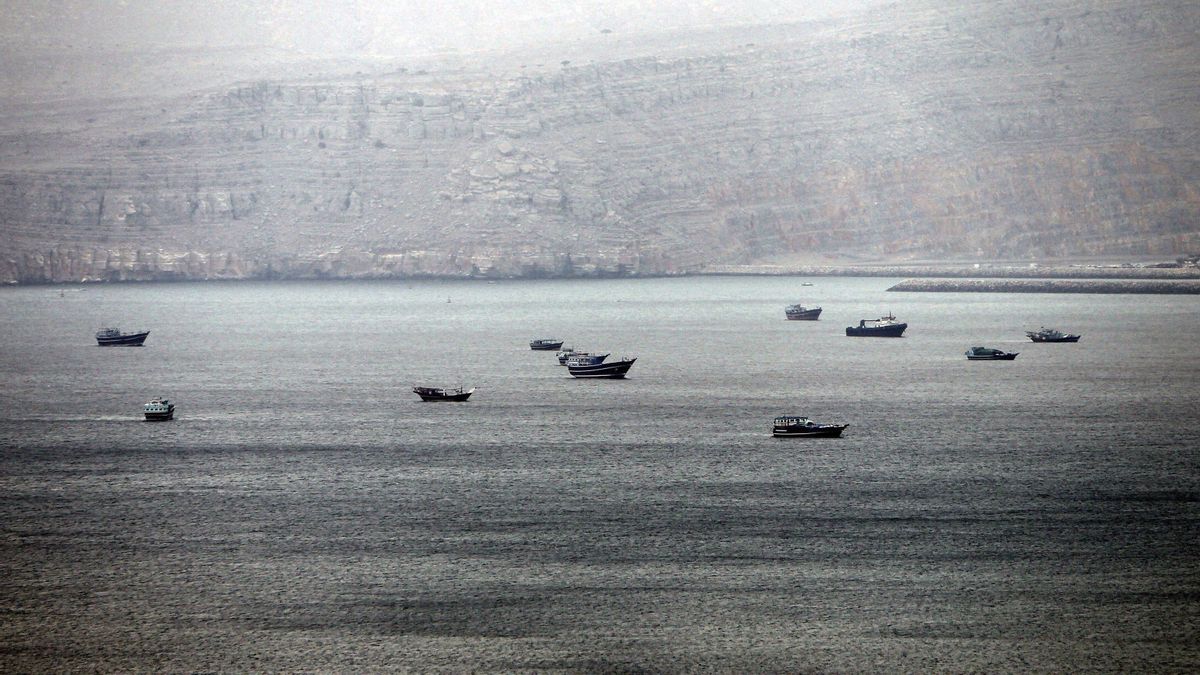
Iran’s military has closed the Strait of Hormuz to maritime traffic, accusing the United States of failing to stop Israeli attacks in Lebanon. The closure is a response to what Tehran calls a “flagrant violation” of a preliminary peace agreement signed this week.
In a statement carried by state broadcaster IRIB, Iran’s army said the U.S. did not uphold the first of 14 points in the memorandum of understanding: guaranteeing a halt to Israeli operations in Lebanon. Israeli strikes there have killed more than 50 people since Friday, according to the Israeli military, which says it is responding to attacks by the Iran-backed group Hezbollah.
The announcement cites “the relentless and continued violation of the ceasefire by the Zionist regime in southern Lebanon” and “the brutal killing and displacement of hundreds of thousands of oppressed people.” It also points to Israel’s refusal to withdraw from southern Lebanese territory, as stated Friday by Israeli Defense Minister Israel Katz.
The U.S. Central Command (Centcom) did not directly address the closure. On Saturday, it reported that 55 merchant ships and 17 million barrels of oil passed through the strait that day.
Minutes before Iran’s announcement, Hezbollah and the Israeli military confirmed they had agreed to a ceasefire brokered by the U.S. on Friday. This ceasefire is already part of the memorandum of understanding signed digitally Wednesday between Washington and Tehran.
Iran’s Foreign Minister, Abbas Araghchi, traveled to Switzerland on Saturday to demand U.S. compliance with the preliminary deal. The first round of negotiations with Iran is set for Sunday.
“In Switzerland, talks are planned to demand the other party fulfill its commitments and clarify how it intends to meet its obligations,” said Iranian Foreign Ministry spokesman Ismail Bagaei.
On the U.S. side, Special Envoy for the Middle East Steve Witkoff and President Donald Trump’s son-in-law, Jared Kushner, are already in Switzerland for the talks, U.S. Vice President JD Vance told Fox News on Saturday. Vance said he plans to join the negotiations in the coming days, alongside representatives from Pakistan and Qatar.
**Violence escalates**
Despite the truce, Israel launched numerous attacks on southern and eastern Lebanon overnight. Lebanon’s Civil Defense reported at least 16 dead, including a Lebanese soldier. The Israeli military said it was striking Hezbollah targets in response to overnight rocket fire from the militant group.
One of the deadliest strikes on Saturday hit a three-story residential building in the southern town of Barish, killing a father, mother, and their two children, a local official told Reuters.
Violence spiked sharply on Friday, one of the bloodiest days in weeks. At least 83 people were killed in Israeli strikes, including three children, and 141 were wounded in southern Lebanon and the Bekaa Valley, according to Lebanon’s Public Health Ministry.
The escalation followed the deaths of four Israeli soldiers, including a senior officer, when a tank was hit by Hezbollah. The group said the attack came after Israel broke an earlier ceasefire.
Since the start of the Israeli offensive on March 2, 4,057 people have died and more than 12,000 have been wounded in Lebanon, the ministry said.