Trump's Fragile Iran Ceasefire Cracks as Israel and Iran Trade Strikes
Part of composite article Iran and US Close to Deal as Israel Pounds Lebanon with Massive Strikes View full article →
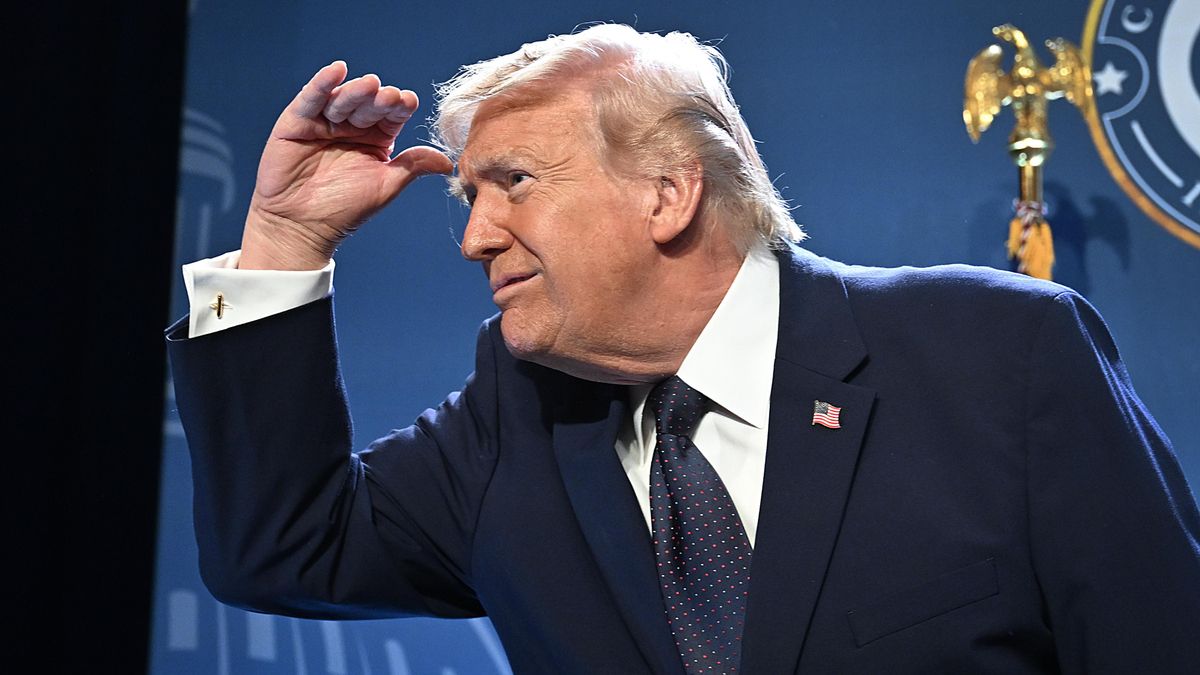
President Donald Trump spent two days in urgent talks to stop a fragile ceasefire with Iran from collapsing. Iran fired ballistic missiles at Israel on Sunday in response to Israeli attacks on Beirut, Lebanon. Israel then bombed targets in Iran, including Tehran, Isfahan, and Tabriz.
Trump publicly ordered both sides to stop "shooting" immediately. Iran and Israel agreed to halt hostilities on Monday morning, but both kept up aggressive language. The episode shows the situation remains highly unstable. The end of the war, which the US government has been announcing for weeks, may still be far off.
Iran launched several waves of missiles at Israel as revenge for Israeli strikes on Beirut suburbs. Israel responded with bombings across Iran. The Israeli military said it was ready for days of fighting or a longer campaign.
Trump is pushing for a deal to stabilize oil markets, which are under pressure from the closure of the Strait of Hormuz. But his ally, Israeli Prime Minister Benjamin Netanyahu, is frustrated that the war has not weakened Iran as expected. Trump spent last week sending private and public warnings to Netanyahu not to sabotage a potential deal. "He has no other choice," Trump told the Financial Times. "I make the decisions. He does not make the decisions."
Iran now insists that any agreement must include the situation in Lebanon. Israel invaded Lebanon last month to fight the Iran-backed Hezbollah militia and has ordered civilians to evacuate larger areas. Israeli bombings of Beirut suburbs on Sunday triggered the escalation, which was stopped at the last minute on Monday.
Analyst Trita Parsi of the Quincy Institute said that from Tehran's view, "a deal with Washington has little value if the US cannot—or will not—stop Israeli actions." He warned that "an Israel without limits would only increase the chance of a new conflict."
Another analyst, Danny Citrinowicz of the Atlantic Council, said Trump may need to pressure Israel to stop its military campaign to keep a diplomatic deal alive. "Otherwise, Iran will feel forced to respond to every Israeli attack," he said.
Trump eventually forced Netanyahu to back down after a phone call. Netanyahu appeared on Monday evening to say the campaign against Iran was over "for now." He threatened a harsh response if Iran attacks again.
Iran said earlier that it had completed its "response attacks." The speaker of Iran's parliament, Mohammad Bagher Ghalibaf, said that as long as the US and Israel lack "genuine will to build trust," Tehran's response will be the same. Also on Monday, Yemen's Houthi rebels announced a blockade on Israel in the Red Sea, in coordination with their Iranian allies.
Iranian President Masoud Pezeshkian said the dual strategy will continue. "Diplomacy and defense are the two wings of national power," he wrote on X. "We have not abandoned either the battlefield or the negotiating table."
Pakistan, the lead mediator, called for restraint. "Especially when the final goal is about to be reached," Prime Minister Shehbaz Sharif said.
A report from the Soufan Center noted that Trump now seems open to not having the US itself receive Iran's enriched uranium for disposal. The International Atomic Energy Agency had already noted the technical difficulties of such an operation.
The situation remains volatile. In Gaza, more than 900 people have died since the supposed ceasefire began in October. No date has been set for the second phase of the peace plan between Hamas and Israel.
In Lebanon, a series of ceasefires have failed. The latest, signed last week between Israel and the Lebanese government, did not include Hezbollah. Lebanese Defense Minister Michel Menassa said Israel has bombed the country nearly 3,500 times since April 16, the date of the previous ceasefire. Since then, 3,526 people have died in Lebanon, according to the office of Prime Minister Nawaf Salam.