Iran’s economy in ruins: “This is not a ceasefire, it’s an auction on our blood”
Part of composite article Trump Demands Ceasefire as Iran-Israel Fighting Escalates View full article →
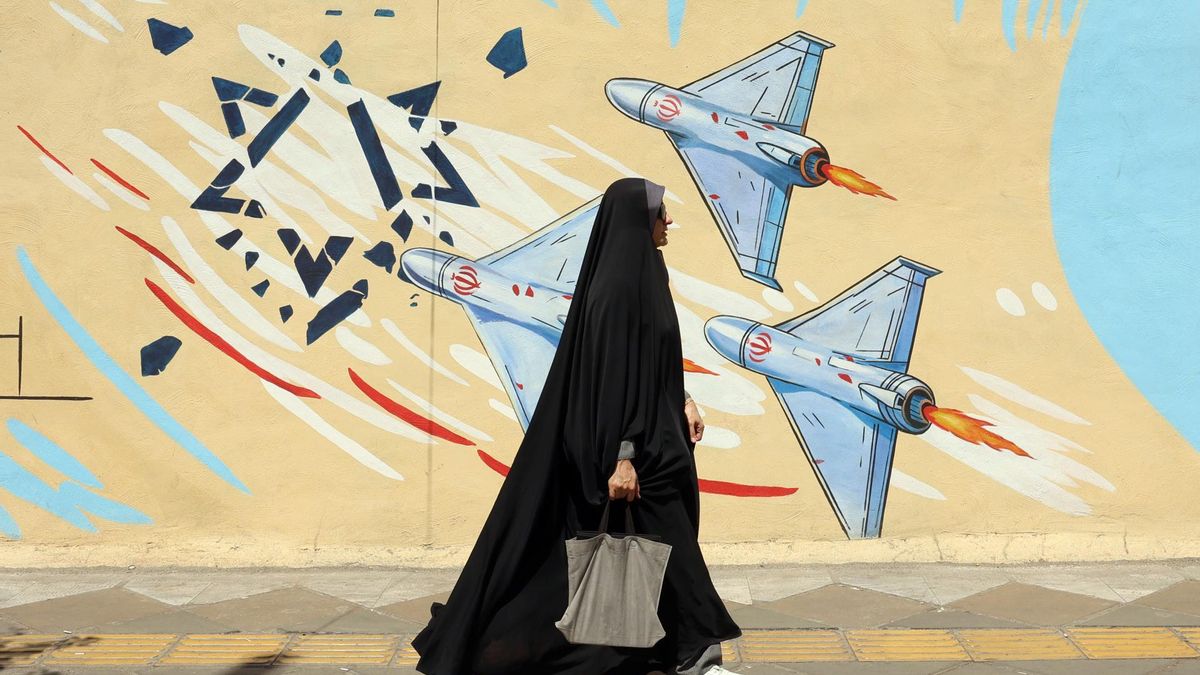
As Donald Trump threatens new military action against Iran while promising a lasting ceasefire, ordinary Iranians say they are trapped between a brutal regime and a devastating war.
Many now fear the worst has already happened.
“I predicted that if the US attacked, promising to rescue us but leaving no clear plan, it would be the worst scenario,” says Saeed, a protester from Tehran who uses a pseudonym for safety. “The economy is worse than before the protests. With daily raids, arrests and executions, the regime is emboldened. We are in a truly disastrous situation.”
The US and Israel launched military operations against Iran on February 28, sparking a war that has crippled the country. Internet was cut for months. Food and medicine prices have soared. Thousands have lost their jobs.
Human rights groups say at least 226 people have been executed this year. Over 50,000 were arrested during protests that began in December, according to the US-based HRANA group.
The regime has also begun training civilians, including children, to use weapons. State television shows teenagers handling Kalashnikov rifles.
“The use of children in security checkpoints and the broadcast of military training on TV have caused great concern,” says Elnaz, a human rights activist in Tehran. “Many child rights activists have protested. War should not be normalized.”
Amir, a businessman from Mashhad, once hoped US intervention would bring political change. Now he feels humiliated.
“This is not a ceasefire. It is an endless auction between the US and the Islamic Republic over our lives and our blood,” he says. “Trump threatened to send us back to the Stone Age, then treated this war like a business deal. He keeps changing his promises. It is truly humiliating.”
The economic crisis is deepening. Noor, a 39-year-old café owner in Tehran, says her business is not failing yet, but she fears the worst.
“It will take years to recover from the emotional and economic devastation caused by the January massacre and the war,” she says. “Even if this ceasefire holds, in a few months the economy will be so desperate that people will return to the streets out of pure despair.”
Widespread videos on social media show destroyed homes, schools and music academies. One video shows Hamidreza Afarideh, co-founder of a music school in eastern Tehran, sitting among the rubble of a building that once sheltered children learning to play instruments.
Ro, a 42-year-old musician in Tehran, condemns the attacks.
“What country has achieved freedom through military invasion? Afghanistan, Iraq, Syria?” he asks. “This attack was carried out under the false pretext of bringing democracy and saving the Iranian people. Instead, it has killed many of my compatriots and destroyed vital infrastructure.”
For many, survival is now the only goal.
“Right now we are just trying to survive,” says Amir. “No one can fight on an empty stomach.”