Spain's hottest April on record triggers urgent climate action
Part of composite article Fuel Costs Double, Crushing Farmers as Asean Turns 60 View full article →
AEMET, Spain's state weather agency, reported last week that April 2026 was the hottest April in the country's history. The heat was notable for its "intensity and duration," while rainfall remained "below normal values, very dry."
Summer is not expected to be better. This situation highlights the urgent need to act against extreme weather events that almost every year surpass the previous one. This urgency is the theme of World Environment Day on June 5: "For the climate, now."
"We said 1.5°C was the limit. We are crossing that limit," warns the United Nations Environment Programme. "For decades, the world has heard the climate story: warnings, goals, distant deadlines. Too often, the response has been drowned out by noise: delay, distraction, denial."
**Companies adapt with water, energy, and waste solutions**
Facing this scenario, companies like Veolia, a global leader in ecological transformation, are pursuing two strategies: mitigation and adaptation. Mitigation means limiting global warming. Adaptation means protecting people and territories.
Veolia's solutions provide "environmental security" through three basic actions: guaranteeing water availability and quality; implementing a circular economy to give waste new life; and reducing pollution to protect human health and industry.
Last year, with over 18,000 workers in Spain, the group supplied water to more than 13.5 million people in over 1,000 municipalities. It treated 1,280,910 tons of waste and helped avoid 363,440 tons of CO2 emissions.
**Renewable energy and recycling in action**
In Barcelona, the *Ecoenergies Barcelona* project recovers and distributes cold and heat for homes and industry. This ensures continuous supply to private clients and public buildings.
The company also turns forest, agricultural, and urban pruning waste into thermal and electrical energy. It promotes geothermal energy, using underground heat for heating, cooling, and hot water.
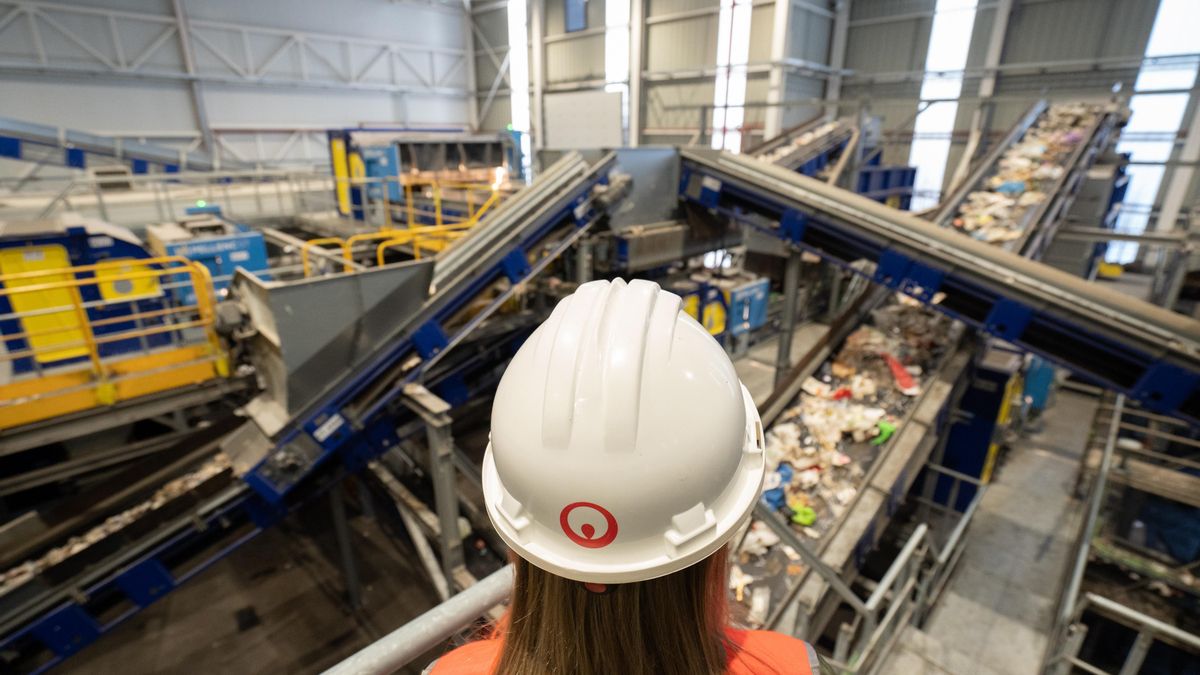
For recycling, a plant in Badajoz specializes in food-contact PET plastic. A plant in Seville handles industrial, post-consumer, and agricultural plastics. Together, they gave 130,000 tons of plastic a new life in 2025.
**Eco-factories and desalination for water security**
Veolia's "ecofactories" transform old wastewater treatment plants into resource-generating infrastructure. They regenerate water for urban, agricultural, and industrial use. They also turn waste into new resources, produce renewable energy, and protect biodiversity.
For desalination, which ensures water supply during long droughts, Veolia's innovations have improved energy efficiency by 85% and reduced operating costs by 90%.