Chinese Team Tests Century-Old Quantum Thought Experiment in Lab
Part of composite article Global Economy Reels as War, Climate Chaos, and AI Speculation Collide View full article →
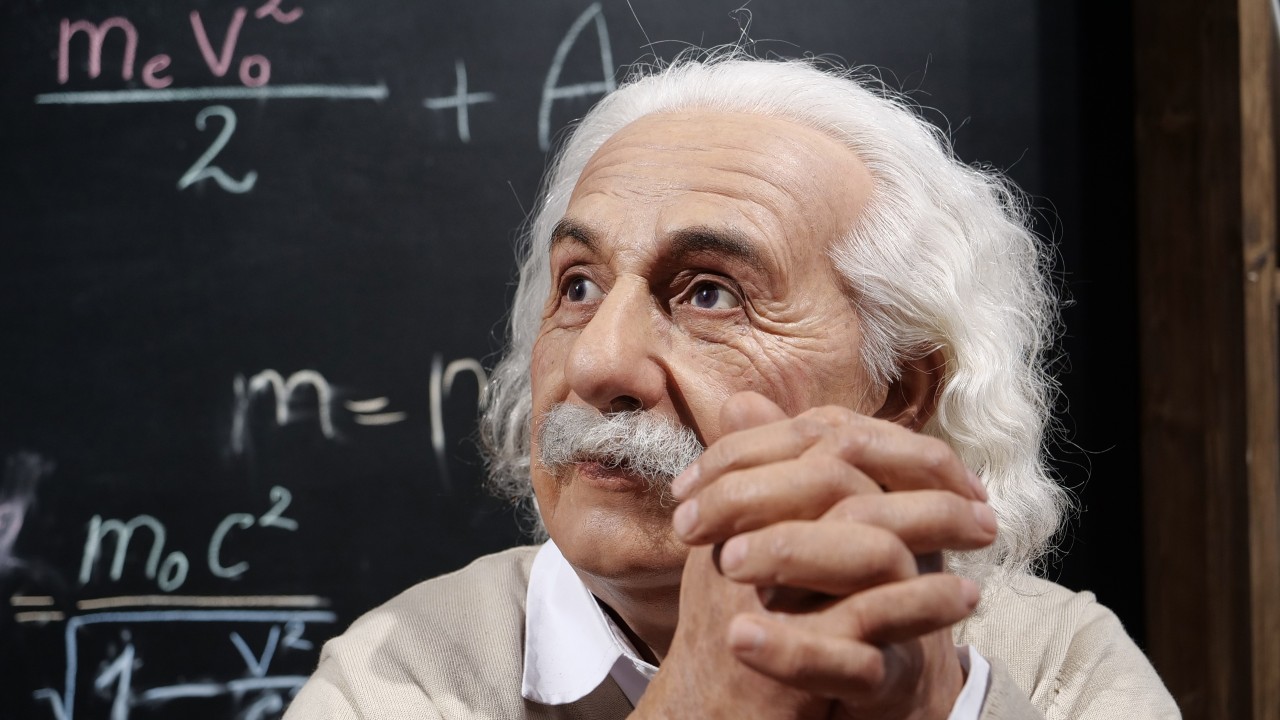
A team of Chinese scientists has conducted the first laboratory test of a thought experiment proposed by Albert Einstein nearly 100 years ago. Their work explores a fundamental and strange behavior of quantum particles that Einstein himself famously questioned.
The experiment was led by Professor Pan Jianwei and his team at the University of Science and Technology of China. They built an extremely sensitive device capable of measuring the tiny force, or "push," from a single particle of light, called a photon.
This test is based on a modern version of a classic physics demonstration known as the double-slit experiment. In the quantum version, a single particle seems to pass through two openings at once, behaving like a wave. Only when scientists measure which path it takes does it act like a single particle.
Einstein proposed a way to detect which path a photon took without directly stopping it. He suggested using the photon's own minuscule momentum to infer its path. He believed this would prove that quantum particles have definite, hidden properties, challenging the mainstream interpretation.
The Chinese team's precise measurements successfully detected the photon's momentum. However, the results confirmed the modern quantum theory: even with this indirect measurement, the photon's wave-like behavior disappears. The act of gaining "which-path" information, however subtly, changes the outcome.
The findings, published in *Nature Photonics*, do not prove Einstein "wrong." Instead, they provide a definitive experimental answer to a theoretical debate he helped start. The research demonstrates that the strange rules of quantum mechanics hold true even under the precise conditions Einstein imagined.