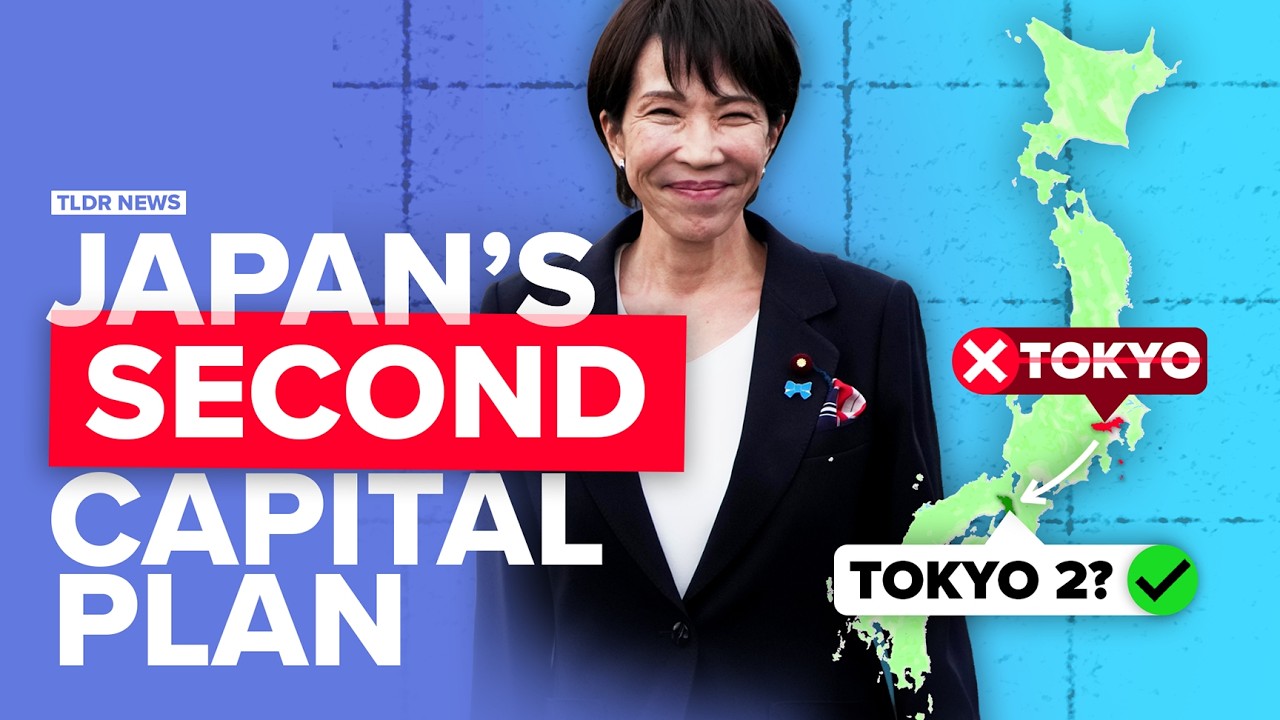
Tokyo’s Shadow: Why Japan Is Building a Second Capital
Japan is quietly constructing a new capital city. The project is not a response to war or revolution, but to a threat far more predictable: the next “big one” earthquake.
Japan is quietly constructing a new capital city. The project is not a response to war or revolution, but to a threat far more predictable: the next “big one” earthquake.
For decades, Tokyo has served as the nation’s political, economic, and cultural heart. It is one of the most populous metropolitan areas on Earth, home to over 37 million people. Yet this concentration of power has become a strategic vulnerability. Seismologists warn that a major earthquake directly beneath Tokyo—known as a “direct hit” type—is not a matter of if, but when. Such an event could paralyze the government, halt financial markets, and disrupt supply chains across the entire country.
The solution is a concept called the “Second Capital” or, more formally, the National Resilience Plan. Japan is not abandoning Tokyo. Instead, it is relocating key government functions to a purpose-built backup city located approximately 200 kilometers west of Tokyo, in the region of Osaka and Kyoto.
This is not a symbolic gesture. The plan involves moving critical administrative agencies, emergency response coordination centers, and backup data storage facilities to a new hub. The chosen location is strategically positioned away from the most active fault lines and tsunami-prone coastlines. The goal is simple: if Tokyo goes dark, Japan’s government can continue to operate within hours—not days.
The project is a logistical and financial undertaking of immense scale. Construction involves reinforcing buildings to withstand a magnitude 9.0 earthquake, building redundant power grids, and installing independent water and communication systems. The estimated cost runs into tens of billions of dollars, funded through a combination of national bonds and corporate partnerships.
Critics argue that the money could be better spent on retrofitting existing infrastructure or improving early warning systems. Supporters counter that the 2011 Tōhoku earthquake and tsunami exposed a fatal flaw: Japan’s centralized model leaves the entire nation hostage to a single point of failure. The Fukushima nuclear disaster, they note, was not caused by the earthquake itself, but by the cascading failure of backup systems.
The Second Capital project is scheduled to reach initial operational capability by the late 2030s. When complete, it will function as a parallel government hub, capable of housing up to 10,000 civil servants and their families. It will also host a “disaster resilience academy” to train future emergency managers.
In a country where every schoolchild drills for earthquakes, this is the ultimate insurance policy. Japan is not building a new capital to replace Tokyo. It is building a shadow capital to ensure that, even if the ground beneath Tokyo gives way, the nation does not fall.
Related Coverage
TSMC Drops $20 Billion on New Japan Plant to Feed the AI Beast
Taiwan Semiconductor Manufacturing Company (TSMC) is building a second advanced chip factory in Japan, pouring over $20 billion into the project to power the exploding demand for artificial intelligence.
$1.8B Pakistan-China Highway Plan Shadowed by Militant Buildup
Pakistan and China are negotiating a $1.8 billion deal to rebuild a key stretch of the Karakoram Highway, but a militant group is quietly expanding its footprint along that same route [230576].
Japan and Australia Build Their Own Shield as Trust in US Wavers
Tokyo and Canberra are expanding joint military exercises, sharing defense technology, and deepening economic cooperation to create an alliance that can stand without Washington.
China Builds Sanctions Shield as 100+ Nations Plug Into Its Dollar-Free Payment System
China is quietly constructing a financial backup system designed to survive U.S. sanctions, with its Cross-Border Interbank Payment System (CIPS) now operating in over 100 countries as Beijing seeks to reduce reliance on the dollar [227337].
Japan’s Yen Rescue Mission: A New Plaza Accord in the Making?
Japan is moving from verbal warnings to concrete action to stop the yen’s slide, and is now signaling it may seek international support for a coordinated intervention not seen since 1985.
Japan and Philippines Race to Stockpile Oil as Middle East War Threatens Asian Energy Lifeline
Japan is funding new oil storage in the Philippines and leading a regional pivot to emergency fuel reserves, as Asian economies scramble to protect themselves from supply shocks tied to Middle East conflicts.