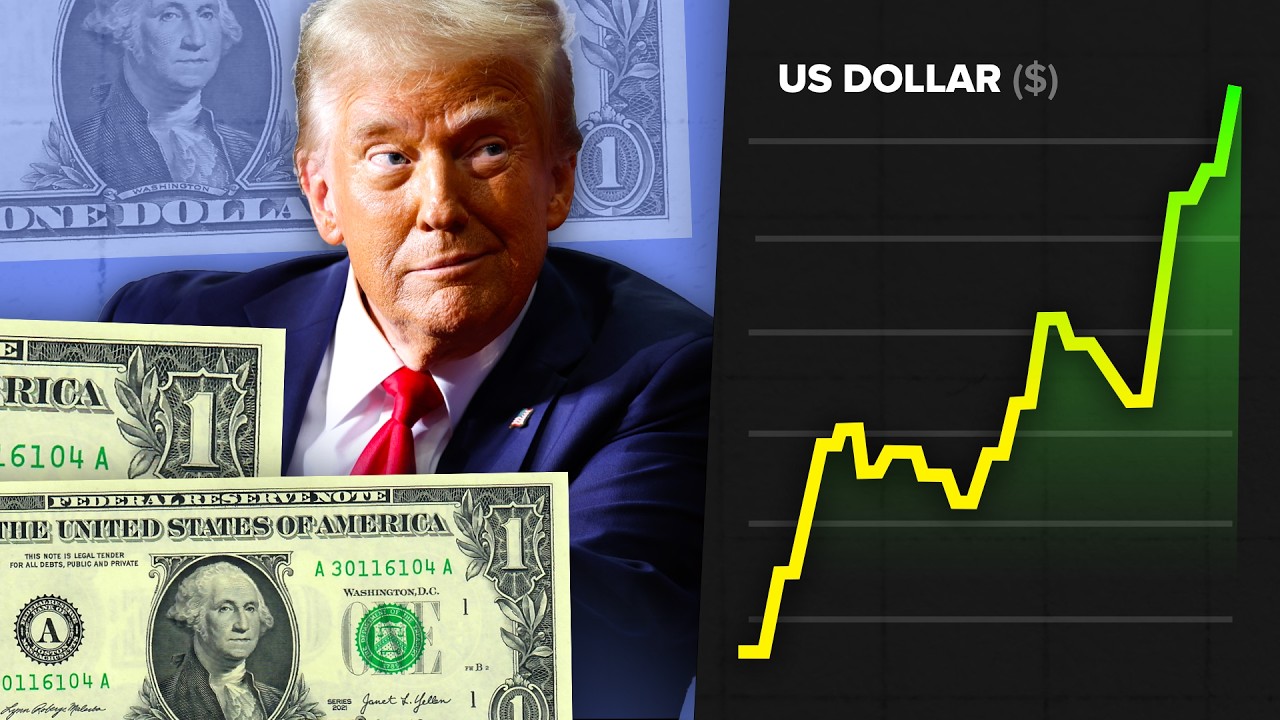
The Dollar’s Defiant Surge: Why the World’s Reserve Currency Keeps Getting Stronger
In a global economy often defined by uncertainty, one trend has become remarkably consistent: the relentless rise of the U. S.
In a global economy often defined by uncertainty, one trend has become remarkably consistent: the relentless rise of the U.S. dollar. While many analysts predicted a decline, the greenback has instead surged to multi-year highs, leaving investors, policymakers, and everyday consumers scrambling for explanations. This is not a story of American exceptionalism alone, but a complex interplay of monetary policy, geopolitical tension, and global capital flows. Here is a clear, factual breakdown of why the dollar is winning.
The Core Driver: Higher for Longer Interest Rates
The most direct cause of the dollar’s strength is the U.S. Federal Reserve’s aggressive interest rate policy. To combat the highest inflation in decades, the Fed raised its benchmark interest rate to levels not seen in over twenty years. Crucially, the Fed has signaled that these rates will stay high for an extended period—a policy known as “higher for longer.”
Higher interest rates make U.S. assets more attractive. Investors around the world can earn a higher return on U.S. government bonds and savings accounts than they can in most other developed nations. To buy these assets, they must first buy U.S. dollars. This increased demand pushes the dollar’s value up against other currencies, such as the euro, the yen, and the British pound.
A Global Safe Haven
When the global economy faces turbulence, capital tends to flee risky assets and seek safety. The U.S. dollar remains the world’s primary safe-haven currency. Recent geopolitical shocks—including the war in Ukraine, instability in the Middle East, and slowing growth in China—have triggered exactly this flight to safety.
Investors view the United States as a relatively stable political and legal environment. The U.S. Treasury market is the deepest and most liquid in the world, meaning investors can buy and sell large amounts of dollars with minimal disruption. During times of crisis, the dollar acts as insurance, and demand for insurance has soared.
The Weakness of Others
A strong dollar is not just about U.S. strength; it is also about the relative weakness of its major trading partners. The eurozone is teetering on the edge of recession, burdened by high energy costs and a struggling manufacturing sector. Japan has maintained ultra-low interest rates to stimulate its stagnant economy, causing the yen to plummet to its lowest level in decades against the dollar. China’s economy is grappling with a property sector crisis and deflationary pressures, weakening the yuan.
As these economies falter, their central banks cannot raise interest rates as aggressively as the Fed. This divergence in monetary policy creates a powerful tailwind for the dollar. The U.S. is simply offering a better return on capital in a world where such returns are increasingly scarce.
The Consequences: A Double-Edged Sword
A surging dollar is not universally beneficial. For American consumers, it is a welcome relief. A strong dollar makes imported goods cheaper, from electronics to clothing, and reduces the cost of foreign travel. It also helps lower inflation by making oil and other commodities priced in dollars less expensive.
However, for American exporters, the strong dollar is a significant headwind. It makes U.S.-made goods more expensive for foreign buyers, hurting companies like Boeing, Caterpillar, and major agricultural producers. For multinational corporations, a strong dollar reduces the value of their overseas earnings when converted back into dollars, which can drag down corporate profits and stock prices.
The impact is even harsher for emerging markets. Many developing countries borrow in dollars. As the dollar strengthens, their debt repayments become more expensive, straining their budgets and risking financial crises. This dynamic has already pushed several nations, including Argentina and Pakistan, closer to default.
The Outlook: How Long Can It Last?
Predicting the dollar’s peak is notoriously difficult. The key variable is the Federal Reserve. If the U.S. economy slows significantly or inflation falls back to the Fed’s 2% target, the central bank will likely cut interest rates. This would reduce the dollar’s yield advantage and likely cause it to weaken.
Conversely, if inflation proves stubborn or global risks escalate further, the dollar could continue its rally. For now, the fundamental drivers remain in place: a hawkish Fed, a shaky global economy, and a world seeking safety in the world’s most liquid currency. The dollar’s surge is not a mystery; it is a logical, if painful, reflection of the current global order.
Related Coverage
Related Editorials
Title: The Quiet Unraveling of Dollar Hegemony
The global financial order is not built on treaties or pacts. It is built on a single currency, the US dollar, which underpins international trade, central bank reserves, and the pricing of commodities from oil to wheat.
The Rise of the AI Dollar: How Silicon Valley Replaced Saudi Arabia as the Backbone of the US Currency
For decades, the global dominance of the US dollar rested on a single, tangible commodity: oil. The "petrodollar" system, forged in the 1970s, ensured that the world’s most crucial energy resource was traded exclusively in dollars, creating an insatiable global demand for American currency.