# The Philippines’ Economic Paradox: Why a Booming Nation Is Leaving Its People Behind
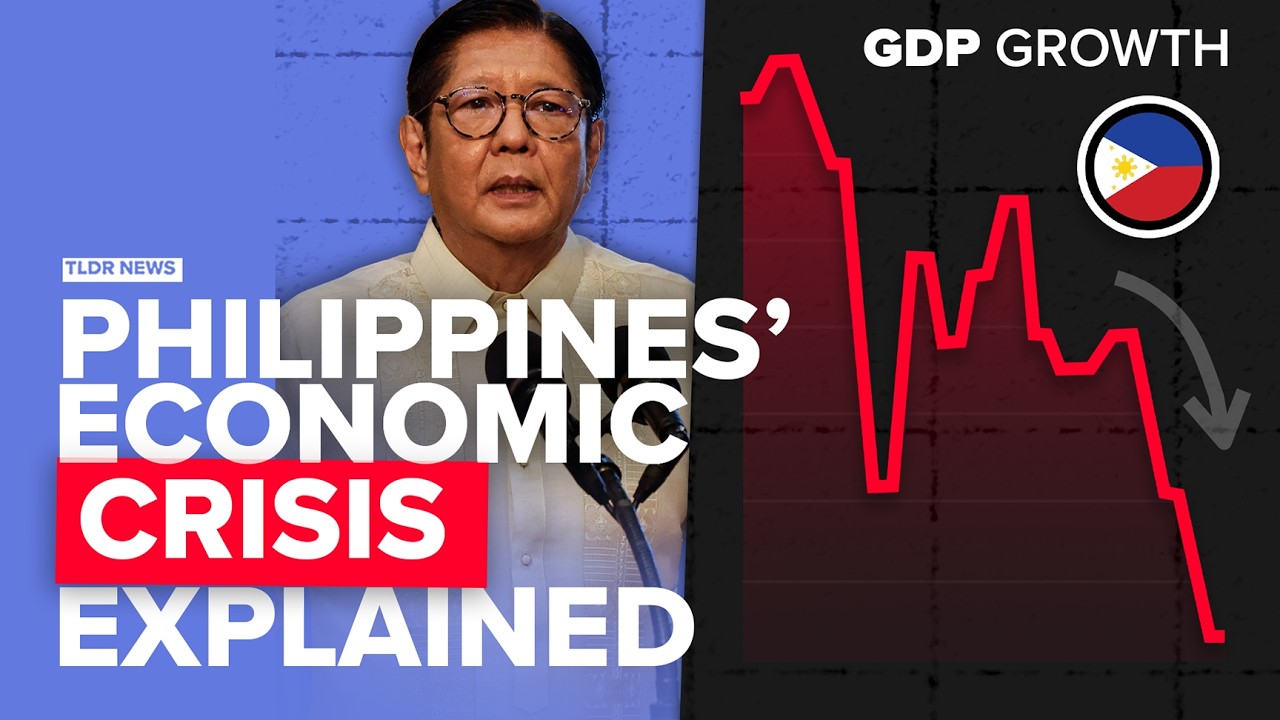
The Philippines has long been hailed as one of Asia’s rising stars. Its economy has grown at an impressive average of over 6% annually for the past decade—a rate that many developing nations envy.
The Philippines has long been hailed as one of Asia’s rising stars. Its economy has grown at an impressive average of over 6% annually for the past decade—a rate that many developing nations envy. Yet beneath this headline success lies a troubling reality: millions of Filipinos are not feeling the benefits. Poverty remains stubbornly high, wages are stagnant, and the gap between the rich and the poor is widening.
How can an economy grow so fast while so many of its citizens struggle to get by? The answer lies in a series of structural failures that have turned potential into paradox.
The Growth That Didn’t Deliver
Between 2010 and 2019, the Philippine economy expanded at a pace that outpaced most of its Southeast Asian neighbors. Gross Domestic Product (GDP)—the total value of goods and services produced—climbed steadily. Foreign investment poured in, the services sector boomed, and the business process outsourcing (BPO) industry turned Manila into a global hub for call centers and back-office operations.
But GDP is a blunt instrument. It measures the size of the economic pie, not how it is sliced. In the Philippines, the slicing has been deeply uneven. According to the Philippine Statistics Authority, the country’s poverty rate stood at 16.7% in 2018—meaning one in six Filipinos lived below the poverty line. By 2021, after the pandemic, that figure had risen to 18.1%.
Meanwhile, the richest 1% of Filipinos now control more than 50% of the nation’s wealth, according to a 2022 report by the nonprofit Oxfam. The middle class, once seen as the engine of stable growth, is shrinking. The result is an economy that looks strong on paper but feels fragile on the ground.
The Jobs Problem: Quantity Over Quality
One of the most glaring issues is the nature of employment. The Philippines has a low unemployment rate—hovering around 5% before the pandemic—but this masks a crisis of underemployment. A 2019 study by the Asian Development Bank found that nearly one in five Filipino workers holds a job that pays below the minimum wage or offers fewer hours than they need.
The BPO sector, which employs over 1.3 million people, is a double-edged sword. It provides steady income for many, but wages have barely kept pace with inflation. A call center agent in Manila earns roughly 20,000 pesos (about $360) per month—enough to survive, but not enough to build savings or invest in the future. Meanwhile, the manufacturing sector, which historically lifted millions out of poverty in countries like South Korea and China, has stagnated. The Philippines’ share of manufacturing in GDP has fallen from 25% in the 1980s to just 18% today.
The result is a labor market that churns out low-paid service jobs rather than high-productivity careers. Without a robust manufacturing base, the economy lacks the ladder that once allowed workers to climb from poverty into the middle class.
The Infrastructure Bottleneck
Infrastructure is another critical weakness. For decades, the Philippines underinvested in roads, ports, airports, and power grids. The “Build, Build, Build” program launched in 2017 aimed to change that, but progress has been slow. Bureaucratic delays, corruption, and land acquisition disputes have stalled many projects.
The cost is tangible. Traffic congestion in Metro Manila alone costs the economy an estimated 3.5 billion pesos ($63 million) per day in lost productivity, according to a 2019 study by the Japan International Cooperation Agency. Power outages are common in many provinces, deterring investors who need reliable electricity. And poor logistics mean that farmers in remote areas struggle to get their produce to markets, leading to waste and lower incomes.
Without modern infrastructure, businesses cannot scale efficiently, and workers cannot move freely to where jobs exist. The economy remains fragmented, with wealth concentrated in a few urban centers while rural areas are left behind.
The Education Trap
A third structural flaw is the education system. The Philippines spends less on education as a percentage of GDP than most of its neighbors—just 3.2% in 2020, compared to 4.1% in Vietnam and 4.7% in Thailand. Classrooms are overcrowded, textbooks are outdated, and many teachers are underqualified.
The consequences are stark. The 2018 Programme for International Student Assessment (PISA) ranked the Philippines last among 79 countries in reading comprehension, and second-to-last in mathematics and science. This means that even as the economy demands more skilled workers, the education system is failing to produce them.
Employers report a persistent skills gap. A 2021 survey by the Philippine Chamber of Commerce and Industry found that 60% of companies struggled to find workers with the right technical skills. This forces businesses to either invest heavily in training or to import talent from abroad—both costly options that slow growth.
The Remittance Dependency
Perhaps the most telling symptom of the Philippines’ economic malaise is its reliance on overseas remittances. Over 10 million Filipinos work abroad, sending home more than $30 billion annually—roughly 9% of the country’s GDP. This money fuels consumption, props up the peso, and keeps millions of families afloat.
But remittances are a crutch, not a cure. They mask the failure of the domestic economy to create enough good jobs. They also create a culture of dependency, where families rely on a relative abroad rather than demanding better opportunities at home. And when global crises hit—like the 2008 financial crash or the COVID-19 pandemic—remittances can dry up, exposing the fragility beneath the surface.
The Way Forward
Fixing the Philippines’ economy will require more than just GDP growth. It demands a fundamental shift in priorities.
First, the government must invest aggressively in infrastructure—not just in Metro Manila, but in the provinces. Roads, ports, and reliable electricity are the foundations upon which businesses and jobs are built. Second, education reform is urgent. The curriculum must be updated to meet the needs of a modern economy, and teachers must be better trained and paid. Third, the manufacturing sector needs a revival. This means cutting red tape, offering incentives for factories, and improving logistics to make Philippine products competitive globally.
Finally, the country must tackle corruption, which siphons off resources and undermines trust. The Philippines ranks 117th out of 180 countries in Transparency International’s Corruption Perceptions Index—a score that deters foreign investors and erodes public confidence.
The Philippines is not a poor country. It is a country with poor policies. The ingredients for success are there: a young, English-speaking workforce, a strategic location in Asia, and a vibrant entrepreneurial spirit. What is missing is the political will to turn growth into shared prosperity.
If the Philippines can bridge the gap between its economic potential and the lived reality of its people, it could become one of the great success stories of the 21st century. If it cannot, the paradox will only deepen—and the millions left behind will continue to ask the same question: Where did the growth go?