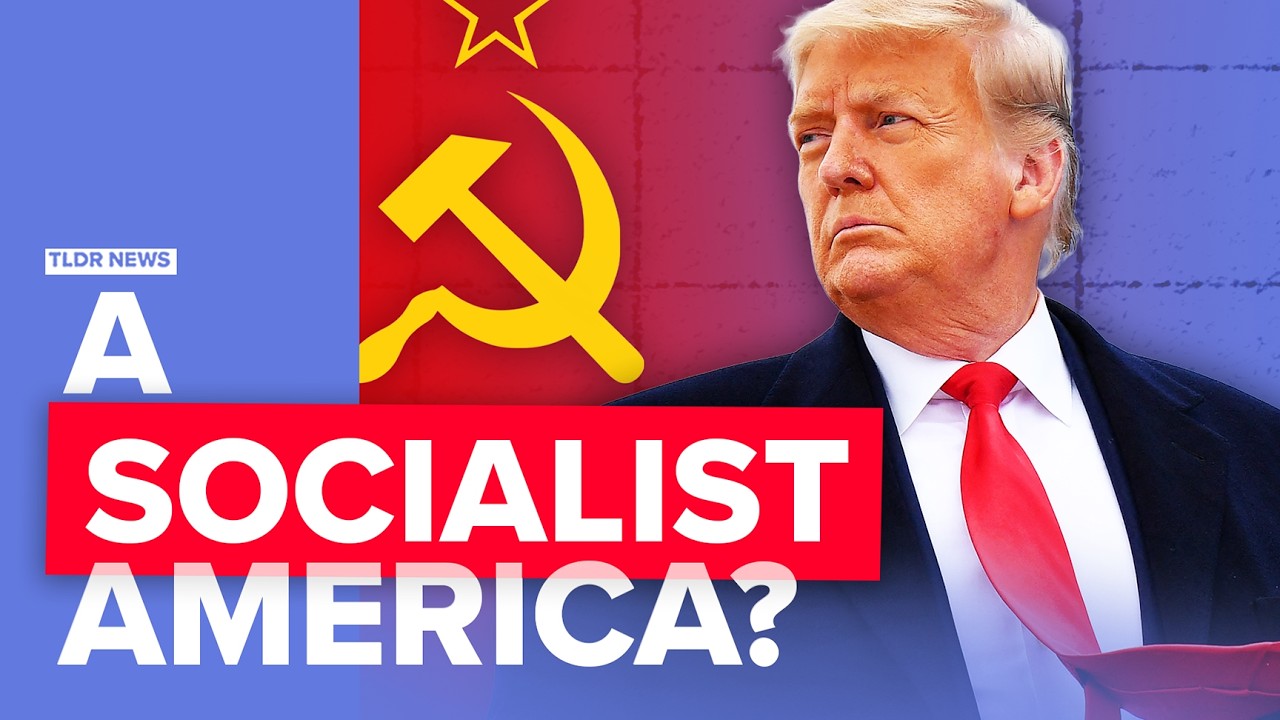
Is Socialism Creeping Into America? The Quiet Shift in Economic Policy
For decades, socialism was a political taboo in the United States—a term used to discredit opponents, not to describe policy. Yet in recent years, a growing number of Americans, particularly younger voters, have expressed favorable views toward socialist ideas.
For decades, socialism was a political taboo in the United States—a term used to discredit opponents, not to describe policy. Yet in recent years, a growing number of Americans, particularly younger voters, have expressed favorable views toward socialist ideas. This shift has sparked heated debate: Is the United States quietly moving toward socialism, or is this simply a rebranding of traditional progressive reforms?
Defining the Terms
Before examining the evidence, it is essential to clarify what socialism means in the American context. Classical socialism involves collective or state ownership of the means of production. However, in contemporary U.S. political discourse, "socialism" often refers to an expanded welfare state, higher taxes on the wealthy, and greater government regulation of the economy—policies that many European nations have practiced for decades under social democracy.
The Polling Evidence
Public opinion data reveals a notable trend. According to a 2021 Gallup poll, 47% of Americans aged 18 to 29 viewed socialism positively, compared to only 29% of those aged 65 and older. Similarly, a 2020 Pew Research Center survey found that 58% of Democrats and Democratic-leaning independents had a positive reaction to the term "socialism." These numbers represent a significant departure from the Cold War era, when socialism was almost universally rejected.
Policy Indicators
Several policy developments suggest a shift in the American economic landscape. The Biden administration's American Rescue Plan, the Infrastructure Investment and Jobs Act, and the Inflation Reduction Act all expanded the federal government's role in healthcare, energy, and social services. Proponents argue these are pragmatic responses to market failures; critics label them as steps toward socialism.
Key examples include:
Student loan forgiveness: The administration's attempt to cancel up to $20,000 in federal student loan debt for certain borrowers, though blocked by the Supreme Court, signaled a willingness to use executive power for wealth redistribution.
Medicare drug price negotiation: The Inflation Reduction Act granted Medicare the authority to negotiate prices for certain prescription drugs—a policy long opposed by pharmaceutical companies as government overreach.
Climate spending: Massive subsidies for green energy and electric vehicles represent the largest federal investment in industrial policy since the New Deal.
The Counterargument: Pragmatism, Not Ideology
Economists and political analysts caution against labeling these policies as socialist. Many point out that the United States already operates a mixed economy with significant government intervention in areas such as Social Security, Medicare, and agricultural subsidies. What appears new is the scale and scope of intervention, not its fundamental nature.
Furthermore, the U.S. economy remains overwhelmingly capitalist. Private ownership, profit motive, and market competition still dominate. The federal government owns no major industries, and the proposed policies do not seek to replace private enterprise but to regulate and supplement it.
International Comparisons
When measured against other developed nations, the United States remains a relatively conservative economy. Government spending as a percentage of GDP in the U.S. is approximately 36%, compared to over 50% in France and nearly 47% in Sweden. Even after recent expansions, the American welfare state is less comprehensive than that of most European countries.
The Political Reality
Despite the rhetoric, no major political figure in the U.S. advocates for the nationalization of industries or the abolition of private property—the traditional hallmarks of socialism. Instead, the debate centers on the proper balance between markets and government. Senator Bernie Sanders, often labeled a democratic socialist, explicitly supports a mixed economy modeled on Scandinavian social democracy.
Conclusion
The evidence does not support the claim that socialism is "coming to America" in any revolutionary sense. What is occurring is a gradual expansion of the welfare state and a renewed debate about economic inequality. Whether this constitutes socialism depends entirely on one's definition. For those who view any government intervention as socialist, the answer is yes. For those who understand socialism as a systemic replacement of capitalism, the answer is clearly no.
What is undeniable is that the Overton window—the range of policies considered politically acceptable—has shifted. Ideas once dismissed as fringe are now debated in mainstream politics. That shift, while not revolutionary, is significant. And it is likely to define American politics for the next decade.
Related Coverage
Related Editorials
# The Unraveling of Democracy: How Economic Insecurity Is Reshaping American Politics
A growing body of research suggests that financial precarity—not ideological polarization—may be the driving force behind democratic backsliding in the United States. For decades, political scientists assumed that citizens who felt economically secure would be more likely to participate in demo
# Is France Abandoning Neoliberalism? A New Economic Era Takes Shape
For decades, France has been a loyal practitioner of neoliberal economics—a model built on free markets, deregulation, privatization, and fiscal austerity. But recent political and economic shifts suggest the country may be charting a different course.
# Why Politicians Avoid Modern Monetary Theory—and Why That May Be Changing
Modern Monetary Theory offers governments a radically different way to think about spending, taxes, and debt. Its academic credibility is growing.
The Blame Game: How Modern Politics Abandoned Solutions for Scapegoats
A growing chorus of analysts argues that Western democracies are trading problem-solving for finger-pointing—and the consequences may be profound. Something has shifted in the machinery of democratic politics.
The Overton Window: How Radical Ideas Quietly Become Political Reality
In politics, the line between "unthinkable" and "inevitable" is thinner than most people realize. Policies that once seemed extreme—universal healthcare, basic income, or even the outright abolition of entire government agencies—do not break into the mainstream through sudden revolution.