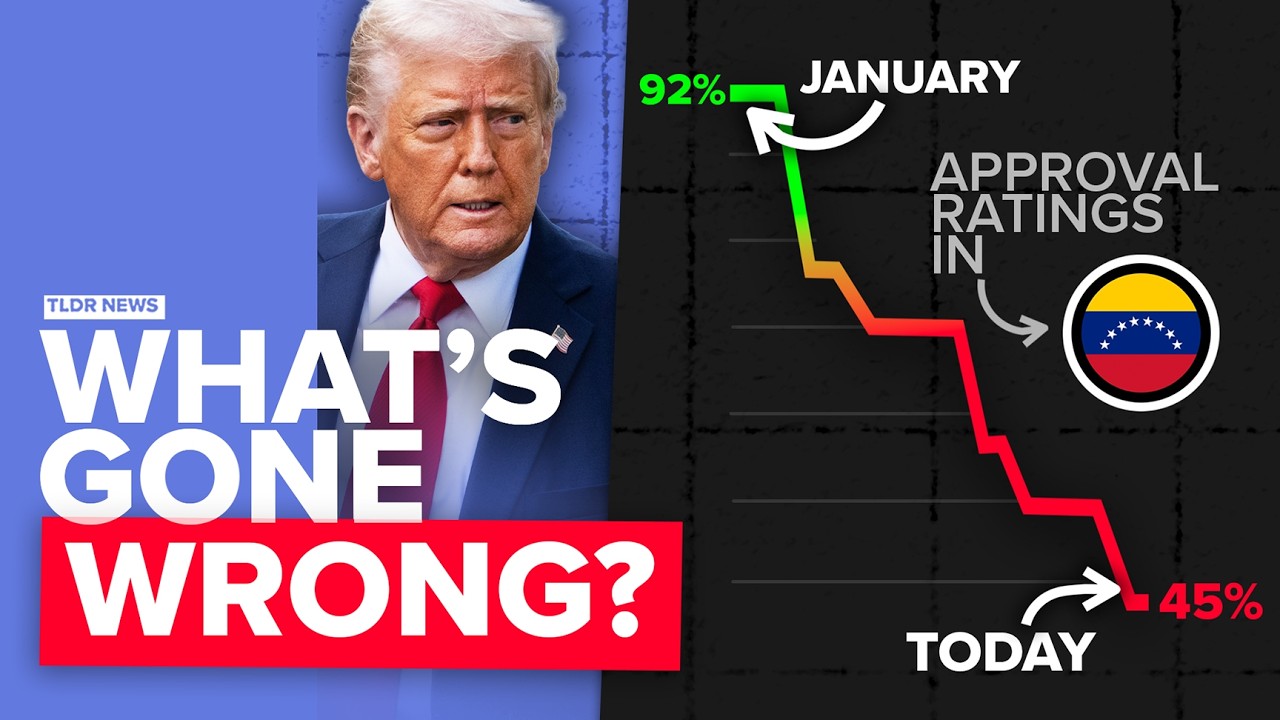
From Hero to Villain: Why Venezuelan Migrants Are Turning Against Trump
For years, Donald Trump was a hero to many Venezuelans. He railed against socialism, imposed crippling sanctions on Nicolás Maduro’s regime, and promised to restore freedom in their homeland.
For years, Donald Trump was a hero to many Venezuelans. He railed against socialism, imposed crippling sanctions on Nicolás Maduro’s regime, and promised to restore freedom in their homeland. But today, a dramatic shift is underway. In the heart of the Venezuelan diaspora—from Miami to Madrid—the former president is losing the very base he once courted. The reason is not ideology; it is policy.
The Broken Promise of “Remain in Mexico”
The core of the disillusionment stems from immigration enforcement. Under the Biden administration, hundreds of thousands of Venezuelans were allowed into the United States on humanitarian parole. Many fled economic collapse, hyperinflation, and political persecution. Trump, however, has vowed to end these programs. More critically, he has promised to reinstate and expand the “Remain in Mexico” policy, which forces asylum seekers to wait in dangerous border cities for their court hearings.
For Venezuelans who endured years of violence and instability, the prospect of being sent back to a third country—or worse, to a Maduro-controlled Venezuela—is terrifying. The memory of Trump’s mass deportation raids in 2019 and 2020, which swept up not only criminals but also long-term residents, remains fresh. One Venezuelan community leader in Florida stated, “We didn’t flee socialism to be treated like criminals by the man who claims to hate socialism.”
The Sanctions Paradox
Trump’s signature foreign policy achievement—maximum pressure sanctions on Venezuela—is now viewed with deep ambivalence. While these measures were designed to oust Maduro, they also devastated the country’s economy, accelerating the exodus of millions. Many Venezuelans argue that Trump’s sanctions did not break Maduro; they broke the middle class.
“The sanctions made life impossible,” explained a former Caracas economist now living in Texas. “They didn’t hurt Maduro. He still has his palaces. They hurt my mother, who couldn’t buy medicine.” This sentiment is echoed in polling: a 2023 survey by the Venezuelan-American Chamber of Commerce found that 62% of Venezuelans in the U.S. now believe Trump’s policies made the humanitarian crisis worse.
The “Latino” Identity Trap
Trump’s campaign has long assumed that Venezuelans are a natural constituency because of their anti-communist stance. But identity politics cuts both ways. Many Venezuelans feel personally targeted by Trump’s rhetoric about “invaders” and “poisoning the blood” of the country. They see a distinction between being anti-Maduro and being anti-immigrant. When Trump refers to all undocumented immigrants as criminals, Venezuelans hear an attack on their own families, many of whom are mixed-status.
“We are not ‘illegals.’ We are refugees,” said a Venezuelan pastor in Orlando. “When he calls us animals, he is calling my grandmother an animal. That is not something you forget.”
The Electoral Calculus
This shift has tangible political consequences. Florida, home to the largest Venezuelan diaspora in the U.S., is a critical swing state. In 2020, Trump won the Venezuelan vote handily. But recent polls from the Florida International University show that support has dropped by nearly 15 points among Venezuelan voters in the last two years. If that trend holds, it could flip key counties in a tight election.
The Biden administration has not been shy about capitalizing on this. By granting Temporary Protected Status (TPS) to Venezuelans and expanding legal pathways, they have created a powerful incentive for a community that now feels the Democrats are the only party offering a lifeline.
A Bitter Irony
The irony is profound. Trump introduced the most aggressive anti-Maduro policy in modern history. Yet, because of his immigration stance, he is now viewed by many Venezuelans as a greater immediate threat to their personal safety than the dictator they fled. For these voters, the choice has become stark: do you vote for the man who hates your government, or the man who seems to hate you?
The answer, for a growing number, is neither—or, with clenched teeth, the Democrat. As one Venezuelan activist in Miami put it, “We are still waiting for a candidate who understands that you can be tough on Maduro and still have a heart for the people he destroyed.” Until that candidate appears, the Venezuelan vote is no longer in the bag for Donald Trump.