The Newsroom That Answers Its Critics: TLDR Responds to Bias Claims, Ad Complaints, and the Mystery of Ross Perot
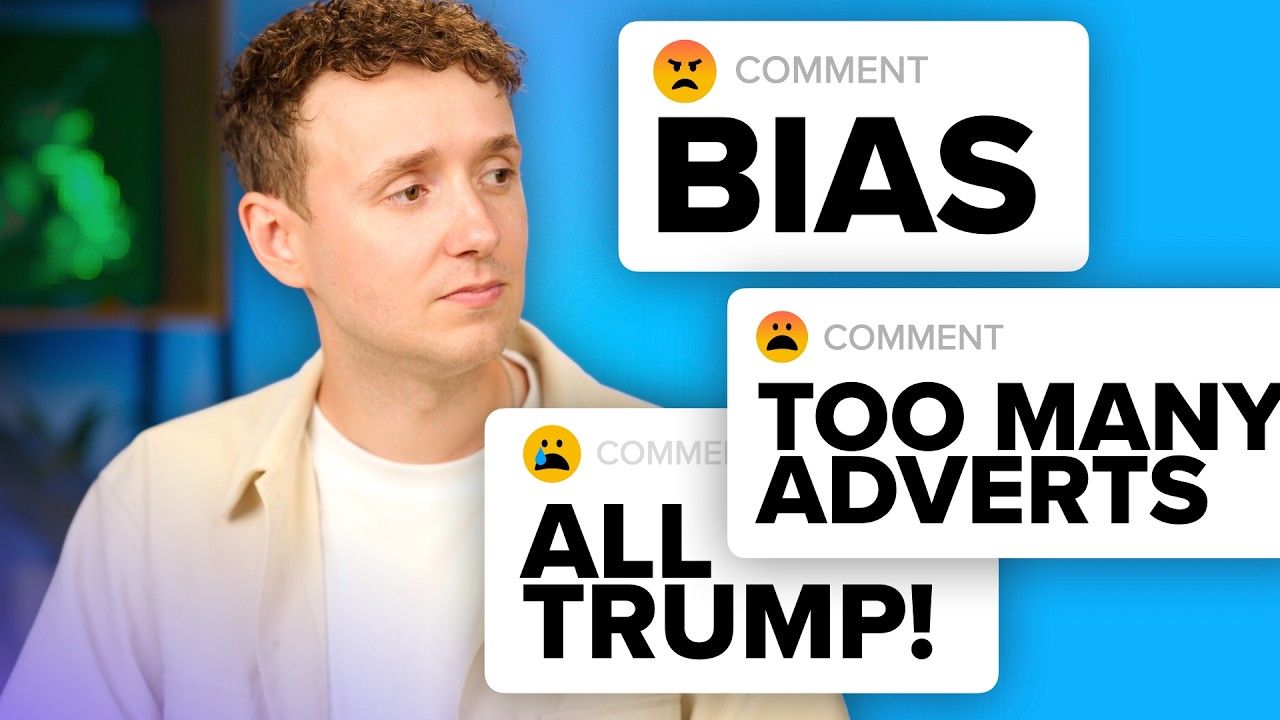
Every year, the team at TLDR News invites its audience to do something rare in media: tear the publication apart. In a video titled "TLDR Responds to Your Complaints and Criticism (2026)," editor-in-chief Zack Michaels, founder and CEO Jack, and a dozen staff members sat down to address the most pe
Every year, the team at TLDR News invites its audience to do something rare in media: tear the publication apart. In a video titled "TLDR Responds to Your Complaints and Criticism (2026)," editor-in-chief Zack Michaels, founder and CEO Jack, and a dozen staff members sat down to address the most persistent critiques of their work. Their answers offer an unusually candid look at how a modern digital news outlet balances journalism, business pressures, and an audience that watches closely.
The Bias Question: Left, Right, or Just the Facts?
The most common criticism TLDR receives is that its coverage leans center-left or progressive in story selection, tone, and framing. The team pushes back, partly with humor. Deputy editor-in-chief Rory invokes Hunter S. Thompson's line that "the only objective reporting is baseball score."
Their substantive defense rests on context. The team argues that US President Donald Trump dominates the news cycle because of his actions and historically low approval ratings, not because of editorial preference. "The main reason we cover Trump is because he keeps on ballsing things up," one staff member says. Rory adds that Trump's foreign policy is "particularly chaotic."
Others frame the issue as a false dichotomy. "It is our job to bias towards the facts," a staff member says. "Quite often you hear factual journalism is left-leaning. That's not the case. If it is biasing in a certain direction, it's biasing towards the truth and towards factuality."
The team acknowledges one tension in its approach. Some viewers argue that striving for artificial neutrality compromises objective truth during severe crises and human rights violations. On this point, several staff members agree. "Sitting on the fence for certain issues is not an impartial take when it comes to human rights abuses, when it comes to things like genocide," one says. Still, the house style favors presenting facts without moral labels. A recent video on Ethiopia, for example, stated plainly that 350,000 people were killed in the war. Staff concede this can feel "odd or even inhuman," but call it "the least bad option." Where something factually violates international law, they say, the videos will state that directly.
Adverts: The Numbers Behind the Complaints
Viewers frequently complain that adverts consume 20 to 40 percent of video runtime. The team says the data does not support this. According to internal figures, the average sponsored segment accounts for about 16 percent of runtime, averaging a little over 90 seconds, which is less than in any previous year. The team is also shortening sponsored segments while lengthening videos.
The economics are straightforward, staff say. "If you're consuming something for free, that 20 percent of the runtime keeps the lights on," one notes, adding that viewers can simply stop watching. The platform itself constrains the format, and traditional media carries heavy advertising too.
On the complaint that adverts are repetitive, the team pleads logistics. With multiple videos published daily, bespoke adverts for each video are impossible. Ads are sold in blocks because coverage is news-dependent: a video on the Congo will not draw the same audience as one on Trump and the US economy. Selling sponsorships in weekly blocks also protects editorial independence, the team argues, because sponsors cannot influence individual stories. This year, TLDR sponsored more of its own content than ever, with the company funding just under half its output, giving it tighter control over advert length and the short promotional messages that follow title sequences.
The "Unprecedented" Problem and the Perils of Prediction
One viewer joked about drinking every time TLDR says "unprecedented," calling it ruinous to their life. The team owns the habit. Staff admit the word gets called out internally, and one editor was recently caught using it incorrectly in the office. Hyperbole, they concede, is "part of the game in news presentations."
A related criticism concerns dramatic conclusions and whiplash between videos, such as one predicting collapse and the next a victorious recovery. The team attributes much of this to the news cycle itself. "We don't have a crystal ball," one says. Covering a story as it develops means publishing accurate information at each stage, even if the situation later changes. The German economy is a recurring example: a video on weak second-quarter data and a later one on surprising third-quarter data may look contradictory, but each reflected the latest release. Titles, staff note, cannot carry that much nuance.
Who Gets Covered: The Geography of the News
Critics say coverage skews heavily toward North America and Western Europe. The team responds with data from its Global channel. Of 280 videos released over 13 months, only 20 percent covered domestic US politics, a figure inflated by recent midterm coverage. Adding videos where the US is involved internationally, such as Trump's plans for the Middle East or Venezuela, brings the total to about 45 percent. Videos about Asia made up 33.8 percent, with the Middle East and the rest of Asia split fairly evenly. The remaining 20 percent covered the rest of the world.
Staff also argue that US-focused framing is often a hook rather than the subject. "We're just using Trump as a hook to get clicks and make it seem more relatable," one says. Audience demand drives the pattern: by watch time, engaged views, and thumbnail click-through rates, US-related videos perform best. The team encourages viewers who want more coverage of other regions to watch those videos when they appear.
Too Young, Too Healthy, Too Optimistic?
One viewer criticism stands out for its optimism: that the staff are "too young and healthy" and believe the future contains joy. The team finds this funny, then pushes back. "I am terrified about the future," one staff member says. Another describes the office as "quite miserable" and notes that end-of-times jokes are common. The consensus is that no one at TLDR feels full of joy about world affairs. If anything, the newest hires are the most optimistic.
Longer Videos and the Limits of Production
Viewers have asked for 15- to 20-minute deep dives. TLDR tried longer videos last year; they performed about as well as average videos while costing more time and money, making them unviable in that format. Current script length is calibrated so an animator can complete a video in one workday and writers can keep pace. Lengthening videos would break that workflow and raise costs.
Staff also argue that much more fits into a standard script than viewers assume. One writer notes that after editing, a piece that felt like it needed 600 more words can usually be cut to 1,200. "1,200 words is a lot of words, especially when you cut out all the filler," the writer says. For deeper coverage, TLDR produces long-form documentaries on its TLDR Party channel, including on-location filming and interviews, covering topics such as Greenland and Taiwan.
Sunday Silence, Visual Errors, and Accents
Why no Sunday videos? Mostly because of the weekend. Urgent stories go out as soon as possible, often Saturday morning; everything else waits for Monday, which performs better. Occasionally a Sunday video appears, meaning it was made on Friday.
On visual errors such as unlabeled axes, truncated scales, and editing mistakes, the team accepts the criticism. Staff review animations before export, and writers review full videos before publication, but "we are still human." Editors scan early comments to avoid repeating mistakes, and the team notes that viewers see the one error among a thousand correct decisions. The frequency of errors has dropped markedly, and the team apologizes for slips in its fortnightly editorial show.
On accents, the complaint that presenters sound southern draws laughter and a defense: many staff are northerners who have "code-switched," including host Ben, whose northern accent has faded. One staff member from Manchester admits to being "poshified" since moving south, though she reverts to a proper Manchester accent when working on TLDR North.
Mispronounced Names and AI Rumors
Presenters sometimes mispronounce foreign leaders' names, cities, and regional terms. The hosts say they look up pronunciations and keep someone beside them during recording to help. "We've definitely got better at this over time," one says.
The team also addresses a recurring suspicion: that the presenters are AI-generated. "We're not AI," one says, joking that AI would pronounce foreign names better. TLDR sources video clips only from providers that label AI content and does not use AI-generated clips; any AI material that slipped through was accidental. The production workflow, staff note with pride, has not changed since AI tools became widespread.
Abrupt Endings and the Three-Reasons Formula
Videos sometimes end abruptly without a proper conclusion. The team acknowledges the problem and has acted. Scripts, previously capped just below 1,200 words, are now expected to run between 1,200 and 1,240, and writers have been asked to use the extra room for better conclusions. At the same time, sponsored segments are shrinking, shifting the ratio between content and ads. Staff also defend open endings: some stories genuinely end on open questions, and forcing a tidy aphorism can feel false.
On thumbnails, viewers say Ursula von der Leyen, president of the European Commission, appears too often. The team's answer is practical: thumbnails with people perform better, and the EU needs a human face. "Who leads Europe" remains an open question, staff note.
Sensationalism and the Myth of a Golden Era
Critics call titles and thumbnails sensationalist, formulaic, and prone to photoshopped flames, tears, or apocalyptic framing. The team concedes the flames. "The fire sells," one staff member says. "I'm never going to stop using the fire." But staff reject the idea of a more intellectual past. "Even internally, there's a sort of nostalgia for a more credible era of TLDR that, when you scroll back through previous videos, never existed," one says. The team draws a line between clickbait and legitimately selling a video, justifying dramatic packaging as long as the content delivers and the title and thumbnail relate to it.
The three-reasons format draws similar criticism for being repetitive. The team disagrees. They have varied the number of reasons, including a four-reason Brexit video that "blew up" in the comments. Staff argue the structure aids comprehension and educational value, and that repetitive content is a bigger risk than a familiar format. Grand narratives, one says, "obscure more than they clarify."
Corrections, Labels, and Prediction Markets
A viewer suggested a regular corrections video every two to four weeks. TLDR already runs one: the editorial, published twice a month on the TLDR podcast channel, acknowledges errors and ends with a Q&A. On the inconsistent use of "far right" and "far left," the team points to a dedicated editorial episode.
On prediction markets as journalistic sources, several staff express sympathy with the criticism. They defend the practice as predictively useful, especially when polling is impossible, while noting that much of the money in these markets comes from functionally insider traders. Videos carry an on-screen reminder that TLDR is not paid by and does not endorse these platforms. A QR code links to an editorial episode in which Jack and Zack discuss whether the outlet is a prediction-market shill. The spoiler: it is not.
The Rare Fish Market and Ross Perot
Two criticisms defy easy categorization. One viewer wants more coverage of the Rare Fish Market. The team is baffled but game. "I would like to do some more videos on strange industries," one staff member says. "If there's a big Rare Fish business, I'd 100 percent get behind that."
Another viewer says TLDR does not mention Ross Perot, the US presidential candidate, nearly enough. Most of the room does not know who he is. The team concedes the point and floats a future title: "Could Ross Perot really become president?"
Paywalls, Platforms, and Transparency
Viewers complain that previously free content, such as the show Andamonium, moved behind a paywall on TLDR Party, and that the website is clunky. The team explains the economics: the predecessor show, Starmageddon, was stopped because it was not economically viable. Andamonium returned only under a funded model, after enough viewers asked for it. TLDR has no outside investors, so each project must pay its own way. Documentaries illustrate the stakes: the Greenland documentary cost about £14,000, and would have lost money unless it drew roughly six million YouTube views. To make ambitious projects without sponsors dictating coverage, the team says, some content must be funded by the segment of the audience that wants it. The website, staff add, now has proper search, categories, and a slider, with more improvements planned.
Too Open to Feedback?
One criticism argues the opposite of everything else: that TLDR is too open to feedback from people who are mostly attackers of small, independent, neutral outlets. Staff see transparency as a core strength. "I was a fan of TLDR before I started working here," one says, "and one of the things I appreciate most is their transparency." Another notes that criticism sometimes stings but often comes from a good place. Internally, a monthly meeting reviews what went wrong and what needs to change. One staff member argues that constant feedback is nearly the only way to maintain a whiff of neutrality. Jack, the founder, frames it as a responsibility. The modern media environment offers immediate feedback, he says, and a new-media outlet that aims to be ethical, independent, and informative has a duty to monitor what audiences think, listen to criticism, and respond. This video, he says, is that response.
Correction: An earlier version of this article misstated the name of TLDR's magazine in a promotional reference. It is TLDR, not "Too Long."