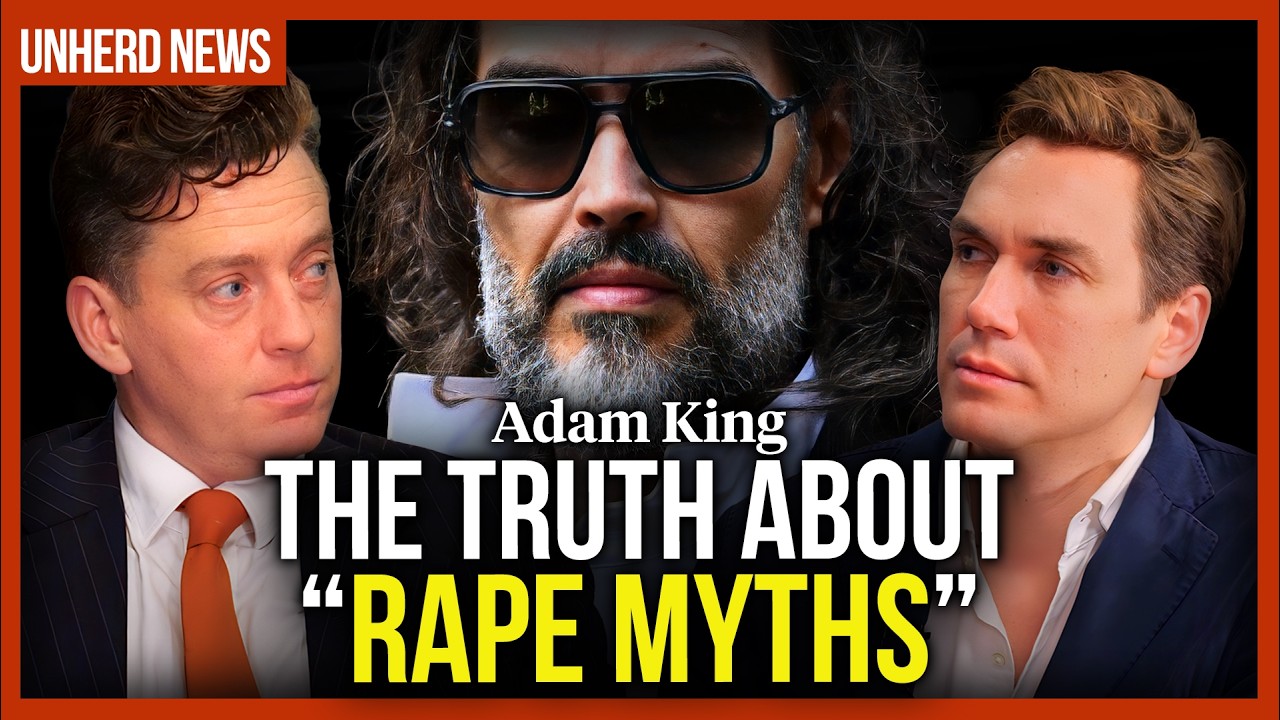
The Rape Myth Trap: How Fear of Backlash Is Silencing Defence Lawyers
A fierce debate has erupted over the use of so-called "rape myths" in British courtrooms, sparked by the recent high-profile trial of Russell Brand. At its centre is a troubling question: are we compromising the fundamental right to a fair defence in our quest to protect victims?
A fierce debate has erupted over the use of so-called "rape myths" in British courtrooms, sparked by the recent high-profile trial of Russell Brand. At its centre is a troubling question: are we compromising the fundamental right to a fair defence in our quest to protect victims?
The controversy began when Brand's defence lawyer, Ian Winter KC, faced intense media criticism for his cross-examination tactics. His crime? Telling the jury that "not one of them resisted or screamed or even tried to leave." This statement, a factual observation from the case, was condemned by the Justice Secretary as an appalling example of a rape myth. The ensuing fallout has led to calls for new rules to discipline barristers who deploy such arguments. But according to Adam King, a barrister who regularly handles sexual offence trials, this reaction threatens to undermine the very foundations of the adversarial justice system.
To understand the issue, one must first define the term. A "rape myth" is a widely held but false belief about rape, rapists, or victims. Examples include the idea that a person who wears revealing clothing is inviting sex, or that a "true" victim will always report the crime immediately. These propositions are demonstrably false. The concern is that jurors, influenced by these prejudices, may acquit defendants based on flawed reasoning. However, King argues that the current debate fails to distinguish between these false stereotypes and legitimate, evidence-based defence arguments.
The distinction is crucial. A defence lawyer cannot argue that a lack of physical resistance proves a defendant is innocent; that would be a false and impermissible claim. But a lawyer can, and arguably must, point to evidence that a complainant did not resist or attempt to escape. As King explains, this is not a neutral fact. Using Bayesian probability, he illustrates that any piece of evidence has a "likelihood ratio" that can shift the scales of probability. If the presence of resistance or injury would be a point for the prosecution, then the absence of such evidence is logically a point for the defence. It does not prove innocence, but it is relevant and probative.
"If it is put by the defense to the jury that this pushes the scales in the defendant's favor, that is entirely accurate and they ought to be permitted to say that," King states. "Otherwise, we are preventing defendants from putting relevant and probative evidence in front of the jury." This principle is fundamental to a fair trial. Both prosecution and defence are expected to make the most forceful case possible, even if it involves a degree of hyperbole. A prosecutor might claim that a match in physical description "cannot be a coincidence," knowing full well that it could be. The system trusts the jury to see through such overstatement. The question is why this trust is now being withdrawn for defence lawyers in sexual offence cases.
The push to ban "rape myths" stems from the belief that juries are uniquely susceptible to them. Yet, this assumption is contradicted by the most significant research on the topic. In 2020, Professor Cheryl Thomas KC, a highly respected academic, published a landmark study commissioned by the senior judiciary. She surveyed nearly 800 real jurors after they had served and found that, contrary to popular belief, jurors did not generally accept rape myths. Despite its significance, the study was largely ignored by the media and, critically, by many of the politicians now calling for reforms. The current drive for new rules appears to be driven by ideology rather than evidence.
This has created a climate of fear within the legal profession. Barristers are increasingly vilified for defending unpopular clients, with Ian Winter KC becoming a target for social media abuse. This has a chilling effect. "Defense lawyers being scared of making what are actually good points can lead to injustice," King warns. He reveals that he has already observed this happening, with colleagues holding back on valid arguments due to the political sensitivity of the case. The fear is that ambitious lawyers will simply avoid sex offence cases altogether, viewing them as a career minefield.
The proposed solution—codifying a ban on "rape myths" into the barristers' code of conduct—would make this situation far worse. Even if such a rule were confined to the most egregious falsehoods, the ambiguity would create a powerful disincentive. Barristers would become hyper-cautious, avoiding any line of questioning that could be interpreted as a "rape myth," thereby weakening the defence and increasing the risk of wrongful convictions.
The argument for these restrictions is not without merit. The primary concern is to prevent victims from being re-traumatised by aggressive cross-examination and to encourage them to report crimes. If victims fear being vilified in court, they are less likely to come forward. King acknowledges these concerns and agrees that overly aggressive cross-examination is unacceptable and that judges should intervene. He also suggests that reducing the crippling delays in the justice system, which can see victims waiting up to five years for a trial, would significantly improve their experience.
However, he argues that these issues can be addressed without sacrificing the defendant's right to a full and fair defence. The right to cross-examine is a non-negotiable component of the search for truth. A jury is likely to be put off by a gratuitously nasty cross-examination, meaning such tactics often backfire.
Ultimately, the debate over "rape myths" is a proxy for a much larger cultural conflict. It pits the need to listen to and protect victims against the foundational principle that every accused person, no matter how unpopular, deserves a robust defence. These two imperatives are not mutually exclusive. As King concludes, we must be able to talk about both. The path forward requires an evidence-based approach, not one driven by emotion or political expediency. To do otherwise risks convicting innocent people, a grave injustice that should be avoided at all costs.
Related Coverage
Germany’s Judges Sound Alarm: Far-Right AfD Could Weaponize Courts, Prosecutors Demand Reform Now
German judges and prosecutors are demanding urgent legal reforms to prevent extremists from abusing the justice system as the far-right Alternative for Germany (AfD) surges in polls. The warning comes as Chancellor Friedrich Merz faces mounting pressure, cancelling his United Nations trip amid party rebellion and election losses.
AI or Artists? The Fight for Creative Careers
A global copyright battle over an AI-generated meme and a literary scandal at the Frankfurt Book Fair are forcing the creative world to ask whether machines can truly create — and who owns what they make.
Bangladesh Moves to Criminalize AI Porn, Critics Warn of Censorship
Bangladesh is drafting a tougher cyber law to tackle AI-generated fake images and videos, often used to harass women. The proposed rules specifically target this growing form of abuse, but critics warn the law's broad provisions could threaten free speech online.
France’s AI Copyright Bill Sparks War with Artists and Musicians
France’s proposed law to let artificial intelligence systems use copyrighted songs, books, and images without permission has ignited a fierce backlash from cultural groups, stalling parliamentary debate and exposing a growing global rift between tech giants and creators.
US Sanctions Threaten ICC as Duterte Trial Opens
The International Criminal Court faces mounting pressure from the United States as member countries gather in The Hague for their annual meeting, the same day the high-profile trial of former Philippine President Rodrigo Duterte begins.
Meta on Trial: Feds Seek Shake-Up as Judge Weighs Breakup, Teen Safety, and Instagram’s Future
A landmark U.S. court case against Meta, the parent company of Facebook and Instagram, could force the tech giant to change its algorithms, add stricter age checks, or even break up its business, as the Federal Trade Commission (FTC) accuses the company of harming children and dominating the social media market.
Related Editorials
Australia’s New “Journalism” Law Could Make Reporting a Crime
In a move that has alarmed press freedom advocates worldwide, Australia is on the verge of enacting legislation that legal experts warn could effectively criminalize routine journalism. The proposed law, known as the *Criminal Code Amendment (Hate Crimes and Other Measures) Bill*, introduces a swee
The Blame Game: How Modern Politics Abandoned Solutions for Scapegoats
A growing chorus of analysts argues that Western democracies are trading problem-solving for finger-pointing—and the consequences may be profound. Something has shifted in the machinery of democratic politics.