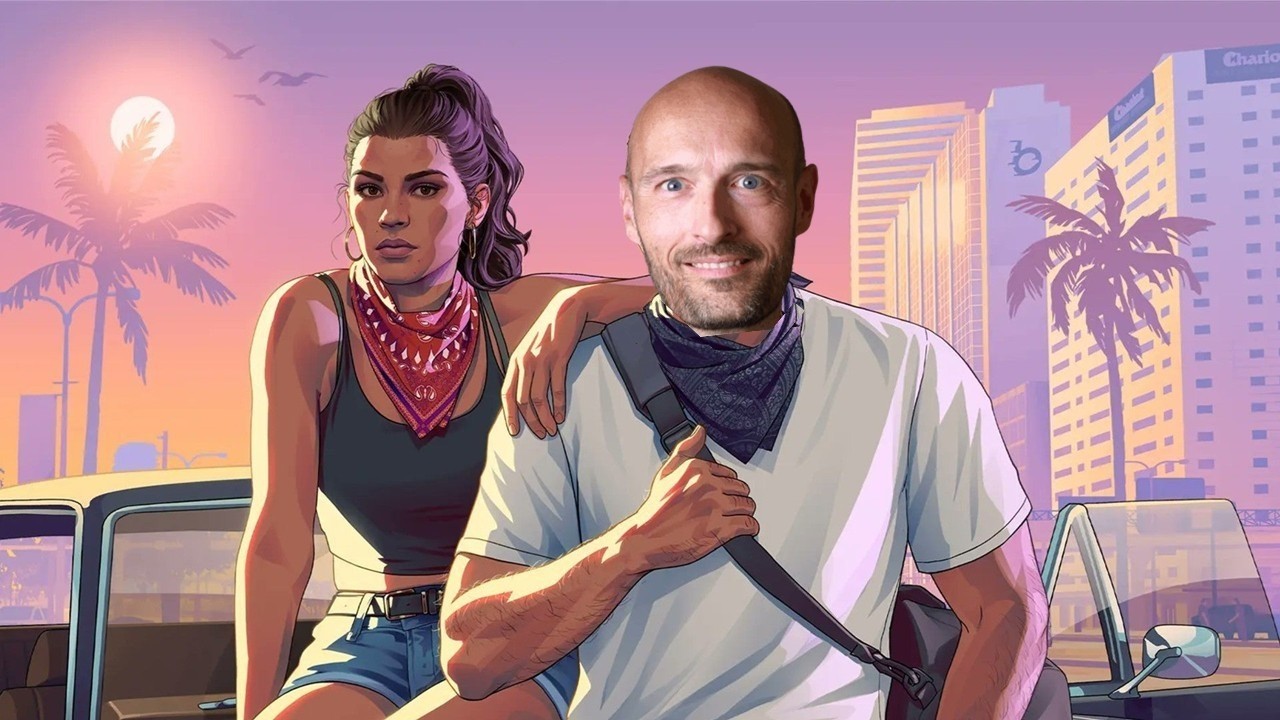
The Billion-Dollar Bet: What GTA 6 Reveals About Money, Work, and Virtual Economies
When Grand Theft Auto 6 launched this Thursday, headlines claimed the American economy lost a billion dollars in output as 1. 5 million workers called in sick to steal virtual cars.
When Grand Theft Auto 6 launched this Thursday, headlines claimed the American economy lost a billion dollars in output as 1.5 million workers called in sick to steal virtual cars. That figure may not survive scrutiny, but the real numbers behind the game are stranger still. It cost more than any entertainment product ever made. It may have paid for itself before anyone played it. And its publisher operates what might be the most profitable central bank on earth.
The sick-day forecasts began with a survey PC Mag commissioned from YouGov in late October. Eight percent of gamers surveyed said they planned to take time off work or skip school to play the game. Scaled across all American gamers, that suggests 12.5 million people rearranging their week around a video game, about eight times the number in the billion-dollar headline. The two figures measure slightly different things: one counts people planning a day off, the other counts people planning to lie to their boss about it.
These numbers are mostly multiplication delivered with a straight face. In 2017, the outplacement firm Challenger Gray and Christmas calculated that a total solar eclipse would cost American employers $694 million by assuming 87 million workers would step outside for 20 minutes to look at the sky. The firm issues a similar report every spring for March Madness, the college basketball tournament. Its 2023 estimate was a record $17.3 billion, calculated to the penny. The assumption underneath all of this is that if someone wasn't looking at the sun or a basketball bracket, they would be working flat out every minute of the day, which suggests nobody involved has spent time in an office.
We do have a real-world test of what happens when a whole country takes a day off. In June 2022, Britain received an extra bank holiday for Queen Elizabeth's Platinum Jubilee. Beforehand, the government's culture department estimated it would cost the economy 2.39 billion pounds, noting that the two biggest monthly falls in UK GDP had come during the months of the previous two jubilees. When the numbers arrived, revised ONS data cited by the House of Commons Library showed GDP falling 0.7 percent in June 2022 and then growing 0.5 percent in July. The work didn't vanish. It got done a little later, which anyone returning from holiday to a full inbox will recognize. Paid holiday is something employees are entitled to under most contracts. When they take it isn't a macroeconomic crisis.
That doesn't mean nobody rearranged their week. According to The Atlantic, the US Army's 9th Engineer Battalion at Fort Stewart in Georgia offered a guaranteed 96-hour pass for launch weekend to any soldier who reenlisted for at least two more years. Forty-three soldiers signed up, roughly 180 days of service for each day off. When a video game gets soldiers to reenlist, and according to the Financial Times has rival developers pushing their November releases back to get out of its way, there is a real finance story underneath the made-up numbers.
Analysts estimate that Rockstar Games spent somewhere between 1 and 1.5 billion dollars making Grand Theft Auto 6, more than any film has ever cost and the most expensive video game ever developed. Why would a rational company make a bet that big, and who ends up paying for it?
While the sick-day forecasts are mostly invented, serious academic research shows that video games do affect how much people work. A 2021 paper in the Journal of Political Economy used American time-use diaries to show that better video games and recreational computing had lowered the working hours of men aged 21 to 30 by about 2 percent since the mid-2000s. That accounts for nearly half of young men's overall drop in work activity over the period and almost three-quarters of the gap that opened between younger and older men. The authors include a careful caveat: the government survey lumps video games together with card games and board games, so they may be identifying a Scrabble boom. Assuming it wasn't Scrabble, a product that can move the labor supply of an entire demographic is a serious business.
Nobody outside the company knows what Grand Theft Auto 6 cost, and Rockstar won't confirm a number. The closest thing to an official figure came from its head of publishing, who told Bloomberg the game did not cost more than the Burj Khalifa in Dubai, which cost about 1.5 billion dollars. Bounding a development budget with the price of the world's tallest building is an unusual form of financial disclosure, though the Burj Khalifa had its own budget problems. It was originally meant to be called the Burj Dubai, but Dubai needed a bailout from Abu Dhabi during its 2009 debt crisis, and the tower was renamed after Abu Dhabi's ruler. Rockstar has at least avoided naming its game after a creditor.
Take-Two CEO Strauss Zelnick seems relaxed about the spending. When Bloomberg's Jason Schreier asked whether Rockstar had an unlimited budget, Zelnick replied that his son was about to get married and he had told him he could have an unlimited budget for the wedding. The son surpassed it.
The Burj Khalifa isn't the obvious comparison, because this satire of Miami was built in an old newspaper building in Edinburgh. It makes more sense to price it in Scottish infrastructure. At a billion dollars or more, Grand Theft Auto 6 cost about two or three Scottish Parliament buildings, which came in at 414 million pounds, or roughly one Edinburgh tram line, which cost about a billion pounds once interest is included and arrived years behind schedule. Grand Theft Auto 6 was delayed too, but only by about a year, and unlike the tram line, it is expected to make money.
The bill is mostly people. When Rockstar shipped Red Dead Redemption 2 in 2018, it had 2,441 employees. By the time Grand Theft Auto 6 was finished, headcount had nearly doubled to 4,711 people across 12 offices. A game industry veteran quoted by The Economist estimates that the cost of making a top-quality game has risen tenfold every decade since the mid-1990s. If that continues, Rockstar will have to stop comparing its budgets to buildings and start comparing them to small countries.
If nobody knows what the game cost, nobody knows what it will make, which hasn't stopped anyone from forecasting. Pre-order estimates range from 1 billion to 1.65 billion dollars, depending on the newspaper. The analyst Bloomberg spoke to forecast anywhere from 20 million to 85 million copies. The investment bank Piper Sandler looked at traffic to the game's Reddit forum, multiplied it by 35, and arrived at 46 million copies at launch. That would mean more than one-third of everyone who owns a PlayStation 5 or an Xbox Series console buying the game immediately. Piper's formal launch estimate is about 30 million, so even the forecasters don't believe the forecasts.
The markets take this seriously and watch Rockstar much as they watch a central bank. As Schreier puts it, every time someone at the company has whispered the words Grand Theft Auto over the past couple of years, Take-Two's share price has moved. According to Bloomberg, fans have taken to tracking the number of pizzas delivered to Rockstar North at night to work out whether something big is coming, about as scientific as the old CNBC habit of checking the thickness of Alan Greenspan's briefcase before Fed meetings.
On the surface, Grand Theft Auto 6 looks like the kind of mega project that usually ends with a public inquiry and a very expensive hole in the ground. Oxford professor Bent Flyvbjerg has spent decades collecting data on more than 16,000 big projects around the world: bridges, tunnels, Olympic stadiums, IT systems. His numbers are grim. Only 8 to 12 percent come in on budget and on time, and just 0.5 percent, or one in 200, come in on budget, on time, and deliver the promised benefits. Flyvbjerg calls this the iron law of mega projects: over budget, over time, over and over again.
Grand Theft Auto 6 failed two of Flyvbjerg's three tests. It was delayed twice and the bill passed a billion dollars. On the third test, the benefits, it looks set to blow through every target. In his book How Big Things Get Done, Flyvbjerg says projects that work tend to have an experienced team, a long planning phase, and building blocks they can reuse. Rockstar has all three. Its senior leadership has worked together for decades, and a group of them took their first research trip to Miami in 2015. Rockstar builds its games on its own engine, which it has reused and upgraded since Grand Theft Auto 4.
There is also a big difference between building a bridge and building a game. A bridge has a capped upside: it can only carry so many cars, so if construction costs double, toll revenue cannot double to compensate. A hit game is different. Once it is finished, selling one more digital copy costs almost nothing, so a big enough hit can swamp even a badly overrun budget. In finance terms, the billion dollars is less like a construction cost and more like the premium on a call option. You can lose what you paid, but there is no ceiling on what you can make.
That option appears to have paid off early. The Economist reports that analysts reckon the game earned back its roughly 1.5 billion dollar budget from pre-orders alone. Pre-orders are revenue, not profit, and Sony and Microsoft take their cut. But in corporate finance classes, the payback period, the time a project takes to earn back what was spent, is usually discussed as a cautionary measure. This may be the first project where the payback period was instant.
The delays turned out to be a good decision. When the development team asked for a second delay from May to November 2026, Rockstar's head of publishing phoned Zelnick to break the news. She told Bloomberg his first reaction was, "You're kidding. Please tell me you're kidding." But once they talked it through, he agreed. Six more months of salaries is expensive, but cheap compared with shipping an unfinished game. CD Projekt released Cyberpunk 2077 in such a state in 2020 that Sony pulled it from the PlayStation store and offered refunds. The same thinking applied earlier in development, when Rockstar realized it lacked enough staff to write and animate all of the game's background characters. Its development lead described the projections as horrifying, so the company built an entire studio in Los Angeles just to make them.
Critics and investors seem to approve. On Wednesday morning, Grand Theft Auto 6 scored 99 out of 100 on the review site Metacritic, tying the highest score a game has ever received, and Take-Two shares rose as much as 8.4 percent. Compare that with the rest of the industry. According to the advisory firm Ephilon, video game companies laid off around 44,000 workers between 2022 and 2025. As the Financial Times' Lex column points out, Take-Two ran something like a movie studio, betting on a few big franchises. Its rivals spent the cheap-money years trying to become Netflix instead, buying studios to build huge libraries and renting access by monthly subscription. Microsoft paid 75 billion dollars for Activision Blizzard to fill its Game Pass service, and its new head of Xbox admitted this year that the strategy did not grow at the pace expected. Sweden's Embracer bought its way to more than 900 franchises and then had to be broken up. Sony reportedly spent a nine-figure sum on Concord, an online shooter that charged 40 dollars to compete with free games. It sold an estimated 25,000 copies, and Sony shut it down and refunded everyone after two weeks.
If a billion dollars still sounds like a lot to spend on one game, Meta's Reality Labs division, which makes its VR headsets, smart glasses, and metaverse software, spent over 100 billion dollars between 2019 and 2025, losing about 88 billion of it. That is somewhere between 65 and 100 GTA 6s. Earlier this year, Meta put the VR version of its main metaverse app into maintenance mode. It turns out the safe thing to do with a billion dollars was to put it all on one game.
That explains why it was a rational bet. Two questions remain: why did Rockstar take 13 years to make a sequel, and who actually pays for all of this?
The short answer to the first question is that for the past decade, Rockstar has run a very lucrative business with annuity-like returns. Grand Theft Auto 5 came out 13 years ago and sold around 235 million copies, generating more than 10 billion dollars in revenue. Rockstar re-released it twice for new console generations, and many fans bought it again each time. Even so, selling games is no longer the main business. Last year, 78 percent of Take-Two's revenue came from what it calls recurrent customer spending, mostly money spent inside games people already own. That share will drop this year because of the huge burst of GTA 6 sales.
For Grand Theft Auto, the annuity is GTA Online, the multiplayer mode that launched a couple of weeks after GTA 5. Its launch was a mess, and Rockstar compensated players by giving each half a million GTA dollars, which it officially called a stimulus package. Economists would call it helicopter money. From that shaky start, it became one of the steadiest cash machines in entertainment. We got a rare look inside the vault in April, when a hacking group stole internal data from Rockstar and leaked it after the company refused to pay a ransom. Rockstar calmly said the breach involved a limited amount of non-material company information, a polite way of saying the hackers had accidentally published a glowing investor presentation. According to the leaked figures, between September 2025 and April 2026, GTA Online averaged 9.59 million dollars a week, nearly half a billion dollars a year, all from a 13-year-old game. Between 2014 and 2024, Rockstar took in more than 5 billion dollars selling virtual currency, and only around 4 percent of weekly players spent any money at all. A tiny slice of the player base carried a half-billion-dollar business. Once investors saw the numbers, Take-Two's share price rose 2.5 percent.
This explains why Rockstar was in no hurry to release a sequel, and why GTA 6's own online mode isn't expected until 2027. If you already own a money printer that clears half a billion dollars a year, rushing out a replacement risks cannibalizing your own cash cow.
Not everyone was won over by the reviews. The columnist Peter Hitchens tried the game for the Daily Mail and recommended it be burned by the public hangman. He then asked a colleague to find a church so his character could atone for his sins. The colleague couldn't find a single one, which, given how many churches there are in Florida, is either a gap in Rockstar's research or a sign he didn't look hard. Hitchens also noticed that when his character picked up petrol, or gasoline, or what he called a horrible sandwich, he didn't have to pay. He concluded that in Vice City there are no rules.
Vice City may be short on churches, and the single-player game may spare players the hassle of paying for a horrible sandwich, but Rockstar takes payment and rules very seriously in GTA Online. Strip away the carjackings and palm trees, and Rockstar operates a full sovereign monetary authority, complete with seigniorage, capital controls, and a ban on rival currencies.
In monetary economics, seigniorage is the profit a central bank makes from issuing money. A 100-dollar bill costs less than 10 cents to print, a decent markup. The central bank of Los Santos does better. It issues its own fiat currency, GTA dollars, at effectively zero cost and sells them to gamers for real dollars through shark cards. Unlike the Federal Reserve or the Bank of England, there is no bond market to pacify and no parliamentary hearings to sit through. By profit margin, it may be the most successful monetary authority on earth.
Like any central bank, Rockstar must manage inflation, though its target appears to be somewhat above 2 percent. When GTA Online launched in 2013, the most expensive car cost about a million GTA dollars. Today, new vehicles routinely cost several times that. Rockstar has raised mission payouts too, but players argue wages haven't kept up. The Central Bank of Los Santos doesn't publish a consumer price index, so we have to take its word for it. A flying motorcycle armed with homing missiles, the Oppressor Mark II, costs around 8 million GTA dollars. The only shark card big enough to buy it is Rockstar's largest, at 99.99 dollars of real money. If you are short on time, the central bank has made the choice simple. Economists call this opportunity cost. If you earn 50 dollars an hour at a real job, spending ten evenings robbing virtual convenience stores to afford a virtual helicopter is a terrible allocation of labor. You are better off working an extra hour, paying Rockstar, and skipping straight to the helicopter. Elon Musk made a version of this argument last year after admitting he had paid others to level up his characters, saying it was impossible to keep up with top players otherwise. It is David Ricardo's comparative advantage, applied to virtual crime.
A serious central bank sometimes protects its currency with capital controls. On its support pages, Rockstar explains that money earned by playing can move with your character to new consoles, but GTA dollars bought with shark cards can only move within the same console family, from a PlayStation 4 to a PlayStation 5, for instance, but never from PlayStation to Xbox. Like any sovereign issuer, Rockstar doesn't tolerate rival currencies. In September, it updated its rules for fan-made modifications to ban crypto and NFT advertising. There is only one legal tender in Vice City.
This central bank now faces one of the hardest operations in monetary economics: a currency reform. When GTA 6's online mode opens, Rockstar must decide what happens to more than a decade of Los Santos balances, and it hasn't said what it will do. Let players carry old wealth into Vice City, and you get day-one inflation and a collapse in demand for new shark cards. Wipe out the old currency, and you risk infuriating the 4 percent of citizens who fund the treasury.
History shows that running a virtual central bank is easier to get wrong than Rockstar makes it look. In 2007, a bank inside the virtual world Second Life called Ginko Financial, which promised huge interest rates, turned out to be a Ponzi scheme. It suffered a bank run and collapsed, owing about 200 million Linden dollars, roughly 750,000 real dollars. Second Life's operator then banned unregulated banks, explaining that it wasn't and couldn't start acting as a banking regulator. That same year, the developer of RuneScape imposed strict trading caps, essentially capital controls, to stamp out players selling in-game gold for real money. Players hated the rule so much that in 2011 the company held a referendum. More than 1.2 million people voted, and over 91 percent chose to restore free trade. Virtual electorates take free capital movement very seriously. In October last year, Valve changed a trading rule in Counter-Strike 2 that suddenly let players convert lower-tier items into rare knives and gloves. Expanding the supply of top-tier assets without warning wiped an estimated 2 billion dollars off the market value of players' virtual skins almost overnight. That is what happens when a central bank changes monetary policy without forward guidance. Rockstar, to its credit, has avoided those mistakes and kept its money printer humming for more than a decade.
Players aren't the only ones helping foot the billion-dollar bill. British taxpayers have been chipping in. In 2015, the British Film Institute certified Grand Theft Auto 5, a game set in a fictional Los Angeles, as culturally British, allowing Rockstar North to claim the UK's video games tax relief. According to a 2024 investigation by The Scotsman, Rockstar North went on to claim 360.3 million pounds over the next eight years, more than five times its 69 million pounds in operating profits over the same stretch, while paying no UK corporation tax. The Scotsman has since reported that the total passed half a billion pounds over a period in which Rockstar paid out more than 400 million in dividends. When the government introduced the tax break in 2014, it noted that 95 percent of British game developers were small and medium-sized firms and estimated the scheme would cost about 35 million pounds a year for the entire sector. Rockstar alone has averaged more than 40 million a year, nearly 35 percent of all payouts. When the Treasury replaced the scheme with the new video games expenditure credit, it made it slightly more generous and still didn't add a cap. The European Commission approved the break on the understanding that it would support a small number of distinctive, culturally British games that struggle to find private financing.
To be clear, there is no suggestion of illegality. Rockstar is claiming a subsidy Parliament left on the table. As the tax lawyer Dan Neidle told The Scotsman, that is not Rockstar's fault; it is inherent in the design of the relief. Rockstar also points out that it employs more than 1,500 people in the UK with an annual wage bill of 316.3 million pounds, so its staff pay plenty of income tax and national insurance.
In Miami, money has flowed the other way. According to Bloomberg, Rockstar paid Miami-Dade County roughly 4 million dollars to put GTA 6 branding across county property, including the airport, the port, and the Miami Heat's arena. The Heat played Wednesday's game as the Vice City Heat. Arena food stands were rebranded as fictional fast-food chains, whose Burger Shot cups promptly turned up on eBay for as much as 75 dollars. A Grand Theft Auto blimp drifted over a couple's wedding on Hollywood Beach. Rockstar's developers reportedly spent many hours across multiple visits in Miami nightclubs purely to study the lighting, which is hard to do from Edinburgh in November.
Not everyone in Miami is thrilled. The Miami-Dade sheriff urged county leaders to reject the campaign, pointing out that the franchise revolves around crimes her deputies spend every day trying to stop. In September, when the Miami Beach City Commission voted on allowing GTA 6 branding on public property, one commissioner opened his laptop to play violent clips from the series and told the room it wasn't worth any amount of money. The commission then voted four to three to approve it.
There is something fitting about the arrangement. As The Economist pointed out this week, Britain has always been good at repackaging American culture and selling it back to Americans. A company that started in a tiny office above a chip shop in Dundee now sells Americans a neon parody of Florida. Britain may have struggled to keep up with the United States in semiconductors or software platforms, but in this particular export, from the Beatles to Top Gun to British actors playing Batman and Spider-Man, the UK still runs a healthy trade surplus. Even Rockstar's English co-founder, Dan Houser, spent decades poking fun at the United States and then became an American citizen.
Some parts of gaming culture remain puzzling. According to Bloomberg, on Wednesday 3.3 million people were on Twitch at the same time watching others play Grand Theft Auto 6. A popular streamer received an advanced copy and said a quick prayer of thanks for a moment he had waited 13 years for. Watching someone else pretend to drive a stolen car around Florida isn't how I would spend an evening, but the community aspect undercuts the stereotype of gamers sitting alone in dark rooms. The Atlantic profiled a 26-year-old contractor in Texas who has logged more than 92 days in GTA Online and met her fiance there. He proposed ten years later on a cruise ship.
As for the billion dollars the American economy supposedly lost on Thursday, if productivity did dip this week, it probably had less to do with Vice City than with everything else breaking. In the three days before launch, Outlook, US air traffic control, Chase Bank, some Apple services, and the NSA's confidential phone system all went down. Some wondered whether foreign hackers or rogue AI were behind it. The explanations were mundane: a month-old bug at Microsoft, a router upgrade in Arkansas, and, as government officials told The Atlantic, hastily built software bolted onto old systems just as the engineers who understood them were leaving. You don't need a video game to shut down the workday when Microsoft Outlook is happy to do it for you.
The bigger question for the gaming industry, raised by both The Economist and the Financial Times, is whether Grand Theft Auto 6 is the blueprint for the future or the last of its kind. According to The Economist, demand for memory chips from AI data centers has pushed hardware prices up so sharply that analysts think the next generation of consoles could cost more than 1,000 dollars. New AI tools are making cheap games easier than ever to produce, and the Financial Times' view is that if AI floods the market with games, standing out from the crowd only becomes more valuable, and that whenever GTA 7 arrives, there will still be a market for a blockbuster. That seems right, though it is a forecast, and unlike Challenger Gray and Christmas, I haven't calculated it to the penny.
Related Coverage
Arms, Debt and an AI Gamble: How Militarization Drained the World in 2026
A year of collapsed ceasefires, record military spending and a trillion-dollar technology bet diverted money from hospitals, schools and food aid — while arms traders, fuel speculators and a handful of tech giants profited. This is the story of who paid for the world's insecurity.
The $1 Million Interceptor and the $1,000 Drone: How the Arms Trade Profiteers Failed the World in 2026
A record global arms buildup drained money from hospitals, schools and food aid while failing to deliver security, exposed most starkly by a $1 million interceptor chasing a $1,000 drone over Saudi Arabia. As military spending hit new highs and weapons makers profited, the costs landed on civilians from Riyadh to Khartoum.
Arms Over Everything: How War, Debt and an AI Gold Rush Drained the World in 2026
A year of collapsed ceasefires, record military spending and a trillion-dollar artificial intelligence gamble diverted money from hospitals, schools and food aid — while arms traders, fuel speculators and a handful of tech giants profited. From Riyadh to Kyiv to Gaza, the bill was paid by ordinary people.
The Trillion-Dollar Gamble: How AI, Chips and Satellites Became Weapons of Power in 2026
A year of record AI investment, chip wars and satellite sabotage exposed how a handful of corporations and states captured the future while workers, nations and the planet paid the bill.
The Trillion-Dollar Gamble: How AI, Chips and Satellites Became Weapons of Power in 2026
A year of record AI investment, chip wars and satellite sabotage exposed how a handful of corporations and states captured the future while workers, nations and the planet paid the bill.
The $100 Billion Shield and the $1,000 Drone: How the World's Arms Binge Failed
*A year of record military spending, spiraling debt and a trillion-dollar artificial intelligence gamble pushed the world to breaking point in 2026—while hospitals, schools and aid went unfunded and arms dealers, fuel traders and tech giants profited.*