The Five Forms of Capital: Why Money Is the Least Important Thing We Own
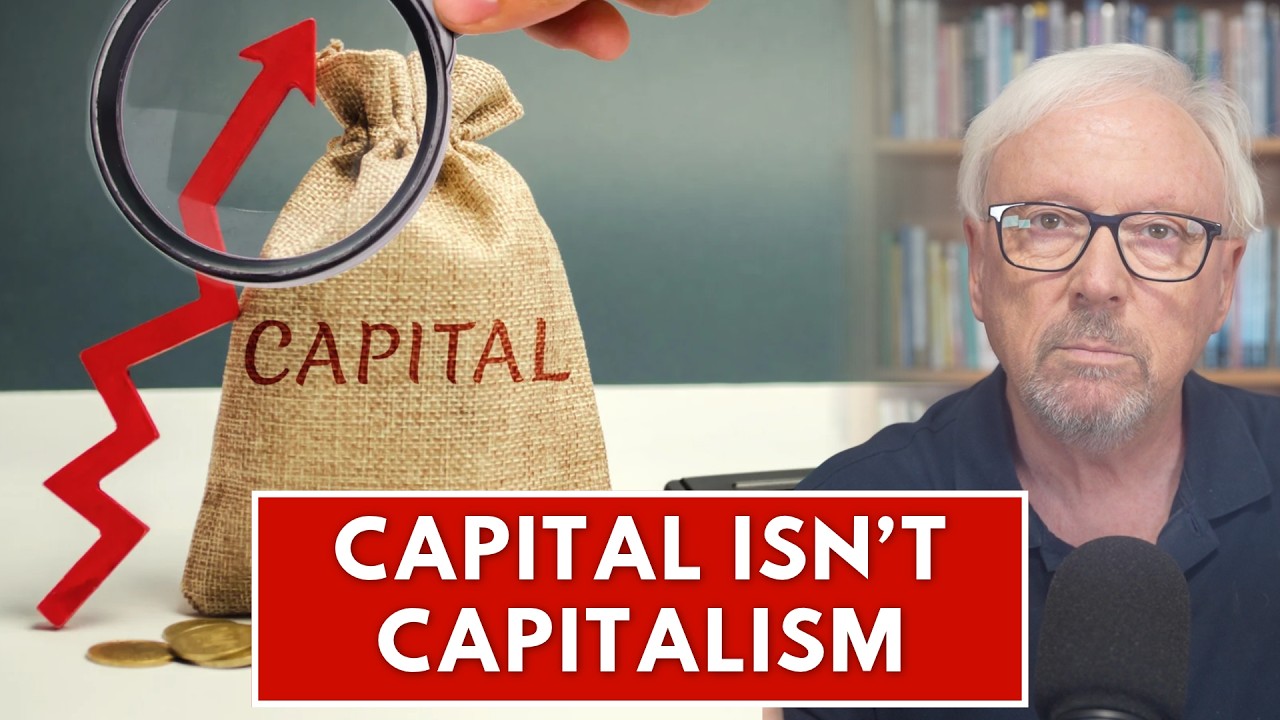
Most people mistake capital for money, or worse, treat it as an enemy because they associate it with capitalism. Both views are wrong.
Most people mistake capital for money, or worse, treat it as an enemy because they associate it with capitalism. Both views are wrong. Capital is anything we have now that will help us live well in the future. It is a far more important concept than money, and money is virtually secondary to it.
Understanding capital is essential to understanding how economies actually work. If we use capital up without maintaining it, our future becomes poorer. The stakes are that simple.
Capital versus income
An apple tree illustrates the difference. The tree is capital; the apples it grows each year are income. Capital is what we have at a single moment; income is what we receive over time. We can eat the apples and still have the tree next year, provided we look after it. If we chop down the tree to sell the wood, we get more money now but no apples later. We can trade capital for income, but not always in ways that serve our long-term well-being.
Ecological capital
Underpinning every other form of capital is what I call ecological capital, often termed natural capital: the living world and everything that keeps it alive. It includes clean air, water, soil, forests, oceans, and all living things, from the tiniest microorganism to the largest animals. Pollution, climate change, and using resources faster than nature can replace them all damage ecological capital. Every other form of capital depends on these systems. Neoclassical economics dismissed them as a free gift of nature, but without them there can be no economy. This capital is not free: it carries a cost of maintenance, and we have a duty to look after it.
Human capital
Human capital belongs to us. It is our knowledge, skills, health, and experience. Education, healthcare, good homes, rest, and family care build it; illness, poor working conditions, exhaustion, and neglect wear it down. We can literally wear ourselves out. In the UK, those on high incomes often live up to 20 years longer than those on low incomes who cannot afford the same well-being. People are not merely tools for the economy; their well-being matters for its own sake. Everyone benefits when all have the chance to enjoy a decent standard of living and access to knowledge, skills, health, and experience.
Social capital
Social capital is the trust and cooperation that help people live and work together. It includes communities, families, laws, public services, and democracy. It is the glue that holds us together in a common cause from which we all benefit. Unfairness, corruption, weak rules, and the sale of public services for private profit destroy it, because they turn shared relationships into market transactions, which are fundamentally different. Public goods, which we share and which cannot necessarily be charged for, underpin our well-being and must be protected.
Physical capital
Physical capital is what most people think of as capital: buildings, machines, roads, railways, pipes, and power lines. This microphone is physical capital. We use it to make things and provide services. It wears out, needs repair, and must be replaced. Schools crumble, trains break down, water pipes leak. We must provide for the replacement of the physical capital we create, or our well-being suffers in the long term. It does not come for free.
Financial capital
Financial capital comes last because it is, in many ways, the least important, yet neoliberal capitalism has prioritized it above all else. It consists of money, savings, shares, loans, and other financial products. Each represents a promise: one person's savings or loan is someone else's debt; a share is a stake in a company owned by someone else. Financial capital provides security, and that matters, but it cannot grow food, heal people, or clean rivers. It only lets us claim a right over what people and nature provide. It is not a form of production in its own right. It is also owned very unequally: a small number of people hold a large share, so it can be used for abuse as well as for constructive purposes.
The maintenance imperative
We must look after capital. We only have real income if we can spend it without making ourselves poorer in the future. Accounting captures this through depreciation, the measure of capital wearing out, a concept few people properly understand but which is vital. We must set money aside to maintain assets even when we are not buying anything new this year. If you own a car and save nothing for its eventual replacement, you will have to borrow when it finally fails. That is the cost of failing to look after capital.
Businesses often mismanage capital. They may maintain their financial and physical capital, but they are poor at maintaining human capital and worse at maintaining ecological capital. The damage many businesses do to people, society, and nature is not recorded in their accounts, so they can report a profit while effectively chopping down the trees. Businesses should set aside the cost of repairing the damage they cause before claiming a profit. Governments, too, must look after everything we depend on. If they do not, our futures will not be as good as our past, and nobody wants to live that way. Hope depends on a better future, and maintaining capital is essential to it.
We will not get richer by using up now the things our future depends upon. Real prosperity means looking after all five forms of capital, starting with ecological capital, on which the others depend. Only what remains after that capital is maintained is our real income to enjoy today.
Related Editorials
Economics Isn’t About Money—It’s About Helping People Thrive
For decades, the public has viewed economics as a grim science of spreadsheets, supply curves, and stock tickers. But a growing movement of scholars and practitioners argues that this perception misses the point entirely.
Beyond the Balance Sheet: Why Money Is Not the Economy
For decades, economists, policymakers, and business leaders have treated money as the ultimate measure of economic health. Gross Domestic Product (GDP), stock market indices, and inflation rates dominate headlines.
The Wealth Paradox: Why Those Who Create Value Rarely Reap the Rewards
Introduction Who truly creates the wealth in an economy? While the popular narrative often credits visionary founders and investors, a closer look at the mechanics of modern capitalism reveals a different story.
The Hidden Engine of Prosperity: Why Economies Run on More Than Just Money
When we think about what makes an economy tick, the mind often jumps to stock markets, currency flows, and quarterly GDP reports. Yet, beneath the surface of financial transactions lies a far more fundamental set of drivers.
The Profound Misconception: Why Most People Don't Understand What Business Actually Is
Ask ten people on the street to define "business," and you will likely receive ten variations of the same answer: a company, a storefront, or a mechanism for generating profit. While these definitions describe the *vehicles* of commerce, they miss the fundamental engine that drives them.