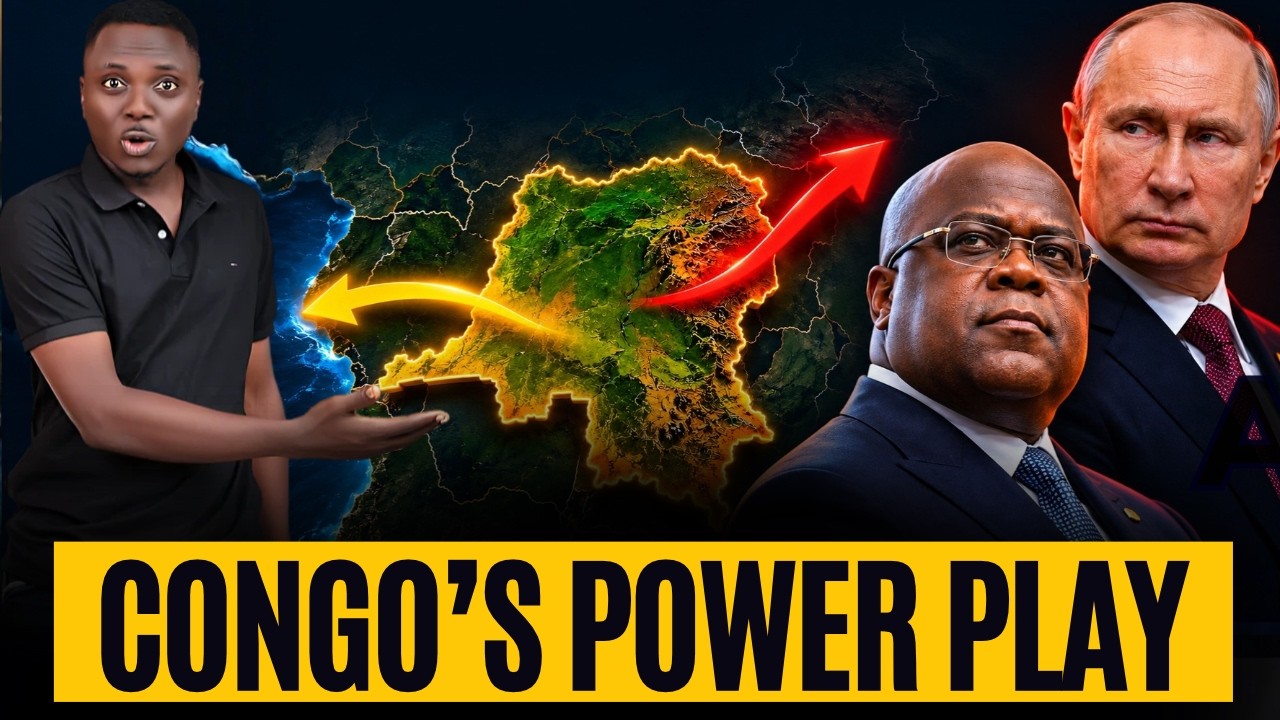
Trump Cut Rwanda From AGOA. Three Days Earlier, Congo Called Putin.
On March 30, 2025, the Trump administration announced it would remove Rwanda from the African Growth and Opportunity Act (AGOA), a trade program that grants eligible African countries duty-free access to U. S.
On March 30, 2025, the Trump administration announced it would remove Rwanda from the African Growth and Opportunity Act (AGOA), a trade program that grants eligible African countries duty-free access to U.S. markets. The decision cited Rwanda's alleged role in the conflict in the eastern Democratic Republic of the Congo (DRC). Yet the timing raises a question: three days before the announcement, Congolese President Félix Tshisekedi had spoken with Russian President Vladimir Putin.
AGOA, created in 2000, allows sub-Saharan African countries to export thousands of products to the United States without tariffs. Rwanda joined the program in 2001 and became one of its notable beneficiaries, using it to expand exports of textiles, agricultural goods, and processed minerals. Removing a country from AGOA is a significant economic sanction, signaling a shift in U.S. foreign policy toward that government.
The official justification centered on Rwanda's involvement in the M23 conflict. M23 is a rebel group operating in eastern Congo that has captured territory and displaced hundreds of thousands of people. The United Nations and Western governments have accused Rwanda of supporting M23 with troops and weapons, a claim Rwanda denies. The Trump administration framed the AGOA removal as a response to this destabilizing role.
But the timeline complicates that narrative. On March 27, 2025, Tshisekedi held a phone call with Putin. According to official Congolese statements, the two leaders discussed bilateral cooperation, including economic and security matters. The call marked a notable diplomatic opening toward Moscow at a time when Congo was seeking additional international support against M23.
Three days later, Washington announced Rwanda's removal from AGOA. The sequence suggests that U.S. policymakers may have been responding not only to Rwanda's conduct but also to Congo's outreach to Russia. By punishing Rwanda, the United States could signal its displeasure with the Congolese government's pivot toward Moscow while still appearing to address the M23 crisis.
Rwanda's government reacted with disappointment, arguing that the decision ignored its security concerns and the role of other actors in the conflict. Rwandan officials have consistently maintained that their actions in eastern Congo are defensive, aimed at neutralizing armed groups that threaten Rwanda's border. The AGOA removal is expected to hurt Rwanda's export sector, particularly its textile and agriculture industries, which rely on U.S. market access.
The episode illustrates how trade policy and geopolitics intersect in the Great Lakes region. AGOA was designed to encourage economic development and good governance, but its use as a lever in security disputes shows how quickly it can become a tool of strategic pressure. For Congo, the call to Putin may have been an attempt to diversify its international partnerships amid frustration with Western responses to the M23 crisis. For Rwanda, the AGOA decision is a costly reminder that its regional conduct carries economic consequences.
The full implications remain uncertain. Rwanda may seek alternative markets or negotiate to restore its AGOA status. Congo's relationship with Russia could deepen or stall depending on developments on the battlefield and in diplomatic channels. What is clear is that the three-day gap between the Putin call and the AGOA announcement has drawn attention to the interconnected nature of trade, security, and great-power competition in Africa.
Related Coverage
Trump Cuts Ukraine’s Starlink and Backs Russian Diesel in 3-Day Blitz
The US has moved sharply against Ukraine and toward Russia, lifting sanctions on Russian diesel, demanding Ukraine stop striking Russian oil, and slowing Starlink service that Ukraine relies on for air defense warnings.
Trump Hands Putin a Diesel Deal and a 60-Day Sanctions Pass While Telling Zelensky to Surrender
Trump eases Russia sanctions for 60 days and pushes Kyiv to restart Russian gas trade as Zelensky accuses Washington of forcing Ukraine to capitulate.
Trump’s Three Moves in Two Weeks Send Ukraine Reeling as Russia Strikes Kyiv Hours After Talks
The United States has sharply shifted its posture toward Ukraine and Russia, alarming Kyiv as Moscow continues deadly attacks despite claiming openness to negotiations.
Trump’s 85-Minute Putin Call Opens Door to Ukraine Peace Talks Ahead of NATO Summit
Trump spoke with Putin for 85 minutes on US Independence Day, and the Kremlin says he’s “ready” to help end the war in Ukraine.
Trump’s Diesel Deal With Putin: 4.8 Million Tons to Cut US Fuel Prices Before Midterms
Trump says Russia will send 300,000 tons of diesel to US immediately, with millions more to follow, as he suspends sanctions and Ukraine cries foul.