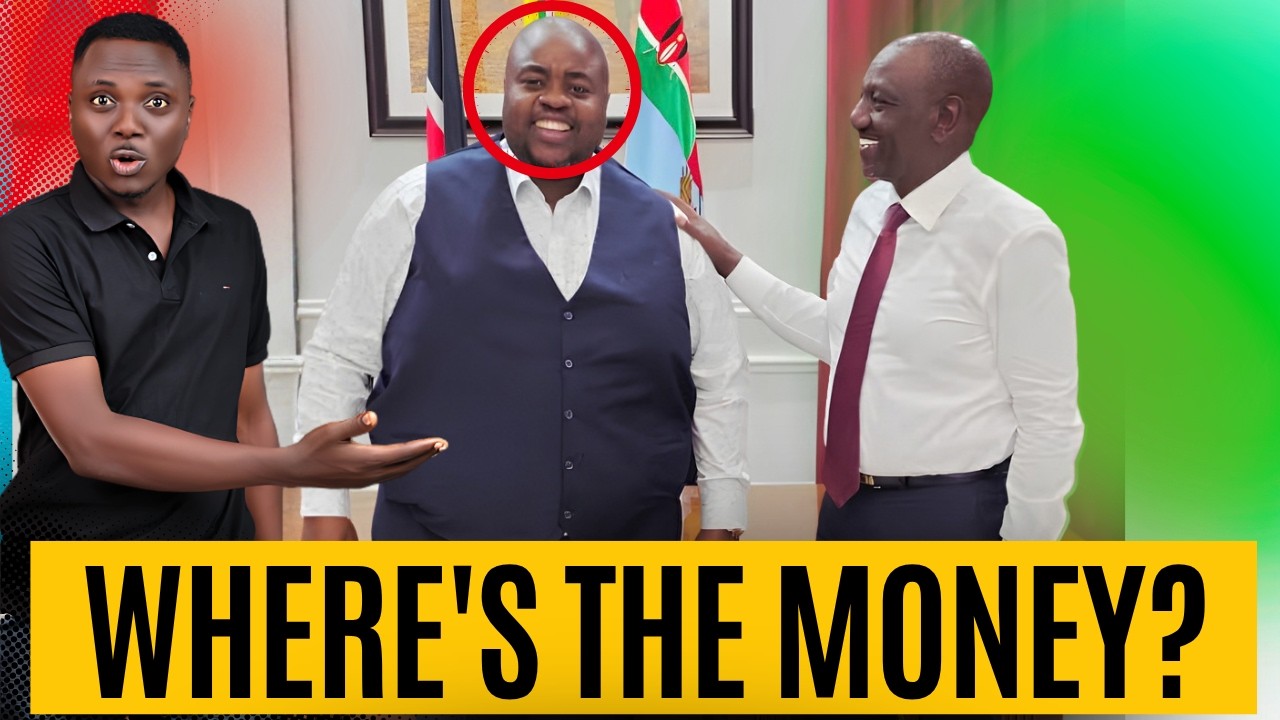
# The Man Who Bribed His Way to the Top: Wicknell Chivayo Explained
In Zimbabwe, few names provoke as much fascination and outrage as Wicknell Chivayo. Once an obscure figure, he has become one of the country's most flamboyant businessmen, known for his lavish lifestyle, close ties to political power, and a string of lucrative state contracts.
In Zimbabwe, few names provoke as much fascination and outrage as Wicknell Chivayo. Once an obscure figure, he has become one of the country's most flamboyant businessmen, known for his lavish lifestyle, close ties to political power, and a string of lucrative state contracts. But behind the luxury cars and social media displays lies a troubling story of corruption, bribery, and a system that rewards connections over competence.
From Obscurity to Notoriety
Wicknell Chivayo's rise is not a tale of entrepreneurial brilliance. It is a case study in how political patronage can transform an unknown figure into a billionaire. His early business ventures were unremarkable, and he lacked the track record typically required for the massive government deals he would later secure.
His breakthrough came through connections to Zimbabwe's ruling party, ZANU-PF. By cultivating relationships with powerful politicians, Chivayo positioned himself as a favored intermediary for state projects. These relationships, built on mutual benefit rather than merit, opened doors that would remain firmly shut to more qualified competitors.
The Anatomy of a Bribery Network
Chivayo's method was straightforward: he used money and gifts to secure influence, and that influence to win contracts. The pattern repeated across multiple sectors, most notably in energy and infrastructure.
His most infamous deal involved a contract to supply solar equipment to the Zimbabwe Power Company. Despite receiving millions of dollars in advance payment, Chivayo failed to deliver the equipment. The project collapsed, leaving the state-owned utility with substantial losses and the public with no benefit. Yet Chivayo faced no serious consequences.
This failure did not slow his ascent. Instead, he continued to win government tenders, often at inflated prices and with little oversight. Each new contract reinforced his reputation as a man who could get things done — not through expertise, but through his ability to navigate Zimbabwe's opaque procurement system.
The Cost to Zimbabwe
The Chivayo phenomenon is not merely a story of one man's greed. It reflects a broader crisis in Zimbabwe's governance. When state contracts are awarded based on political loyalty rather than competitive bidding, the entire country suffers.
Public funds that should have built power plants, roads, and hospitals instead financed luxury lifestyles and foreign bank accounts. Zimbabweans continue to endure chronic electricity shortages, crumbling infrastructure, and a struggling economy — problems that corruption like Chivayo's has helped entrench.
His case also illustrates the impunity enjoyed by those with the right connections. Despite widespread reporting on his questionable deals, investigations have stalled and prosecutions have failed to materialize. The message is clear: in Zimbabwe, proximity to power offers protection from accountability.
A Symbol of a Broken System
Wicknell Chivayo is often described as a businessman. A more accurate description might be a political entrepreneur — someone whose primary skill is not creating value but extracting it from the state. His wealth is not a sign of economic contribution; it is evidence of a system that has been captured by elites.
His flamboyant public persona — the cars, the cash, the social media bravado — serves a purpose. It signals to others that he is untouchable, that his connections protect him. It is a display of power designed to intimidate and impress in equal measure.
What His Story Reveals
Chivayo's trajectory raises uncomfortable questions. How many other contracts have been awarded through similar means? How much public money has been lost to figures like him? And why does a system that produces such outcomes persist?
The answers point to deeper structural problems: weak institutions, political interference in procurement, and a culture of impunity that shields the well-connected. Until these issues are addressed, Zimbabwe will continue to produce men like Wicknell Chivayo — and continue to pay the price for their rise.
His story is not unique to Zimbabwe, but it is a particularly stark example of how corruption operates in plain sight. It is a warning about what happens when accountability disappears and power becomes the only currency that matters.