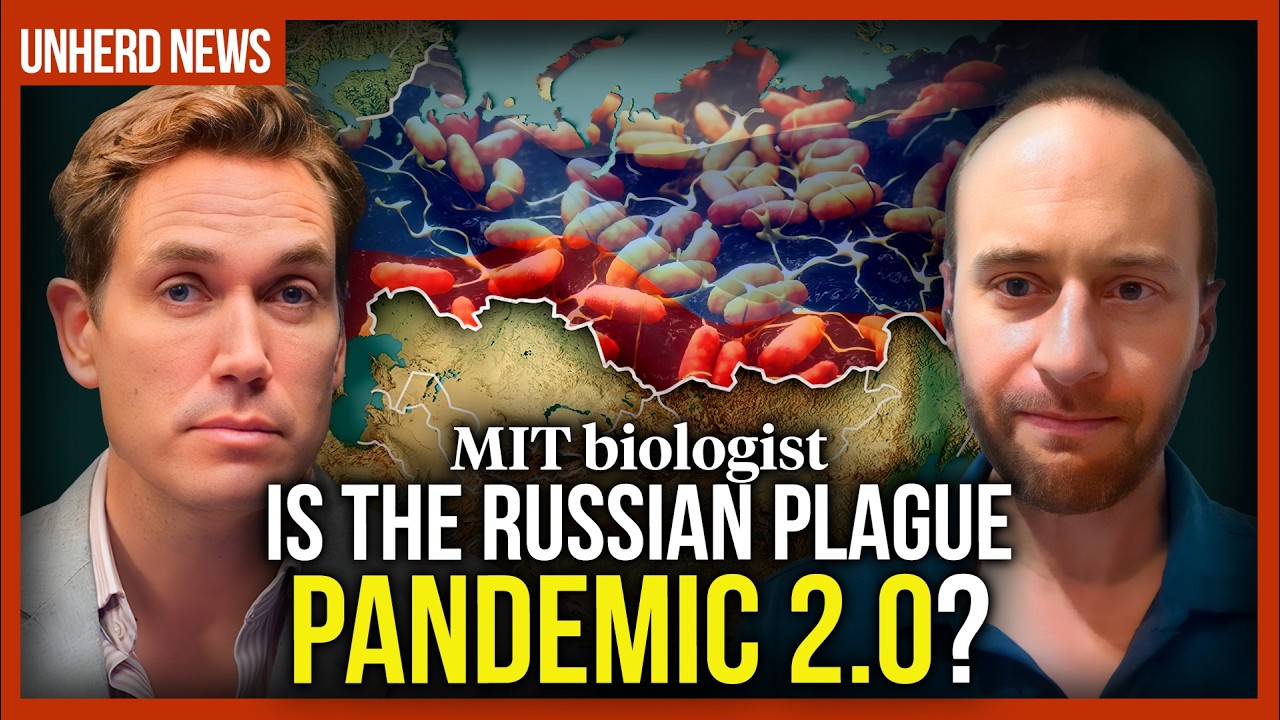
# The Russian Plague: Is Pandemic 2.0 Already Here?
A leaked report from Russia's own biological weapons program suggests the country may be concealing a pandemic far deadlier than COVID-19. MIT-trained biologist Dr.
A leaked report from Russia's own biological weapons program suggests the country may be concealing a pandemic far deadlier than COVID-19. MIT-trained biologist Dr. Paul Cottrell warns the world may be repeating the mistakes of 2020—this time with a pathogen that kills half of those it infects.
A Pattern of Concealment
In 2019, the world watched as a novel coronavirus emerged in Wuhan, China. Beijing's initial response—silencing doctors, suppressing information, and delaying transparency—allowed the virus to spread globally. The result was a pandemic that killed millions and paralyzed economies.
Now, according to Dr. Paul Cottrell, a biologist with training from MIT, a similar pattern may be unfolding in Russia. His warning centers on a leaked document from a Russian laboratory that he describes as deeply alarming.
What the Leaked Document Reveals
According to Cottrell, the document—reportedly from within Russia's biological research infrastructure—describes a pathogen with a case fatality rate of approximately 50 percent. For context, COVID-19 has an estimated fatality rate well below 1 percent in most populations. A pathogen killing one in two infected individuals would represent a catastrophe of historic proportions.
The document allegedly references "pandemic 2.0," language suggesting that Russian officials may be preparing for or already responding to a second major outbreak—one they have not disclosed to the international community.
The Russian Plague Connection
Cottrell draws parallels to historical outbreaks of plague in Russia, which have periodically devastated populations across centuries. The concern is not that this is literally bubonic plague, but that Russia may be harboring—or actively developing—a pathogen with similarly devastating potential.
Russia has a documented history of biological weapons research dating back to the Soviet era. The infamous Biopreparat program employed tens of thousands of scientists and produced weaponized strains of anthrax, smallpox, and other pathogens. While Russia claims to have ended these programs, questions about transparency have persisted for decades.
Why This Matters Now
Several factors make this warning particularly urgent:
Lack of international oversight. Russia has repeatedly blocked or limited international inspections of its biological facilities. Unlike the United States, which publishes extensive research and allows external review, Russia's programs operate behind a veil of secrecy.
Pattern of denial. If a dangerous pathogen were spreading within Russia, the government has both the capability and the historical precedent to conceal it. During the early COVID-19 outbreak, Russia underreported cases and deaths, according to multiple independent analyses.
Global interconnectedness. In a world of international travel and trade, a pathogen emerging anywhere can spread everywhere within days. The COVID-19 pandemic demonstrated how quickly local outbreaks become global crises.
The Risk of Complacency
Cottrell's warning carries an implicit critique: the world has not learned from COVID-19. International health surveillance remains fragmented. The World Health Organization lacks enforcement power. And geopolitical rivals continue to treat biological research as a domain of national secrecy rather than global security.
If a pathogen with a 50 percent fatality rate were spreading in Russia—or anywhere—the window for containment would be narrow. Early detection and rapid transparency would be essential. Yet the incentives for governments to conceal outbreaks remain strong: economic stability, political survival, and national pride all push toward silence.
What Can Be Done
Cottrell's message is not one of inevitable doom but of urgent vigilance. The international community must:
- Demand transparency from all nations regarding biological research and disease outbreaks
- Strengthen independent monitoring systems that do not rely on government self-reporting
- Prepare healthcare infrastructure for pathogens far deadlier than COVID-19
- Treat biological threats as a shared global security concern, not a matter of national sovereignty
A Warning, Not a Prediction
It is important to note that Cottrell's claims rest on a leaked document whose full contents have not been independently verified. The existence of a dangerous pathogen in Russia is a possibility, not a confirmed fact. But the pattern—secrecy, denial, and the potential for catastrophic consequences—is familiar.
The question is whether the world will act on early warnings this time, or wait until the bodies are impossible to hide.
Dr. Paul Cottrell is a biologist and researcher who has spoken publicly about biosecurity risks. His warnings should be evaluated alongside independent verification and the assessments of the broader scientific community.